Flydubai emergency exposes the hidden cost of moving airline crews
Two pilots travelling as passengers helped during flight FZ1073’s diversion, highlighting the crew-positioning system that keeps airline networks running.
Key takeaways
- Two flydubai pilots travelling as passengers helped crew bring FZ1073 safely to Tabuk after a cockpit emergency.
- The UAE’s aviation regulator is investigating; important details about the incident remain unknown.
- Deadheading moves airline employees as passengers to position them for other assignments.
- Crew positioning carries seat, accommodation and staffing costs, while helping airlines manage disruption.
- Regional route changes and summer demand have increased positioning needs, according to analyst Saj Ahmad.
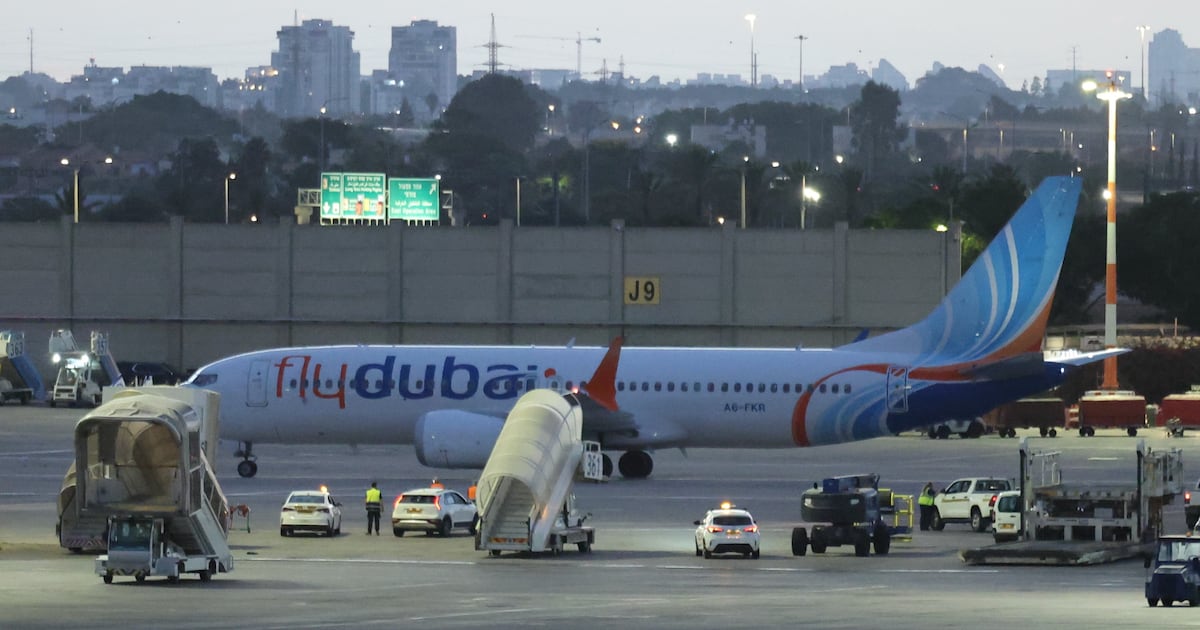
Two flydubai pilots boarded flight FZ1073 as passengers, not to fly the aircraft. Yet when an emergency developed in the cockpit, they were among the crew members who helped bring the Boeing 737 Max 8 safely to the ground in Tabuk, Saudi Arabia, according to The National — Business. Their journey to another assignment had become something far more consequential: a reminder that the people occupying passenger seats can also be an airline’s operational lifeline.
The flight was travelling from Dubai to Tel Aviv on Wednesday morning. The National reported that the operating pilot and co-pilot were injured in an altercation on the flight deck, after which the aircraft descended about 17,400 feet within seconds from 34,000 feet. Much about the incident remains unclear. The UAE’s General Civil Aviation Authority said it was investigating its causes and circumstances. Flydubai did not comment to the newspaper about the positioning crew aboard.
The passengers who keep a network moving
Their presence has drawn attention to “deadheading”: moving pilots or cabin crew as passengers so they can work another service. Known as crew positioning in the International Civil Aviation Organisation framework, it is an everyday tool for matching staff with flights. A Dubai-based pilot needed for a departure from London the following morning, for example, might first travel to London as a passenger. The journey moves a worker, rather than adding an operating pilot to that flight.
Saj Ahmad, chief analyst at StrategicAero Research, told The National that the practice helps airlines manage staff flying hours, provide relief and reposition crews. He said it is more prominent on long-haul services than on short routes, where the same pilots may operate several sectors in a day. It also gives carriers a way to respond quickly when cancellations, delays or timetable changes leave crews in the wrong place.
But travelling is not automatically downtime. The US Federal Aviation Administration distinguishes deadhead transportation from flying assignments and says it is neither part of a duty period nor rest. Decisions about whether a flight needs two, three or four pilots also involve working-time limits, fatigue management and operational requirements, Ahmad said.
“The decision is regulatory, mathematical, and operational – not discretionary,” said Saj Ahmad, chief analyst at StrategicAero Research.
A necessary move with a commercial cost
Moving staff this way can mean paying for passenger seats, accommodation and other expenses without using those employees as operating crew. It also removes pilots from other potential flying assignments, a constraint Ahmad highlighted against an existing pilot shortage. Airlines therefore have to balance where crews are needed with the flying hours available to them, while being selective about routes requiring more than two pilots.
Regional disruption has made that balancing act harder. According to The National, airlines flying through the Middle East have repeatedly adjusted routes since the Iran war began on February 28. Ahmad said crew positioning had become more common as Gulf carriers reshaped networks and capacity to match demand and support routes seeing stronger summer traffic. A sharp increase in these movements can indicate disruption or an uneven network, rather than simply routine scheduling.
For FZ1073, the immediate issue remains establishing what happened on the flight deck, with the UAE regulator’s investigation the next development to watch. For airlines, the wider challenge is keeping crews in the right places without stretching staffing, flying-hour allowances or costs. This flight showed how a routine logistical decision can unexpectedly take on a safety role.
Sources
Investing involves risk. TGC value can fall. This is not investment advice.
Comments
No comments yet — be the first.