
Google takes AI hardware into orbit as the data-centre race leaves Earth
Project Suncatcher will test whether computing in space can harness abundant sunlight, but radiation, maintenance and regulation remain major hurdles.
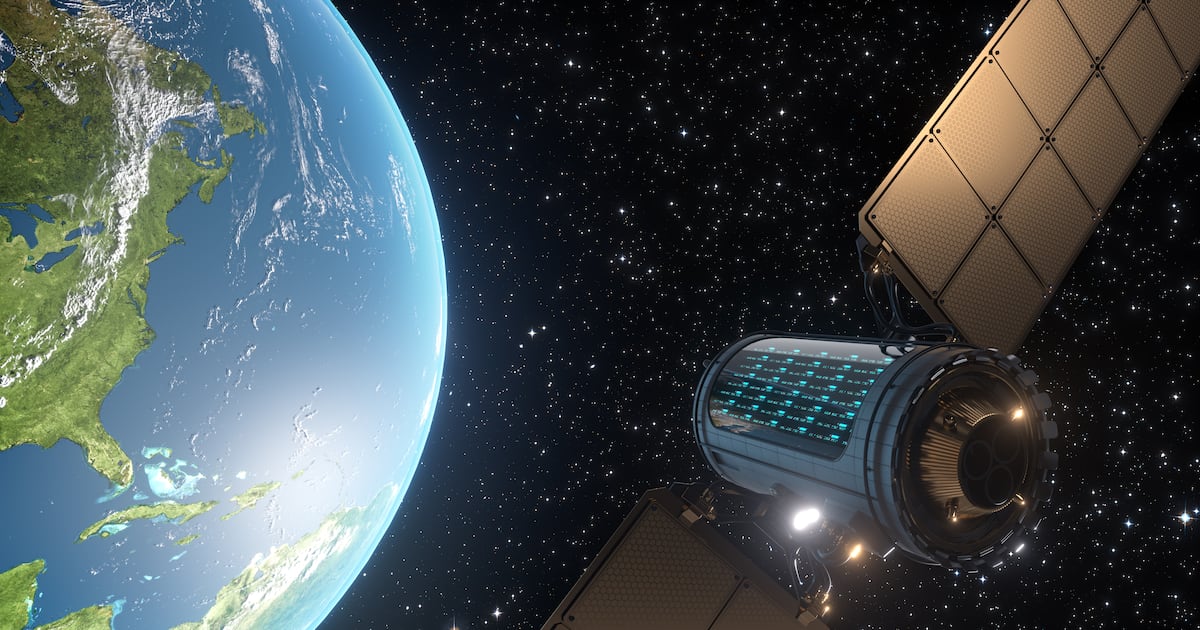
Key takeaways
- Google launched Project Suncatcher hardware aboard SpaceX’s Transporter-18 mission to test AI computing in space.
- The experiment will assess processor performance and the ability to answer basic AI queries in orbit.
- Google says near-continuous sunlight could give orbital systems a substantial solar-power advantage.
- Aurelia Institute chief Ariel Ekblaw warns that heat management, radiation, chip upgrades and regulation complicate deployment.
- SpaceX and Nvidia have also outlined ambitions for orbital AI infrastructure.
Replacing a computer chip is routine on Earth. In orbit, it could mean another trip to space. That is one of the practical problems facing Google as it tests whether the infrastructure behind artificial intelligence can move beyond the planet. According to The National — Business, the Alphabet-owned company launched experimental AI hardware on Thursday, taking a step towards an idea that promises plentiful solar energy but brings a new set of engineering headaches.
Google said its Project Suncatcher travelled aboard SpaceX’s Transporter-18 rideshare mission, a launch carrying multiple payloads. The project has spent several years in research and development. Its successful launch now allows the company to examine how its technology and processors perform in space, including whether they can provide enough computing power to answer basic AI queries. This is an experiment, rather than a working, large-scale orbital data centre.
The appeal of computing above Earth
The backdrop is growing opposition to data centres in many parts of the world. These facilities house the computers that process digital information, including AI workloads, and draw criticism over their noise, size and heavy energy requirements. Google is exploring whether space could eventually support machine learning—the computing process used to train and run AI systems—at a much larger scale. Moving some of that work into orbit could address some of the objections faced on the ground.
The central attraction is sunlight. Google says satellites in low-Earth orbit, relatively close to the planet, can receive almost continuous sunshine and generate substantially more solar power than installations on Earth. If the technology works, the company envisages linking groups of satellites so they can handle larger AI workloads together. That remains a longer-term possibility, not an outcome established by the launch.
“In low-Earth orbit, satellites can access near-constant sunlight, generating up to eight times more solar power than on Earth,” Google said.
Google is not alone in pursuing the idea. At the World Economic Forum’s annual meeting in Davos in January, SpaceX chief executive Elon Musk described space as offering enormous room to expand AI infrastructure. A few weeks later, he predicted SpaceX might put a working data centre in orbit as early as 2027. In March, Nvidia announced its Space-1 Vera Rubin Module, which it said would help bring AI computing to orbital data centres.
The difficult part starts after launch
Ariel Ekblaw, founder and chief executive of the non-profit space architecture lab Aurelia Institute, has challenged the more aggressive schedules. Speaking at the Semafor World Economy Summit in April, she said space’s extreme cold does not make it an inherently favourable setting for computers that generate intense heat. Temperature management is only one of the engineering challenges, she said; radiation is another.
Maintenance adds a further obstacle. Earth-based data centres regularly replace their central processors and graphics processors, the chips that carry out computing tasks. Ekblaw warned that frequent chip upgrades become far more difficult when the equipment is in space. She also expects substantial regulatory hurdles. Overcoming those problems could, however, make orbital facilities a way to reduce AI’s carbon footprint, she said.
Google has acknowledged the hard problems ahead. The next test is whether the hardware already launched can operate effectively and answer AI queries in orbit. Beyond that, the question is whether small experiments can become scalable infrastructure while solving the maintenance, radiation and regulatory challenges that a successful rocket launch alone cannot remove.
Sources
Comments
No comments yet — be the first.