
Modern Mining Equipment: Safer, More Productive Gold Mining
Learn how excavators, haul trucks and processing plants improve gold mining safety and productivity, and how Teqwah deploys productive machinery.
أبرز النقاط
- Modern equipment can improve safety and consistency, but effective training, maintenance and site controls remain essential.
- Excavators, haul trucks and processing plants must be matched to avoid bottlenecks and unnecessary costs.
- Useful productivity measures include availability, utilisation, cost per tonne, plant throughput and gold recovery.
- Machinery-backed participation still carries operating and liquidity risks; owning productive assets does not ensure positive results.
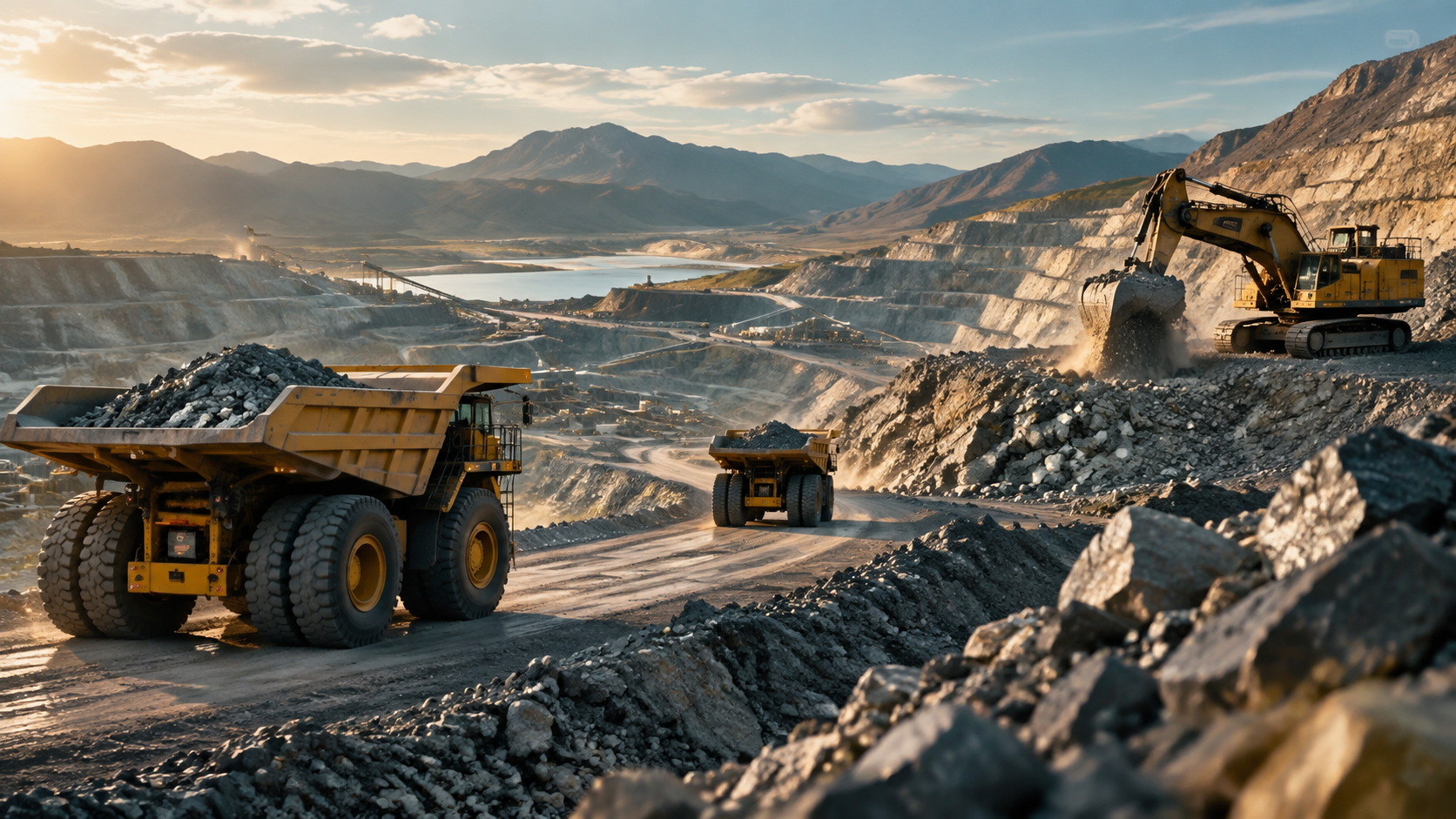
Modern mining equipment does more than move earth faster. Properly selected, operated and maintained, it can reduce exposure to hazards, improve control over ore movement and help recover more gold from the material processed.
For investors, the important connection is between machinery and operating economics. A large fleet is not automatically a profitable fleet: equipment must suit the deposit, work reliably and feed a processing system that can handle its output. Understanding that chain helps explain both the opportunity and the risks of machinery-backed mining activity.
Excavators: controlled digging and consistent loading
Excavators remove overburden, dig ore and load vehicles. Modern hydraulic controls can help operators position buckets accurately, while suitable attachments let machines handle different ground conditions. Selective digging can reduce dilution—the mixing of valuable ore with lower-grade or barren material.
Dilution matters financially because unwanted material still costs money to load, transport and process. Better separation can improve the quality of the plant feed, although geological knowledge and clear digging boundaries remain essential.
Safety features may include protected operator cabins, cameras, visibility aids and operating alerts. These can improve awareness, but do not replace stable working faces, exclusion zones or trained operators. People on foot must remain separated from moving equipment.
Productivity also depends on matching bucket size to truck capacity. Poor matching creates unnecessary loading passes or leaves trucks waiting. The objective is steady, controlled movement—not simply the biggest possible excavator.
Haul trucks: keeping material moving safely
Haul trucks connect excavation areas, stockpiles, waste dumps and processing facilities. Their contribution depends on payload, travel distance, road condition, loading time and unloading arrangements.
Payload monitoring can help avoid overloading, which increases stress on tyres, brakes and structural components. Fleet monitoring systems can reveal queues, excessive idling and repeated delays. Some operations use proximity detection or collision-warning systems to improve awareness around large vehicles.
These technologies support, rather than replace, road engineering and operating discipline. Suitable gradients, maintained road surfaces, edge protection, traffic rules and fatigue management remain fundamental.
More trucks do not always mean more production. If the excavator cannot load them quickly enough, or the plant cannot accept additional material, extra vehicles may increase fuel and maintenance costs without increasing gold output. A balanced haulage circuit matters more than fleet size alone.
Processing plants: turning throughput into recovered gold
Moving ore is only part of the job. A processing plant must separate gold from surrounding material, using a flowsheet suited to the ore's characteristics.
Depending on the deposit, equipment may include crushers, grinding mills, screens, gravity concentrators and chemical recovery systems. Not every gold operation needs every stage. Metallurgical testing helps determine which combination is appropriate.
Modern instrumentation can monitor feed rates, particle size, slurry density and other process conditions. More consistent control can limit interruptions and help maintain recovery: the proportion of gold in the feed that is successfully extracted.
Throughput and recovery must be considered together. Pushing more tonnes through a plant may be counterproductive if inadequate grinding or insufficient treatment time causes more gold to leave with the tailings.
Safety measures include machine guarding, isolation before maintenance, dust suppression and controlled chemical handling where relevant. Tailings and water systems also require careful engineering and monitoring. Automation can reduce some exposure, but introduces its own maintenance and control-system requirements.
The financial test: productive hours, costs and bottlenecks
Equipment creates value through useful work, not ownership alone. Investors should distinguish availability, meaning readiness to operate, from utilisation, meaning how much available capacity is actually used.
A mechanically sound machine may still sit idle because of weather, permitting delays, fuel shortages or insufficient demand. Conversely, heavy use without adequate maintenance can produce breakdowns and shorten asset life.
Useful operating measures include:
- Availability and utilisation: whether equipment is ready and productively employed.
- Cost per tonne: fuel, labour, maintenance and other relevant costs relative to material handled.
- Plant throughput and recovery: material processed and the share of contained gold recovered.
- Safety and maintenance performance: incidents, inspections, planned servicing and unplanned downtime.
No single measure tells the whole story. Lower handling costs cannot compensate indefinitely for poor ore grades or weak recovery. Likewise, a high production rate can conceal rising repair costs.
Capital spending must also be assessed alongside mobilisation, spare parts, operator training and eventual replacement. Preventive maintenance can require scheduled downtime while reducing the likelihood of more disruptive failures later.
How Teqwah deploys productive machinery
According to teqwah.com, Teqwah deploys equipment and operating capital into gold mining, including extraction and processing work. Productive machinery supports operations and can also earn through managed rental activity.
The official description does not identify particular excavator models, truck capacities, plant configurations or site-level productivity results. The technologies explained above are therefore industry examples, not verified features of its fleet.
The risk disclosure states that assets are bought outright rather than financed, machines are registered to the venture and a maintenance reserve is funded before distributions. It also identifies funding and mobilisation time, site demand and maintenance windows as factors affecting machinery activity.
For a Teqwah investment, participants hold TGC rather than selecting an individual machine or mine. Management allocates combined capital across its operations. TGC is a divisible participation unit valued from recorded pool data, not an exchange-traded instrument. Productive assets therefore do not remove operating risk or ensure liquidity; machinery performance is only one influence on overall results.
Frequently asked questions
Does modern mining equipment make gold mining safe?
It can reduce specific hazards, but cannot eliminate risk. Training, ground stability, traffic separation, maintenance and emergency procedures remain essential alongside technology.
Does a bigger fleet always produce more gold?
No. Gold output depends on ore grade, material movement, plant capacity and recovery. Additional machines help only when they address a genuine constraint in that chain.
How should investors assess machinery-backed operations?
Look beyond equipment ownership. Examine utilisation, maintenance provision, operating costs, reporting and participation terms, including exit restrictions. Strong machinery performance alone does not establish investment profitability.
Investing involves risk, values can fall, and this article is education, not financial advice.
رأي تِقوى
Teqwah Capital describes an operating model centred on gold mining and gold trade, supported by productive machinery and managed fleet rental. Investors hold TGC as participation in Teqwah rather than selecting individual projects, while management allocates capital and records operating results.
المصادر
الاستثمار ينطوي على مخاطر. قد تنخفض قيمة TGC. هذا ليس نصيحة استثمارية.