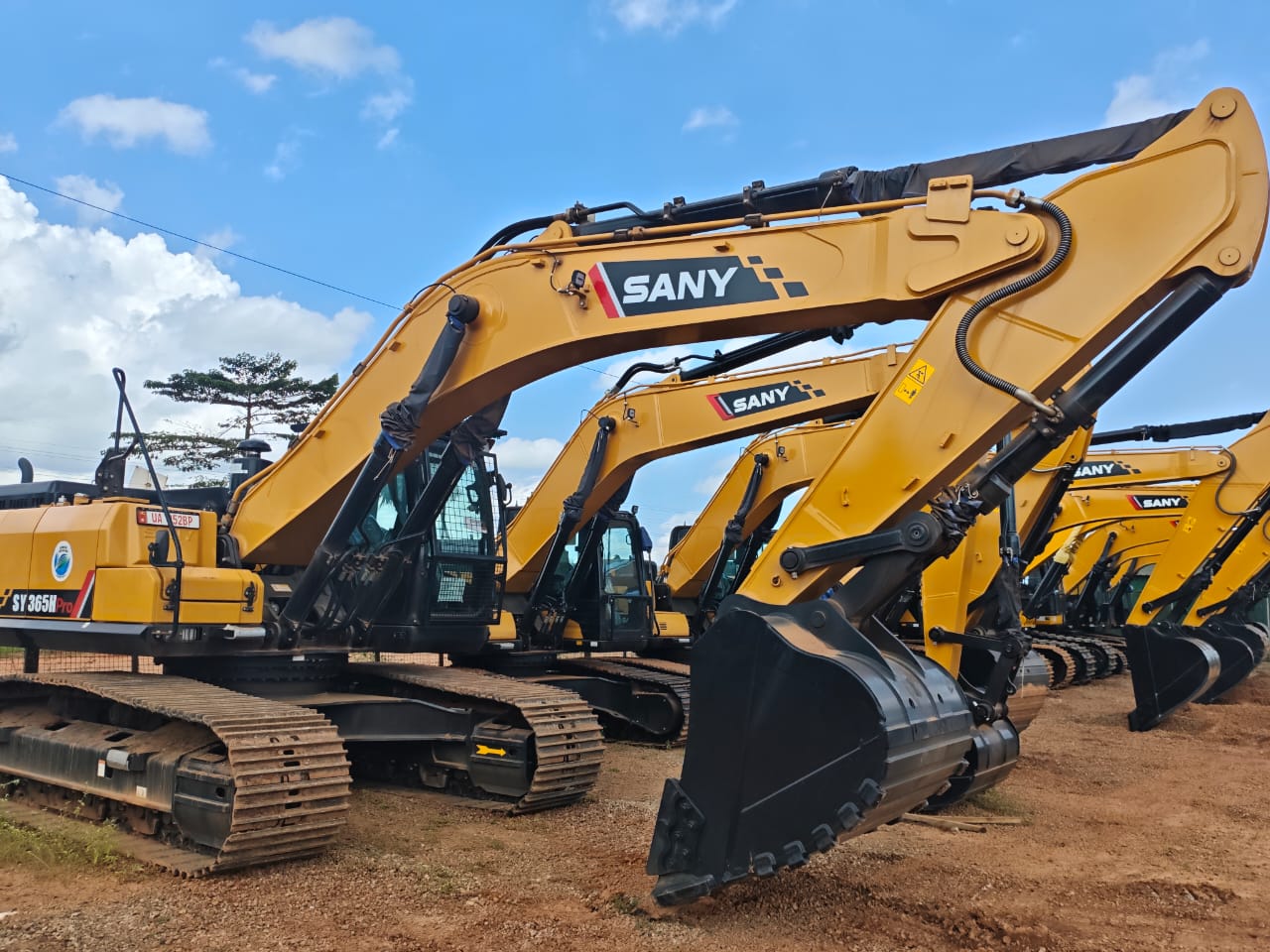
2,500 kilometres of obstacles: moving an excavator from the Gulf to Uganda and South Sudan
A 21-tonne excavator cannot fly to a landlocked mine. It sails to Mombasa, then crawls up the Northern Corridor on a lowbed trailer — past weighbridges, low bridges and one of Africa's roughest highways.
Key takeaways
- Gulf machinery reaches Uganda by sea to Mombasa, then 1–2 weeks by road on the Northern Corridor
- Oversized loads need advance permits; sudden weight-rule changes can force machines to be dismantled mid-route
- The 192-km Juba–Nimule highway, carrying ~90% of South Sudan's imports, now takes 7–8 hours and repairs were funded in September 2026
The machine that cannot fly
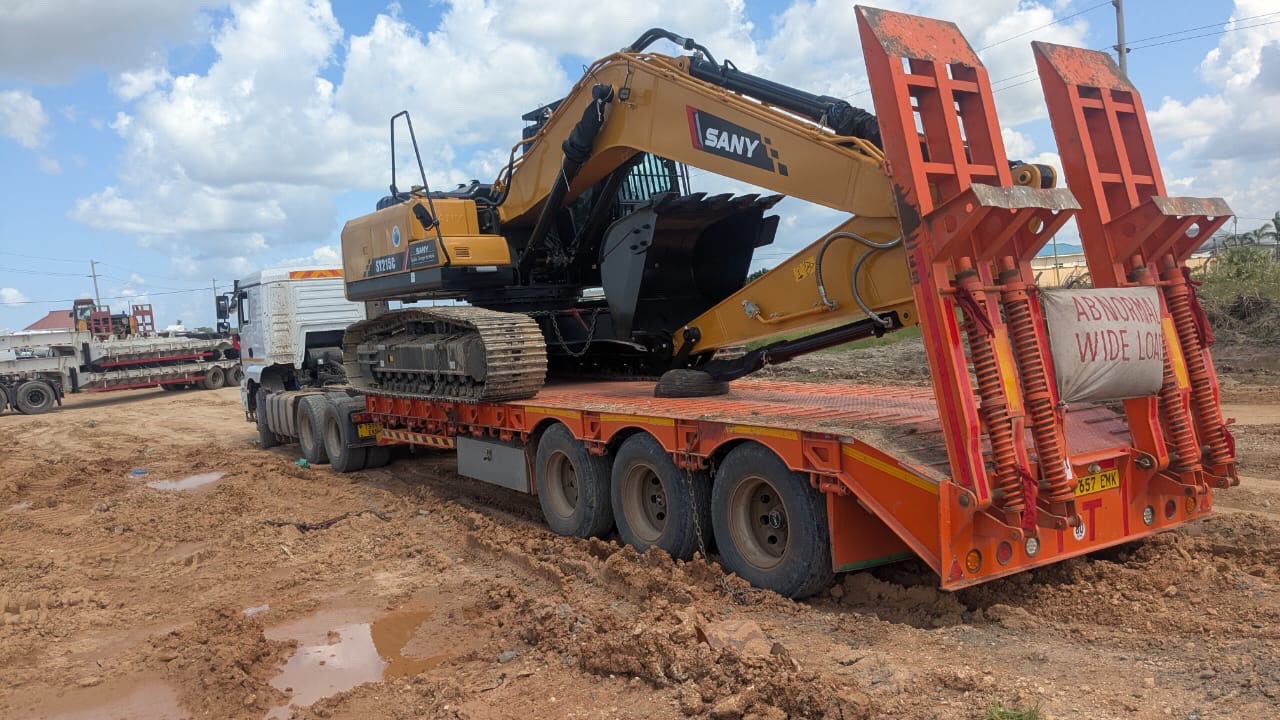
Look at the photo above. A SANY SY215G crawler excavator — about 21 tonnes of steel — sits chained to a lowbed trailer under a sign that reads "abnormal wide load". This is how heavy machinery travels in East Africa: slowly, on the road, one obstacle at a time.
For a buyer in Uganda or South Sudan, the journey starts far away. Most machines from the Gulf leave Dubai's Jebel Ali port by sea. The ship needs roughly two to three weeks to reach Mombasa in Kenya, the main gateway for landlocked Uganda, according to freight forwarders on the corridor.
The Northern Corridor
From Mombasa, the machine joins the Northern Corridor — the highway lifeline that runs through Kenya to Kampala. That road leg alone takes another one to two weeks. Uganda has no seaport, so around 85 percent of cargo between the UAE and Uganda moves this way: ship to Mombasa, truck to Kampala.
An excavator is not normal freight. Its weight and height decide the trailer, and the trailer decides the route — which bridges it can cross, which weighbridges it must stop at, which border posts can handle it. Permits for oversized loads are arranged in every country the convoy crosses, before the load is even lifted.
When the rules change mid-journey
The corridor can surprise even experienced movers. In one documented case, a logistics team moving two 74-tonne excavators from Mombasa towards a Congolese gold mine hit a sudden change: Uganda's roads authority tightened its over-weight permits without notice. The solution? Dismantle the machines in Mombasa to get each unit under the limit, then reassemble them at the site. Tall loads face the opposite problem — some must be offloaded to pass under low obstacles, then winched back on.
The hardest 192 kilometres in East Africa
If the machine is bound for South Sudan, the real test comes after the Ugandan border at Nimule. The Juba–Nimule highway is South Sudan's main trade artery — it carries roughly 90 percent of the country's imports. It is also falling apart.
What was a three-hour drive in 2012, when the USAID-funded highway opened, now takes seven to eight hours. Deep ruts and washed-out sections strand trucks and buses; rollovers have become routine, and cargo spills along the roadside. South Sudan's roads minister blames overloaded trucks — some consolidated to 60 or 70 tonnes at Nimule, far above the regional 45-tonne limit — for crushing the asphalt. A new weighbridge at Nimule is meant to stop that, and repair funding was approved in September 2026, with a contractor set to fix the worst sections.
Why it matters
Every excavator that reaches a mine in Uganda or a construction site in Juba has survived this journey. The cost of moving it — freight, permits, escorts, delays — is built into the price of everything built with it. For traders like Teqwah Capital's machinery desk, knowing the corridor is not a detail. It is the business.
Teqwah view
Moving machinery to landlocked African markets is a logistics discipline of its own: sea freight to Mombasa, permits on the Northern Corridor, and careful planning for the Juba–Nimule road. Teqwah Capital's machinery trading desk works this corridor for mining and construction buyers.
Sources
Comments
No comments yet — be the first.