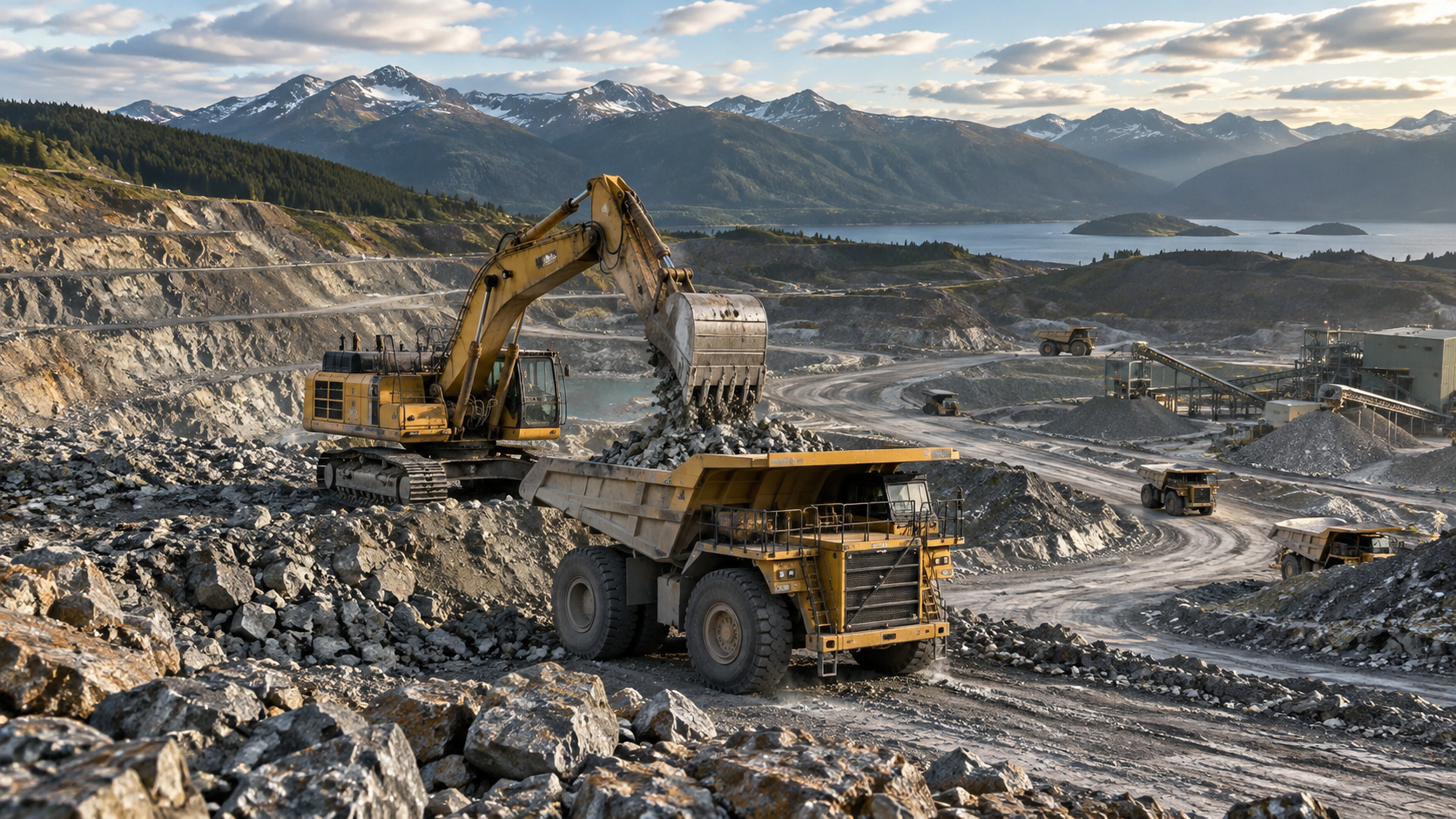
Physical Gold: From Mine to Bullion and Teqwah Gold Trade
Discover how physical gold is sourced, assayed, refined and traded—and how our TGC participation connects investors with real gold operations.
Key takeaways
- Physical gold moves through distinct stages: sourcing, assaying, refining and trading, with documentation and quality checks throughout.
- A lot's weight is not its fine-gold content; representative sampling and an agreed assay help establish its value.
- A trading spread becomes profit only after costs, while quality, documentation and timing can change the outcome.
- TGC is participation in our combined operations, not a specific bar or an exchange-traded gold price; its value can fall.
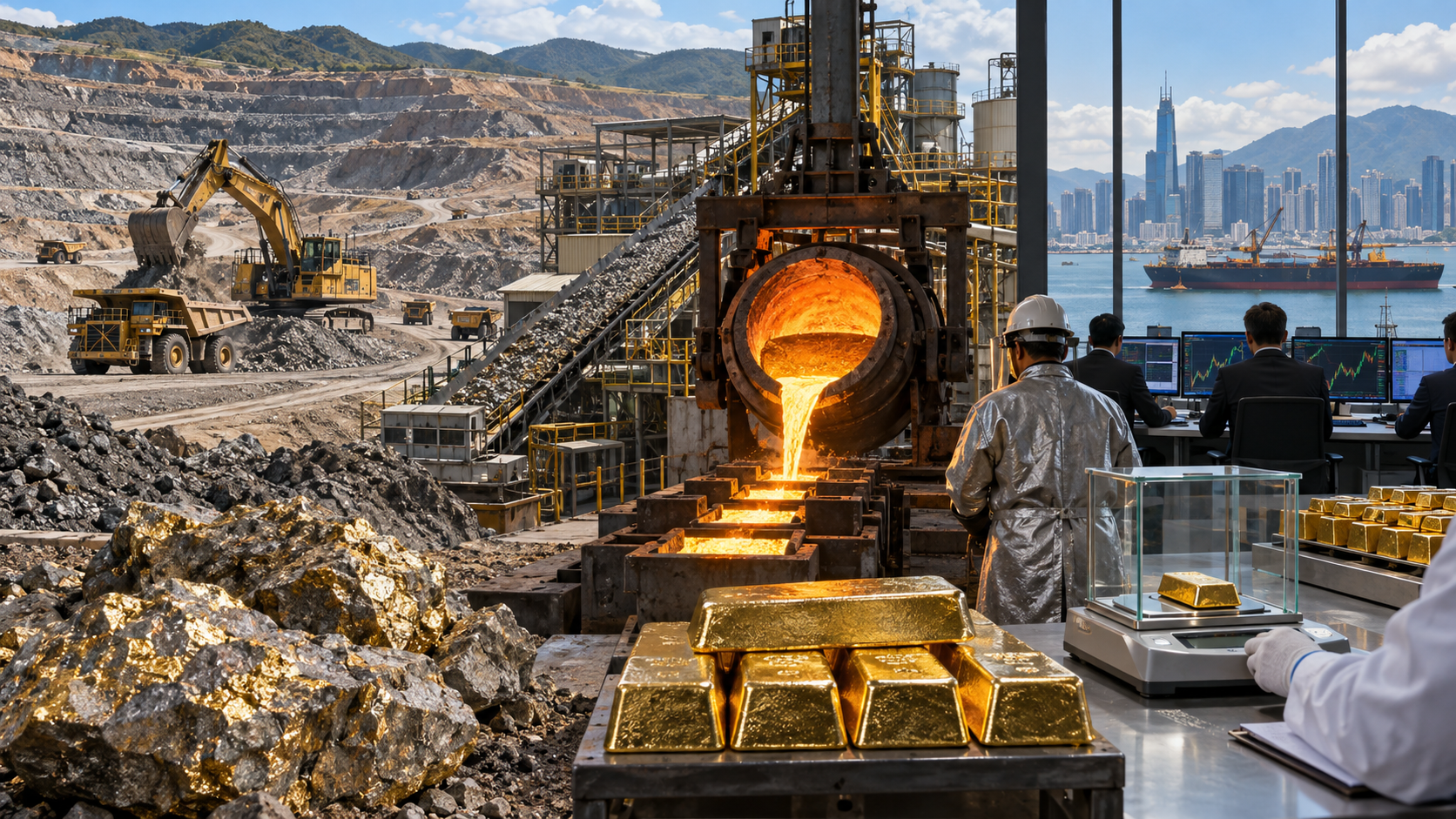
A small gold bar fits in your palm. So why does getting it there require miners, laboratories, refiners, transporters and traders?
Because finding gold is only the beginning. Someone must establish where it came from, measure what it contains, remove impurities and deliver it to a buyer who accepts the result.
At Teqwah, we see opportunity in that practical work. For people who see potential in gold but cannot run a mine themselves, understanding the journey is a powerful starting point. Let us follow the metal—and separate the wider industry's processes from what our participation model offers.
Gold's journey creates opportunity through execution: verified quality, careful costs and a buyer who trusts what arrives.
1. Sourcing physical gold: what are you actually buying?
Imagine a small miner offering a trader a gold-bearing lot. The first question is not simply, “What is the price?” It is, “What exactly is this, and can it legally be sold?”
Mined gold begins in ore or deposits containing other materials. Processing separates and concentrates the gold. It may then become doré: a partly refined metal mixture, commonly containing gold and silver. Doré is not the same as investment bullion.
Physical gold also enters supply chains through recycled jewellery and other recovered material. Not every new bar starts with newly mined gold.
Responsible sourcing means examining both the metal and its history. Depending on the transaction and jurisdiction, checks can include:
- The seller's identity and authority to sell.
- Origin records and relevant mining or export permissions.
- Evidence of ownership and movement between handlers.
- Environmental, labour and conflict-related risks.
Paperwork alone does not prove that every risk has disappeared. Records need scrutiny, and doubtful information needs follow-up.
Why this matters: cheap gold can become an expensive problem if ownership, origin or export eligibility is unclear.
2. Assaying: how much gold is really inside?
A shopkeeper would not buy a sack of coffee without knowing its weight and quality. A gold buyer needs similar answers, but appearance is not enough.
An assay measures precious-metal content. The result helps establish how much fine gold—the actual gold content—a lot contains.
Sampling is crucial. If a mixed lot is tested only at one unusually rich spot, the result may misrepresent the whole shipment. A representative sample matters as much as the testing method.
X-ray fluorescence, often called XRF, can provide a quick assessment, but surface readings may not reveal the full composition. Fire assay is a widely used laboratory method for determining gold content. The appropriate method depends on the material and the transaction.
Consider a hypothetical one-kilogram lot assayed at 90% gold. It contains approximately 900 grams of fine gold before refining losses or contractual deductions—not one kilogram of saleable pure gold.
Buyers and sellers also need agreement on whose assay governs settlement and how disputes are resolved.
Why this matters: a small purity difference can change the economics of an entire trade.
3. Refining: turning mixed metal into bullion
Assaying answers, “What is in it?” Refining answers, “How do we separate it?”
Refiners use processes suited to the incoming material to remove unwanted metals and increase purity. Melting alone is not refining: turning metal into liquid does not automatically remove its impurities.
Refined gold can be cast into bars or made into minted products. Bullion is precious metal valued mainly for its metal content, although manufacturing and distribution add costs.
A finished bar may carry its weight, fineness, refiner's mark and an identifying number. Fineness describes purity: 999.9 fineness means 999.9 parts gold per thousand. Markings help identification, but do not replace verification of authenticity and the seller.
A young saver choosing a small bar may pay more per gram than a wholesale buyer. Producing, packaging and distributing small pieces costs money too.
Why this matters: a gold-price headline is not necessarily the price of a finished bar in your hand.
4. Trading: a spread is not the same as profit
A trader's challenge is to buy on workable terms and deliver material that meets the buyer's requirements.
The purchase price may reflect estimated fine-gold content, a reference gold price and a negotiated discount or premium. Final settlement may follow an agreed assay. Contracts need clarity about delivery, payment and when ownership and transport risk pass between parties.
The spread is the difference between buying and selling prices. Profit is what remains after costs. Assaying, refining, secure transport, insurance, applicable charges and financing can all affect an industry's trade economics.
Timing matters too. Gold prices can move while a shipment waits for documentation or processing. Even a rising market does not rescue every poorly priced transaction.
Consolidation—combining smaller lots into a larger shipment—can improve logistical efficiency. But origin and quality records still need to remain traceable.
Why this matters: physical gold trading is an operating business, not simply a bet that gold prices will rise.
5. How our Teqwah Gold trade participation works
Our gold trade activity involves sourcing, consolidating, assessing and moving physical gold through documented channels. The industry methods above explain the wider journey; they are not a claim that we operate every stage or use a particular laboratory or refinery.
We manage capital across gold mining, physical gold trade and productive machinery. Participants hold TGC as one proportional participation in our combined operations. They do not select an individual shipment, mine, wallet or asset.
Participation starts from $15. Our standard administration fee is 4%, or 2% with a partner link, shown before confirmation. A 30-day deployment period precedes capital deployment across the operations described in our model.
TGC is a divisible participation unit, not an exchange-traded gold price. Its recorded value equals pool value divided by circulating TGC. Recorded investor profit changes that pool; losses can reduce it. Our model describes a 70% participant and 30% managing-partner split. Approved referral commissions are deducted from participants' share of recorded positive daily profit before it enters TGC value.
Seed TGC has a 60-day lock-up; later rounds have 6–12-month lock-ups. Payout follows a three-day target, not an assurance of immediate liquidity. Physical bullion from 1 g to 1 kg is also available as a withdrawal option in Dubai.
That is the opportunity we are building: participation in productive work, with outcomes dependent on execution. Review our how it works page and risk disclosure, alongside your participation agreement, before deciding.
Frequently asked questions
Is assaying the same as refining?
No. Assaying measures metal content. Refining separates metals and raises purity. Both help turn uncertain material into a product buyers can evaluate.
Does holding TGC mean owning a specific gold bar?
No. TGC represents proportional participation in our combined operations, not selection of a particular bar or shipment. Physical bullion withdrawal is a separate available option in Dubai.
Will TGC move exactly with the gold price?
No. Its value comes from recorded pool data, not exchange trading. Operating performance and losses matter, so a higher gold price does not automatically mean a higher TGC value.
Take your next step at your own pace. Explore Teqwah and TGC →
Investing involves risk; values can fall. This article is educational, not financial advice.
Teqwah view
At Teqwah, we connect participation capital with gold mining, physical gold trade and productive machinery. We welcome people who want to understand the work behind gold, while we manage allocation across our operations and record the resulting performance. The opportunity is exciting precisely because value must be created through execution, with shared outcomes rather than a fixed return.
Sources
Investing involves risk. TGC value can fall. This is not investment advice.
Comments
No comments yet — be the first.