Uganda MPs verify digital plate tracking as costs and factory capacity face scrutiny
A police demonstration reassured lawmakers about vehicle tracking, but plate costs, contractor capacity and communication with motorists remain under review.
Key takeaways
- MPs said a visit to the Naguru Police Command Centre confirmed that cars and motorcycles could be tracked.
- Police reported recovering 337 of 375 stolen vehicles, a 90% recovery rate.
- The production facility has reported capacity of 2,500 plate kits daily, or 50,000 monthly.
- The plant employs more than 300 Ugandans, with over 900 additional jobs supported in related industries.
- Costs, contractor capacity, institutional coordination and communication with motorists remain areas of scrutiny.
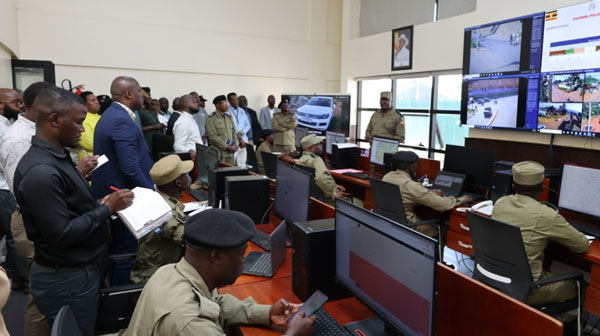
Ugandan lawmakers wanted more than a presentation about digital number plates: their committee chair said they wanted the system tested with their own plates. After visiting the Police Command Centre at Naguru, members of Parliament’s Committee on Physical Infrastructure concluded that cars and motorcycles could be tracked, according to The Independent Uganda (direct). The inspection strengthened their confidence in the technology while leaving questions about costs and delivery on the table.
The visit followed hearings in which stakeholders raised concerns about the project’s security functions and practical rollout. On September 28, committee chair Mwine Mpaka said Parliament needed to establish whether the security component worked. Two days later, police and government officials presented operational evidence. Police ICT director AIGP Felix Baryamwisaki told legislators that 337 of 375 stolen vehicles had been tracked and recovered, a recovery rate of 90%.
From recovery figures to a working demonstration
Rather than rely only on those numbers, the committee sought a closer look at how vehicles are identified, how information is processed and how the system helps police. At Naguru, members saw the technology operating in a police environment and received documented security results. Mpaka said the visit had established that tracking worked and that attention should now turn to making the system better.
Committee chair Mwine Mpaka said the country needed digital number plates, while lawmakers continued to examine the cost and the contractor’s capacity.
Information handling was also part of the scrutiny. Committee members asked how data generated by the system is managed and stored. Sam Okiding, Deputy CDF and a representative of the Uganda People’s Defence Forces in Parliament, said he was satisfied that the data was stored in Uganda. The visit gave lawmakers a way to assess the security operation directly, beyond the competing claims made during hearings.
Production improves, but delivery remains in focus
The command-centre inspection followed a visit to the number plate production facility. Lawmakers were shown the manufacturing process, stocks of materials, and production and installation work. The Independent Uganda reported production capacity of 2,500 plate kits a day, or 50,000 a month, describing that as sufficient for current registration and fitting needs. This gave the committee another point of comparison with earlier concerns over production capacity and plate availability.
The facility employs more than 300 Ugandans, while the project supports over 900 additional jobs in related industries, the outlet reported. It put localisation—the share of activity carried out locally—at 80% and described the plant as East Africa’s first full-cycle number plate production facility. Those figures show the manufacturing and employment interests alongside the project’s vehicle-registration and security roles.
The report said the plate backlog had been cleared and registration and fitting times had fallen sharply after significant implementation difficulties. Still, the committee’s earlier concerns included issuance delays, costs and communication with motorists. The next test is improving cooperation among the institutions involved, police operating and administrative procedures, and information for motorists. For lawmakers, seeing tracking work has not ended scrutiny of what the system costs or how reliably it is delivered.
Sources
Comments
No comments yet — be the first.