What Is an Assay Certificate? A Guide to Checking Gold
Learn what an assay certificate tells you about gold, how to check its issuer and testing method, and why custody still matters.
Key takeaways
- An assay certificate records test information about a metal sample or product; it does not establish every fact about a purchase.
- Match the certificate’s identifiers to the item and read the result, units, method and limitations together.
- Verify the issuer independently and check any claimed accreditation and its relevant scope.
- Custody records help connect tested material to delivered metal; a certificate alone does not prove ownership, origin or investment value.
A shopkeeper offers you a gold bar and slides a certificate across the counter. The document looks professional. The purity figure looks reassuring. But does that piece of paper prove the bar in front of you is the gold that was tested?
Not on its own.
At Teqwah, we want readers to feel confident asking the questions that matter. Understanding an assay certificate is a practical place to start. It helps you move beyond an impressive stamp to the evidence behind a metal’s stated quality.
An assay certificate records a test result. Its usefulness depends on connecting that result to the right metal, a suitable method and an identifiable issuer.
What does an assay certificate actually tell you?
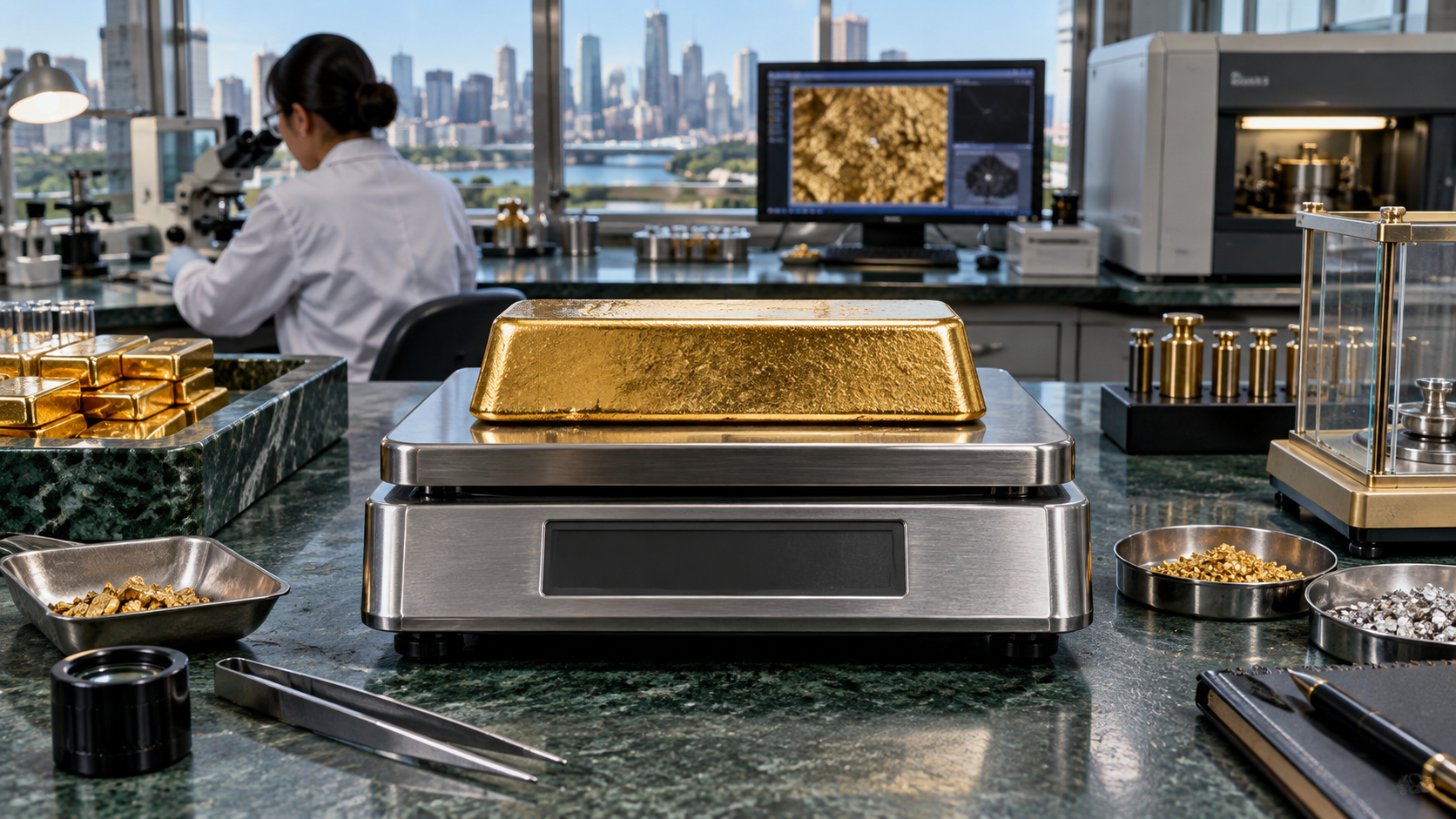
An assay certificate is a document recording test information about a metal sample or product. An assay is an analysis used to establish composition, such as how much gold a tested sample contains.
Depending on the document, it may identify the sample, describe the testing method and report purity or the concentration of particular elements. Formats vary. The word “certificate” alone does not establish the depth or reliability of the testing.
For a buyer, the distinction is simple: the certificate reports what was tested, not necessarily everything being offered for sale.
Imagine a small miner submitting a sample from a larger lot. The result describes that sample. Applying it to the whole lot requires confidence that the sampling was representative—meaning it fairly reflected the material being sold.
Why this matters: a precise result from an unrepresentative sample can still lead to a poor buying decision.
Before reading the purity, match the identity
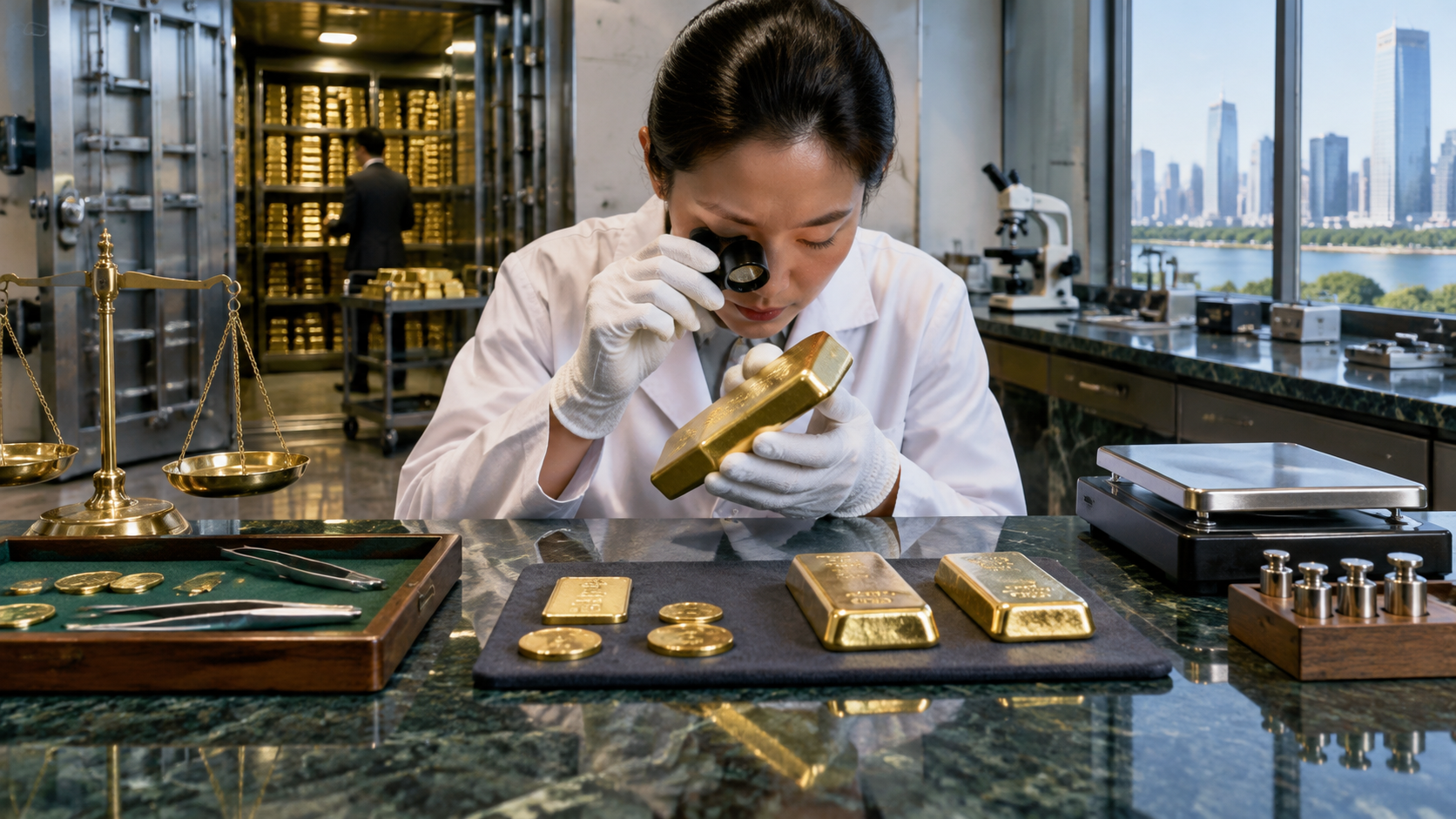
Start with the connection between the document and the physical metal. A genuine report attached to the wrong bar is not useful evidence about that bar.
Look for identifiers that can be checked against the item, its packaging and supporting records. Not every certificate contains every field, but missing information deserves a question.
A useful reading checklist includes:
- Item or sample identity: a serial number, lot number, sample reference or clear description.
- Reported result: the purity or composition, with its units clearly stated.
- Testing information: the method, relevant dates and any stated limitations.
- Issuer details: the laboratory, refinery or other organisation responsible for the report.
- Document reference: a report number or another way to confirm the record with its issuer.
Read the units carefully. A gold fineness of 999.9 parts per thousand expresses 99.99% gold. A result for an ore sample might instead describe gold concentration by mass. These are different contexts, not interchangeable product descriptions.
Also distinguish purity from weight. A high purity figure does not independently confirm how much a bar weighs.
Ask how the metal was tested—and by whom
Different assay methods answer different questions. You do not need to become a laboratory specialist, but you should understand the main limitation of the method used.
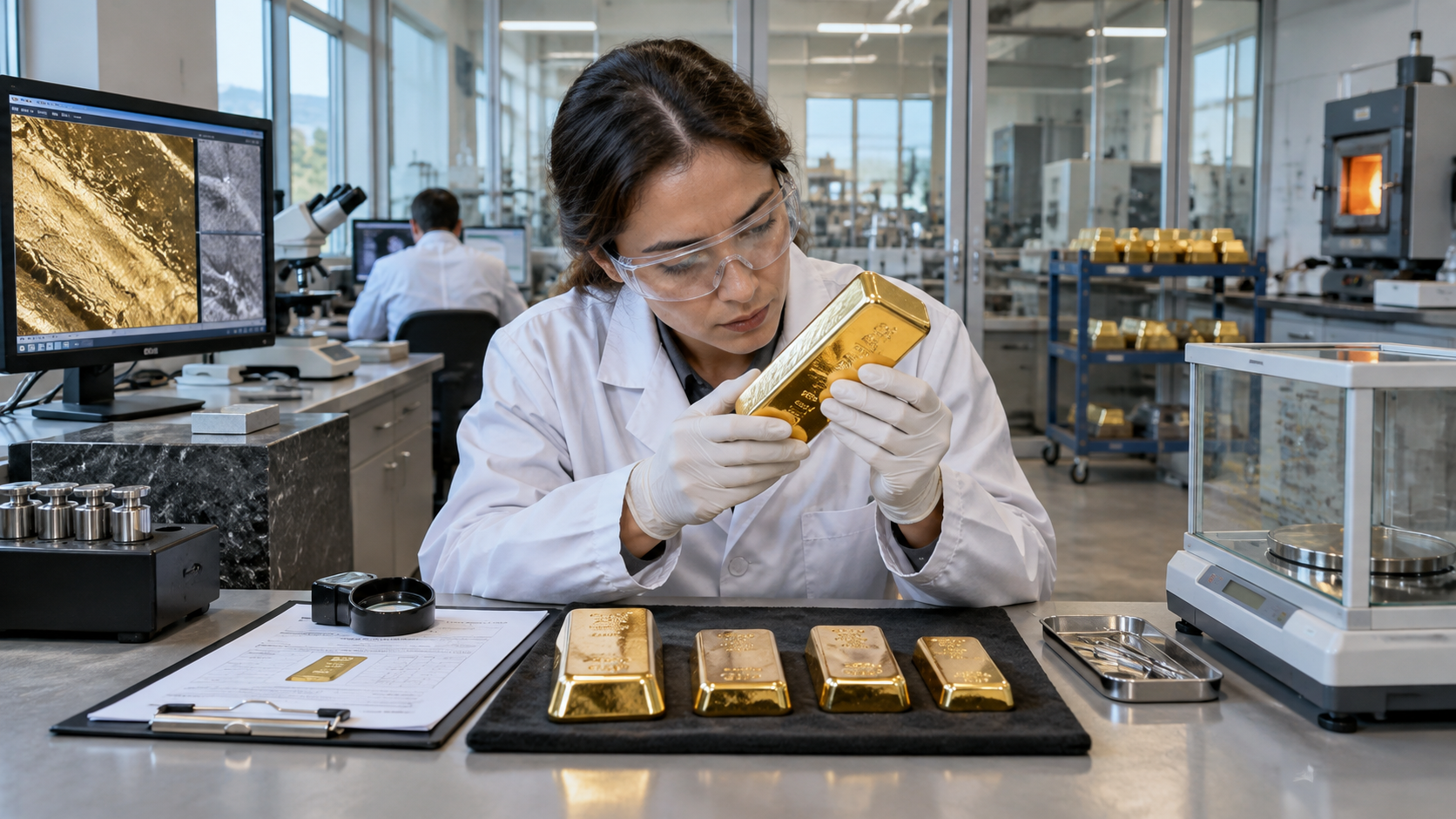
X-ray fluorescence, or XRF, uses X-rays to analyse elemental composition. It can provide quick, generally non-destructive testing. However, its readings concern material near the tested surface; they do not automatically establish the composition throughout a bar. Plating and uneven composition can complicate interpretation.
Fire assay involves processing a prepared sample at high temperature to determine precious-metal content. It is commonly used for gold analysis, but consumes the test portion. Its usefulness still depends on sound sampling and competent laboratory work.
Neither a technical method name nor an official-looking logo settles the question of reliability.
Check who issued the document, whether they can confirm its reference and what the report actually covers. If accreditation is claimed, verify the claim and its scope through the relevant accreditation body. Accreditation for one activity does not automatically cover every test.
Use contact details found independently, rather than relying only on a phone number or QR code printed on the document.
A certificate cannot replace checking custody
Now return to the shop counter. Even if the certificate is authentic and the analysis was sound, you still need to connect the tested material to the item being handed over.
That is where chain of custody matters: the documented history of who held, transferred, sampled or stored the metal.
Ask how the sample was collected and labelled. Was the bar or package sealed? Do serial numbers match across the report and delivery records? Has the material been melted, mixed, repackaged or otherwise changed since testing?
A broken seal does not automatically mean fraud. It does mean that a previous identity check may no longer be enough. Depending on the transaction, independent inspection or fresh testing may be appropriate.
Warning signs include mismatched references, unexplained changes to documents, an issuer who cannot confirm a report, or pressure to pay before checks are complete.
A certificate also does not, by itself, prove ownership, lawful origin, insurance or market value. Those questions require their own evidence.
Why this matters: testing tells you about material; custody helps establish which material you are actually receiving.
What this means for your gold decisions
For a young saver comparing bullion offers, the best question is not simply, “Does it have a certificate?” It is, “Can I verify what this certificate says about this specific item?”
At Teqwah, our gold trade involves physical gold being sourced, consolidated, assessed and moved through documented channels. That makes the distinction between test information and item identity relevant to understanding the work behind gold operations—not just the finished product.
For people who see potential in gold but cannot run a mine themselves, we offer participation through TGC in our unified pool across gold mining, physical gold trade, productive machinery and selected real estate. Participants do not choose individual projects. An assay result is not a measure of investment performance: operating costs, execution and losses remain separate considerations.
The opportunity we are building at Teqwah is grounded in productive work. Understanding the evidence helps you approach that opportunity with clearer questions and realistic expectations.
Frequently asked questions
Is an assay certificate proof that gold is genuine?
It is evidence about the tested material, not conclusive proof about any item presented alongside it. Verify the issuer, method and link to the specific metal.
Is an assay certificate the same as a hallmark?
No. A hallmark is a mark applied to an article under a particular marking system. An assay certificate is a document recording test information. Requirements and meanings vary by jurisdiction.
Should I buy gold without an assay certificate?
There is no universal answer. Consider the product, seller, applicable rules and available verification. If identity or quality remains uncertain, pause and seek independent testing or qualified guidance.
Explore how we connect participation with real operations at teqwah.com.
Investing involves risk, values can fall, and this article is education, not financial advice.
Teqwah view
At Teqwah, we source, consolidate, assess and move physical gold through documented channels as part of our gold trade activity. We see understanding assay certificates as a useful step towards understanding the real work behind gold participation. We invite you to explore our approach with confidence in your questions and realistic expectations about risk.
Sources
Investing involves risk. TGC value can fall. This is not investment advice.
Comments
No comments yet — be the first.