Afreximbank chief challenges rating rules that favour outside ownership
George Elombi says African shareholders’ cash contributions deserve more weight as he presses for changes to how development banks are judged.
Key takeaways
- Elombi says rating rules disadvantage African-owned development banks and favour highly rated shareholders from outside the continent.
- He argues that cash already contributed by African governments deserves greater weight than promises of future funding.
- He said Afreximbank’s support for Ghana had prompted calls to treat it as a private lender and downgrade it.
- S&P returned to rate the bank this year after more than a decade and assigned an investment-grade rating, according to Elombi.
- He urged member states to keep providing capital and uphold the bank’s treaty-based preferred creditor status.
African governments have put cash into Afreximbank, yet its president says promises of funding from richer countries carry more weight in credit assessments. George Elombi is challenging that imbalance, arguing that the bank faces pressure to bring in owners from outside Africa to improve its standing with rating agencies.
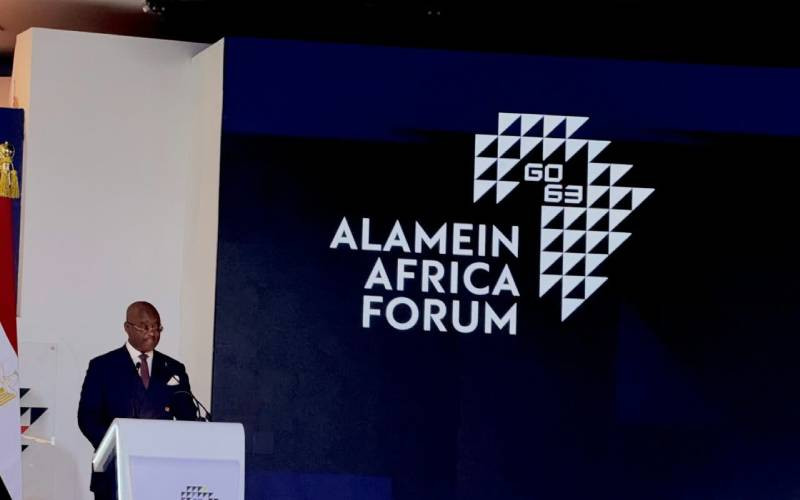
Speaking on Saturday at the opening of the Alamein Africa Forum in New Alamein, Elombi called for an overhaul of the global financial system, according to The Standard Kenya Business (direct). The Afreximbank president and chairman said development banks are assessed using rules rooted in an earlier era. Institutions with ownership structures different from the model established after 1944 are penalised, he argued, rather than judged fairly on their own records.
Cash versus promises
Elombi pointed to a methodology completed in June by an unnamed major rating agency. In his account, it effectively made a better credit rating — an assessment of a borrower’s ability to repay debt — dependent on adding large, highly rated government shareholders that do not borrow from the bank. No African government meets that description, he said. He also said only two African development finance institutions, both with shareholders from outside the region, receive both multilateral treatment and high ratings.
“The message was quite clear: hand over this institution to others outside the continent,” Elombi said.
At the centre of his complaint is the treatment of callable capital: money shareholders promise to provide if needed, rather than cash already paid in. Elombi said such commitments had never been drawn upon at major development banks in more than 80 years. He contrasted that with African shareholders’ repeated cash contributions to Afreximbank, including almost $300 million in fresh equity in 2025. He questioned why funding promises should outweigh demonstrated support, particularly when some large, highly rated countries had cut development assistance by more than half.
The wider stakes extend beyond one bank. Kenyan President William Ruto, speaking at the UN General Assembly in New York the previous month, said subjective sovereign ratings — assessments of governments’ creditworthiness — had cost African countries about $75 billion. Ruto also said developing countries faced borrowing rates two to four times those paid by developed economies. His remarks formed part of the broader African push for changes to the global credit system cited in the report.
A test of ownership
Elombi said Afreximbank’s backing for Ghana during its debt crisis had become an argument against the bank. Critics, he said, wanted it treated as a private lender rather than a multilateral institution owned by multiple countries, and downgraded accordingly. He countered that S&P had returned to rate Afreximbank this year after more than a decade, assigning an investment-grade rating, a category indicating relatively lower credit risk.
He also highlighted the bank’s crisis response. Afreximbank approved a $10 billion Gulf crisis facility within weeks of conflict disrupting shipping, fuel and fertiliser supplies in February, he said. It also deployed a $4 billion programme within months of the Ukraine war driving up food and energy prices. Elombi presented those interventions as evidence of a lender supporting economies when conditions worsen.
For member governments, his challenge now is to turn ownership into continued support. Addressing leaders including Egypt’s Abdel Fattah El-Sisi and Ghana’s John Mahama, Elombi urged fresh capital contributions and respect for the bank’s treaty-based preferred creditor status, which gives its repayment claims priority. Those contributions, and members’ defence of that status, are the next points to watch.
Sources
Investing involves risk. TGC value can fall. This is not investment advice.
Comments
No comments yet — be the first.