Aukot presses Kenya to open the books on Sh2.2 trillion Dangote refinery
The Thirdway Alliance leader is seeking ownership records, government agreements and clarity on Parliament’s role in the planned Lamu refinery.
Key takeaways
- Aukot is seeking ownership and contract records for the Sh2.2 trillion refinery project in Lamu.
- His request covers signed agreements, supporting documents, amendments and any available drafts if no final deal exists.
- He wants clarity on parliamentary approval, the project’s legal structure and any public financial liability.
- The planned Dangote Industries refinery is designed to process up to 700,000 barrels of crude oil daily.
- Aukot has asked for the agreement and significant government commitments to be published online.
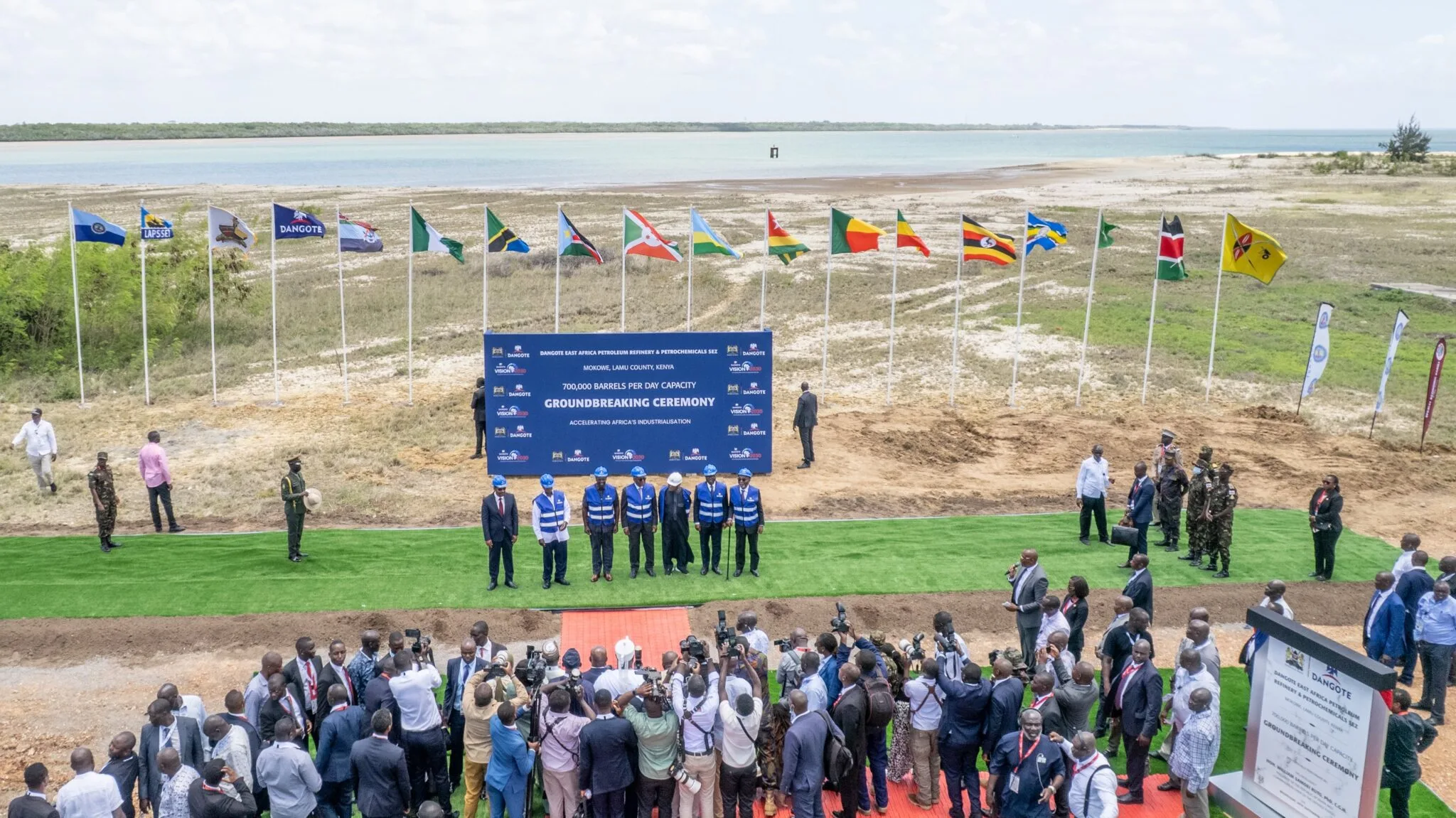
Days after a groundbreaking ceremony for a Sh2.2 trillion refinery in Lamu, Kenyan party leader Ekuru Aukot is asking the government to show who owns the project and what it has agreed to. His request reaches beyond the main contract: he also wants supporting documents, ownership records and an explanation of whether the venture could create financial obligations for the public, according to Capital FM Kenya Business (direct).
Aukot, who leads Thirdway Alliance Kenya, addressed the request to Attorney-General Dorcas Oduor. He is seeking the agreement between the government, or any related public entity, and the Dangote Group or its project company, Dangote Refineries Limited SEZ. The request concerns the Dangote East Africa Refinery and Petrochemicals SEZ in Lamu. SEZ stands for special economic zone.
The contract—and the people behind it
The ownership questions cover directors, shareholders and beneficial owners—the people who ultimately own or control a company. Aukot also wants the signed versions of the agreement, its attached schedules, separate related agreements known as side letters, and any later changes. Together, those requests seek both the identity of the people behind the project and the terms agreed with the government.
His letter also leaves open the possibility that a final agreement has not yet been signed. In that case, he asks Oduor’s office to explain its current status and provide available drafts and approvals already on record. The request therefore seeks clarification not only of what the documents contain, but also of which stage the agreement has reached.
Aukot’s position is that information on matters of public importance must be made available by the government, citing Kenya’s Constitution and access-to-information law.
Aukot cited Article 35(3) of the Constitution and Section 5 of the Access to Information Act, 2016. He asked for the agreement and significant government commitments to be posted on an official public website. He also requested electronic copies for Thirdway Alliance Kenya and the public, seeking publication rather than access limited to his party.
Parliament’s role and the refinery’s reach
Another part of the letter asks whether Parliament debated, approved or ratified the agreement or project. If it did, Aukot wants dates, official debate transcripts, committee records, resolutions and approval documents. If it did not, he wants the government to explain whether parliamentary approval is required and the legal grounds for that view. He also asks whether the venture is classified as a public-private partnership—a project involving government and private business—and whether it creates any public financial liability.
According to Capital FM, President William Ruto and Nigerian industrialist Aliko Dangote broke ground on September 30, 2026. The report says Ugandan President Yoweri Museveni, Ethiopian Prime Minister Abiy Ahmed and Benin President Romuald Wadagni attended alongside other officials. Developed by Dangote Industries, the refinery is designed to process up to 700,000 barrels of crude a day, placing it among Africa’s largest planned refining facilities.
The project is intended to supply Kenya and the wider East African market, with petroleum products also targeted for Uganda, Tanzania, Ethiopia, South Sudan, Rwanda, Burundi and the Democratic Republic of Congo. The next point to watch is whether Oduor’s office releases the requested records and clarifies the agreement’s status, Parliament’s involvement and any financial commitments carried by the government.
Sources
Comments
No comments yet — be the first.