Disinflation vs Deflation: Why Prices Still Feel High
Inflation can fall while your shopping bill keeps rising. We explain disinflation vs deflation and what the difference means for savers and investors.
Key takeaways
- Disinflation means prices are rising more slowly; deflation means the overall price level is falling.
- A lower inflation rate does not reverse earlier price increases or automatically reduce your shopping bill.
- Check the comparison period, measured basket and base effects before interpreting an inflation headline.
- Inflation trends provide context, but they do not determine gold prices or the results of productive operations.
You hear that inflation is falling. Then you visit the supermarket, buy your usual basket, and pay more than before. Has someone misunderstood the numbers?
Not necessarily. The headline may describe disinflation: prices are still rising, just more slowly. Deflation means the overall price level is falling.
At Teqwah, we believe understanding that difference helps you ask better questions about your budget, your savings and investment opportunities. A calmer inflation headline is useful news. It is not a promise that yesterday’s prices are coming back.
Disinflation slows the climb in prices. Deflation takes the overall price level down.
1. Why your shopping bill can rise as inflation falls
Think of a shopkeeper who buys bread, milk and cleaning products from suppliers. Last year, those costs rose sharply. This year, they rise again, but by less. The shopkeeper may still raise shelf prices, only more gently.
That is disinflation in everyday life.
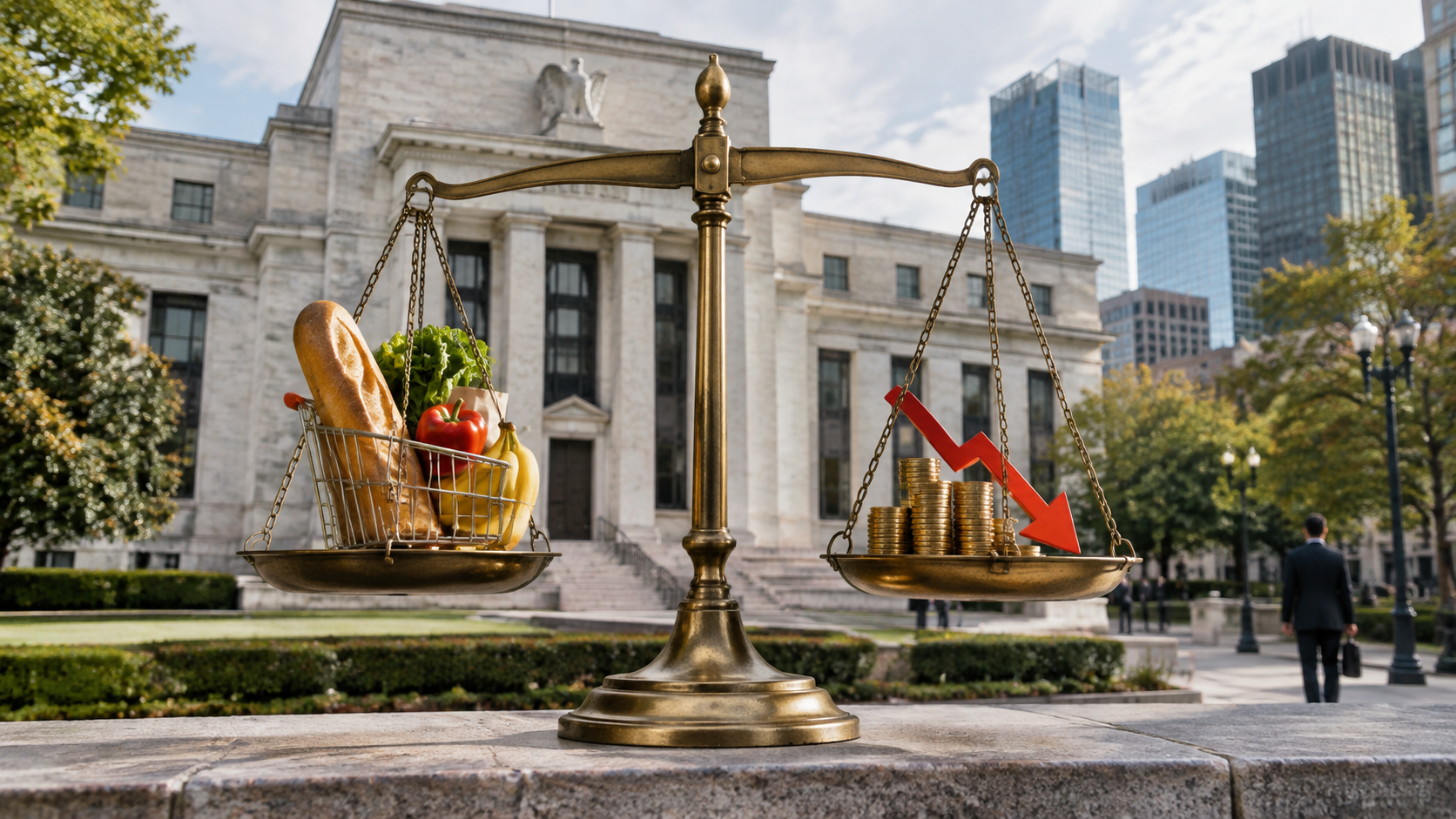
Here is a hypothetical example. A basket costs 100 currency units. After 10% inflation, it costs 110. If inflation then slows to 5% over the next comparable period, the basket costs 115.50.
Inflation has fallen. The bill has not.
The key distinction is between the price level, meaning what things cost, and the inflation rate, meaning how quickly that cost changes. A lower positive rate still adds to the price level.
For your household, relief may mean smaller increases rather than outright savings. If your income starts growing faster than prices, your buying power can improve without prices falling.
Why this matters: plan your budget around actual costs, not just the direction of a headline.
2. When falling prices really mean deflation
Now imagine the overall basket falls from 100 to 98 over a comparable period. That is a 2% decline in its price level: deflation.
But a discount on one product is not enough. Cheaper phones, seasonal vegetables or a weekend sale can coexist with rising rent and transport costs. Deflation concerns the overall price level across a broad basket, not every item individually.
Falling prices may sound welcome. Sometimes lower costs reflect better technology or more efficient production. Yet widespread, persistent deflation can also accompany weak demand: households spend less, businesses struggle to sell, and employers may cut investment or jobs.
It can also make existing debt harder to carry. A fixed repayment does not shrink just because prices and income fall.
We should therefore ask why prices are falling before calling the change good or bad. A temporary monthly decline is not the same as a prolonged economy-wide pattern.
3. How to read an inflation headline without being misled
Suppose a headline says, “Inflation drops again.” Before changing your spending or investment plans, look at what the number measures.
Use this short checklist:
- Is the rate still positive? A fall from a higher positive rate to a lower one signals disinflation, not deflation.
- What period is being compared? Prices can fall month to month while remaining higher than a year earlier.
- Which basket is measured? Headline inflation covers the full measured basket. Core measures commonly exclude food and energy to help reveal underlying trends.
- Is the comparison doing some of the work? A high price level a year earlier can make today’s annual increase look smaller. This is called a base effect.
Your own experience may differ from the average. A young saver spending heavily on rent can face a different squeeze from someone whose home is paid off.
Why this matters: the headline describes a measured basket, not your exact household.
4. What slower inflation means for savings and gold
For a saver, the practical question is not simply, “Is inflation lower?” It is, “Can my money buy more after costs and price increases?”
Money that grows more slowly than your living costs loses purchasing power. Disinflation can reduce that pressure, but it does not automatically remove it.
Lower inflation also does not automatically bring lower borrowing costs. Central banks consider the persistence of price pressures, economic activity and other conditions. Market expectations can change before policy does.
Gold requires the same care. Its price responds to several forces, including interest rates after inflation, currencies, demand and uncertainty. Neither disinflation nor deflation gives investors a dependable one-direction signal for gold.
And owning an interest in gold-related operations is different from simply holding bullion. A small miner still has to manage fuel, labour, machinery and production. Slower cost increases may help, but they do not ensure a profitable operation.
Why this matters: an economic trend is context, not an investment outcome.
5. Where our approach fits: execution before headlines
For people who see potential in gold but cannot run a mine themselves, we offer a way to participate in productive operations. At Teqwah, our TGC participation unit records a proportional share of our unified pool across gold mining, physical gold trade, productive machinery and selected real estate. Participants do not choose individual projects.
The opportunity is exciting precisely because value must be created through execution. Mining output, operating costs and recorded results matter more than attaching a hopeful label to an inflation report.
A Teqwah investment is not a direct wager on an inflation number. TGC value comes from recorded pool value divided by circulating TGC. It is not exchange-traded, and its value can rise or fall.
We invite you to bring that same curiosity to every opportunity: understand what creates value, what can go wrong and how your participation works.
Frequently asked questions
Does disinflation mean prices are falling?
No. In the usual positive-inflation setting, it means prices are rising more slowly. Deflation means the overall price level falls over the period measured.
Can disinflation make life more affordable?
It can help if income grows faster than prices. But slower inflation alone does not reverse earlier increases or make every household better off.
Is gold certain to benefit when inflation slows?
No. Gold responds to multiple economic and market forces. Gold-related operations also face production and cost risks, so an inflation headline cannot predict their results.
Keep asking what sits behind the numbers. Explore how we connect participation with productive operations at Teqwah →.
Investing involves risk, values can fall, and this article is education, not financial advice.
Teqwah view
At Teqwah, we connect participants with a unified pool spanning gold mining, physical gold trade, productive machinery and selected real estate. We see the opportunity in productive work and recorded operating results, not in treating an inflation headline as a promise. We invite you to understand that journey with us, knowing that TGC value can rise or fall.
Sources
Investing involves risk. TGC value can fall. This is not investment advice.
Comments
No comments yet — be the first.