Dubai and the UAE as a Global Gold Trading Hub
Discover how Dubai connects the global gold trade, what happens between mine and market, and what investors should understand about costs and risk.
Key takeaways
- Dubai and the wider UAE connect gold producers and buyers through logistics, trading expertise and supporting services.
- Testing, refining, documented sourcing and secure settlement help physical gold move between markets.
- Gold-trading margins depend on costs, timing and execution—not simply on a rising gold price.
- TGC represents participation in our unified operating pool, not direct ownership of an individually allocated gold bar; its value can fall.
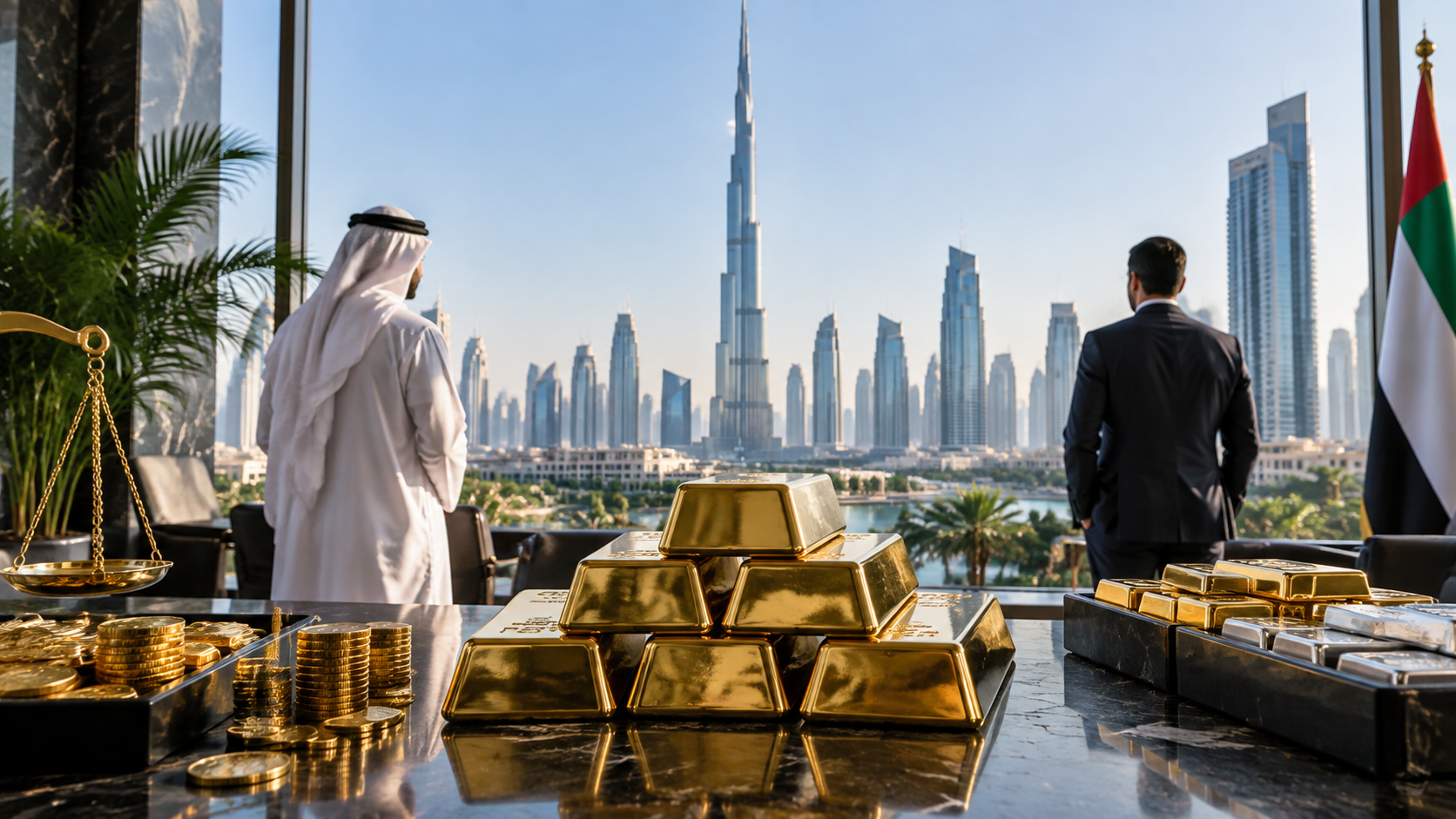
You walk into a gold shop in Dubai and see a small bar behind the glass. Its weight is clear. Its purity is stamped. But how did it get there—and who created value along the way?
That question opens a bigger story than the gold price alone. Dubai and the wider UAE connect producers, refiners, traders and buyers across borders. At Teqwah, we see opportunity in understanding that journey: not just owning something valuable, but supporting the productive work around it.
Gold becomes a global business when physical metal can move with reliable testing, clear records and trusted settlement.
Why does so much gold business connect through Dubai?
Imagine a small producer looking for a buyer, and a jewellery wholesaler looking for dependable supply. They need more than an introduction. They need transport, quality checks, payment arrangements and confidence that the transaction meets applicable rules.
Dubai brings many of those services close together. Its international air links, logistics infrastructure and established precious-metals business community help connect suppliers and customers across Africa, Asia, the Middle East and beyond.
The wider UAE adds commercial infrastructure and access to international markets. Dubai is an important part of that network, not a separate country or a shortcut around trade requirements.
For a shopkeeper, a concentrated trading ecosystem can make it easier to compare suppliers and replenish stock. For a producer, it can widen access to potential buyers. Neither benefit removes the need to check the other party.
Why this matters: a trading hub reduces friction. It does not remove risk.
What happens between a mine and a shop window?
A miner's output is not automatically ready for a retail customer. Material may need processing, assessment and refining before it becomes a recognised bullion product.
A typical journey can involve:
- Sourcing: establishing who supplied the gold and documenting its origin.
- Assaying: testing how much gold the material contains.
- Refining: removing impurities to achieve the required purity.
- Logistics and custody: transporting, insuring and safeguarding the metal.
- Sale and settlement: agreeing terms, transferring ownership and completing payment.
Not every shipment follows the same route. Recycled jewellery, for example, enters the chain differently from newly mined material.
Consider a buyer offered two bars of equal weight. If their purity differs, their fine-gold content differs too. A stamp is useful, but credible testing and documentation matter more than appearance alone.
We see this as the practical heart of gold commerce: turning material into a product another buyer can assess and accept. Each stage carries costs, responsibilities and potential delays.
Does a busy gold market mean easy profits?
Suppose a trader buys gold, arranges testing and transport, then sells it at a higher price. The difference is not all profit. Insurance, refining, financing and other operating costs still need to be covered.
The international gold price is a reference point, not the complete invoice. Physical transactions can include a premium or discount reflecting purity, product form, location, availability and transaction size. Jewellery may also carry making charges.
Timing matters. If payment arrives late, a trader may have capital tied up while another shipment needs funding. If the gold price moves before a sale is completed, an expected margin can shrink or disappear.
Buying and selling prices also differ. That gap, often called the spread, means a saver who buys a bar and immediately resells it may receive less than they paid even without a major market move.
The useful distinction: gold-price exposure and operating profit are different things. A rising gold price does not automatically make every gold business successful.
What should you check before trusting a transaction?
A polished showroom or a Dubai address is not enough. Trust should come from checks you can understand.
Start with the basics: who is selling, what exactly is being sold, how purity is established, and what documents support ownership and origin? Ask who holds the metal before delivery and what happens if the agreed conditions are not met.
Responsible sourcing means examining the supply chain for risks such as illicit origin, conflict financing and serious human-rights abuses. Customer identification and anti-money-laundering checks also matter. Documentation is part of the product's credibility, not unnecessary paperwork.
Avoid assuming that every gold transaction in the UAE has identical tax or customs treatment. Product characteristics, transaction structure and destination can change the requirements. Check current official guidance and obtain qualified advice for a specific transaction.
For a young saver, the simplest rule is useful: if the seller cannot explain the product, costs and exit process clearly, pause.
How can you participate without running a mine?
For people who see potential in gold but cannot run a mine themselves, the first decision is what kind of exposure they want. Holding a physical bar is different from participating in a business that mines, trades or operates machinery.
Our Teqwah investment brings participants into one unified pool across gold mining, physical gold trade, productive machinery and selected real estate. TGC is our divisible participation unit, with participation starting from $15. Participants do not select individual projects; we manage allocation across our operations.
Its recorded value is calculated by dividing recorded pool value by circulating TGC. It is not exchange-traded, and that recorded value is not a traded market price. Operating losses can reduce it.
At Teqwah Capital, gold mining and gold trade are our core activities. We connect investment capital with productive African operations. Our physical gold trade involves assessing, consolidating and moving gold through documented channels.
That is the opportunity we are working to build: participation in productive activity, rather than a promise based on a glittering commodity. Execution matters. Before deciding, understand the administration fee, deployment period, applicable lock-up and payout terms through how it works.
Frequently asked questions
Why is Dubai a global gold trading hub?
Its connectivity, logistics and concentration of precious-metals businesses help bring producers, traders and buyers together. Testing, refining and secure handling support that trade.
Is gold bought in Dubai automatically cheaper?
No. Compare equivalent purity and weight, then include premiums, making charges, applicable taxes and resale terms. A headline price alone is not enough.
Is TGC the same as owning a gold bar?
No. TGC records proportional participation in our unified operating pool. Physical Teqwah bullion is available as a withdrawal option in Dubai, but TGC itself is not an individually allocated bar.
Curious about how participation connects with real operations? Explore TGC →
Investing involves risk and values can fall. This article is educational, not financial advice.
Teqwah view
At Teqwah, we see gold's opportunity in the productive work behind the metal, from mining to documented physical trade. We bring participants into one unified pool through TGC while we manage operating allocation. It is an exciting journey precisely because value must be created through execution, and outcomes remain variable.
Sources
Investing involves risk. TGC value can fall. This is not investment advice.
Comments
No comments yet — be the first.