Gold Ore vs Gold: Why Finding Gold Is Only the Beginning
Gold is an element; gold ore is a mixture. Learn how grade, recovery and costs determine whether gold-bearing material can create economic value.
Key takeaways
- Pure gold is the chemical element Au; gold ore is a mixture of gold-bearing material and other components.
- Gold content alone does not establish whether a deposit can be mined economically.
- Grade measures gold concentration, while recovery measures how much processing actually captures.
- An investment assessment must consider recovered revenue, full project costs, execution risks and cash-flow timing.
A small miner shows you a rock with a golden glint. “There is gold here,” they say. Would you invest?
Before we reach for a calculator, we need a better question: how much gold can actually be recovered, and what will that recovery cost?
At Teqwah, we see this distinction as a starting point for understanding gold mining. Gold is a chemical element. Gold ore is a mixture of materials. Turning one into a saleable product requires work, equipment and careful economic decisions.
The opportunity is exciting precisely because value must be created through execution—not simply discovered in a rock.
Is gold an element, a compound or a mixture?
Pure gold is a chemical element, represented by the symbol Au. Its atoms have 79 protons. It is not a compound, and ordinary chemical processes cannot break it down into simpler elements.
But an object described as “gold” is not necessarily pure gold. A jewellery maker may mix gold with other metals to improve hardness or change its colour. The resulting alloy is a mixture; the gold within it remains the element Au.
Think of sugar stirred into tea. The sugar does not become the whole drink. Likewise, gold present in a rock does not make the whole rock gold.
Why this matters: an investor needs to distinguish the valuable ingredient from the material surrounding it. Confusing the two can turn a promising discovery into an unrealistic expectation.
What is gold ore, and why is it a mixture?
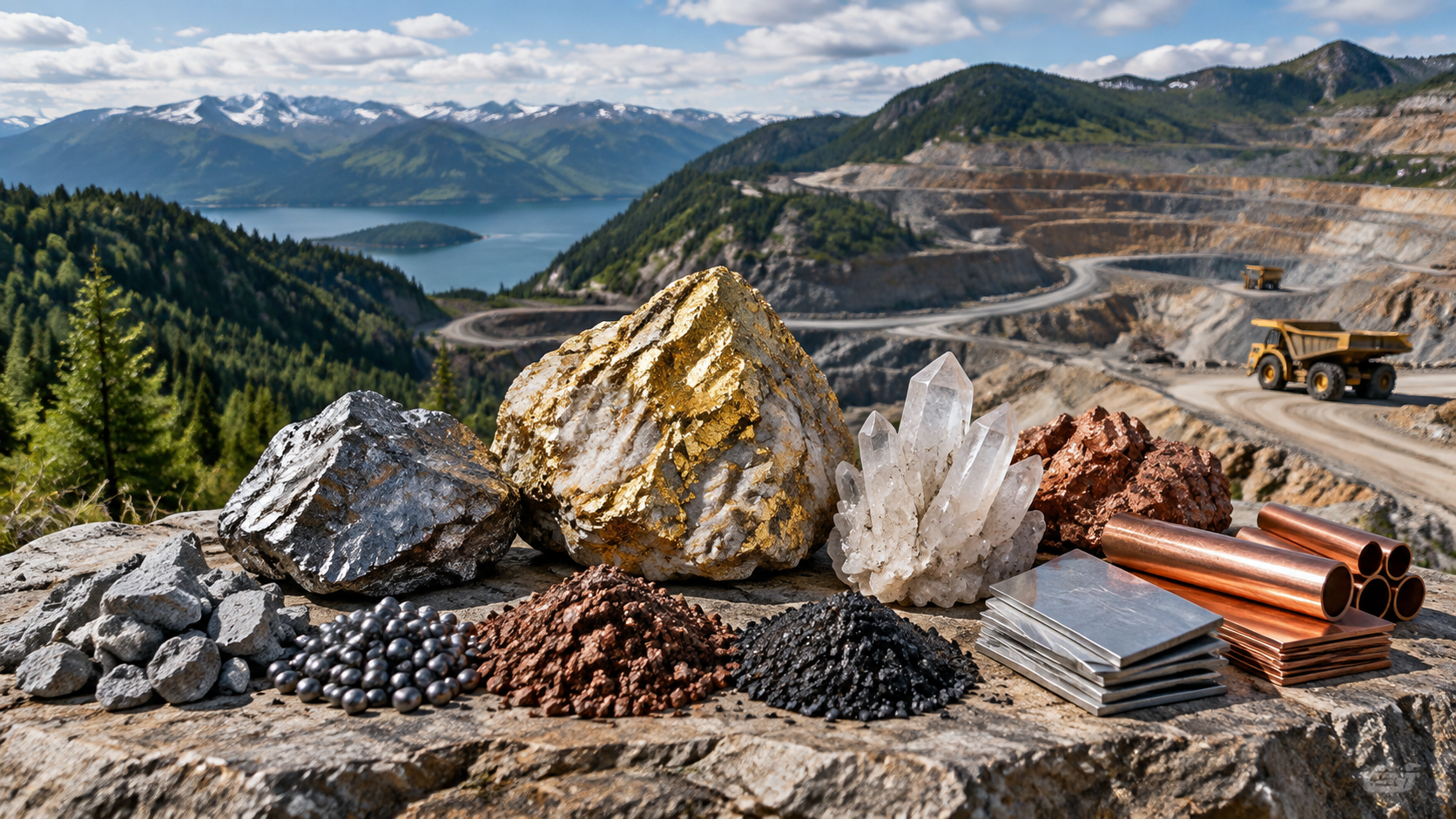
Gold ore is rock or sediment containing gold that may be worth recovering. It contains different materials rather than a single pure substance. Those materials can include quartz, other minerals and gold-bearing mineral particles.
Some gold occurs as native metal. Some is so finely distributed, or so closely associated with other minerals, that it is difficult to recover. A promising sample may contain no visible gold at all.
There is also an important vocabulary detail. In stricter mining usage, ore generally means material that can be extracted economically under specified conditions. Until the evidence supports that conclusion, “gold-bearing rock” may be the more careful description.
Imagine a shopkeeper buying a sack of mixed produce. Finding a few valuable items does not establish the value of the whole sack. Their quantity, condition and sorting costs matter.
Finding gold establishes its presence. Recovering it for more than the full cost of doing so is what creates economic value.
How much gold is there—and how much can we recover?
Two terms help readers look beyond a photograph of a shiny sample: grade and recovery.
Grade measures the concentration of gold in the material. For rock deposits, it is commonly expressed in grams per tonne. Recovery describes the proportion of that gold a processing method actually captures.
Here is a hypothetical example, not a forecast for our operations. Suppose one tonne of material contains two grams of gold. At 80% recovery, processing would capture 1.6 grams—not the full two grams.
That difference matters because revenue depends on gold recovered and ultimately sold, not just gold measured in the ground.
Three checks make the picture clearer:
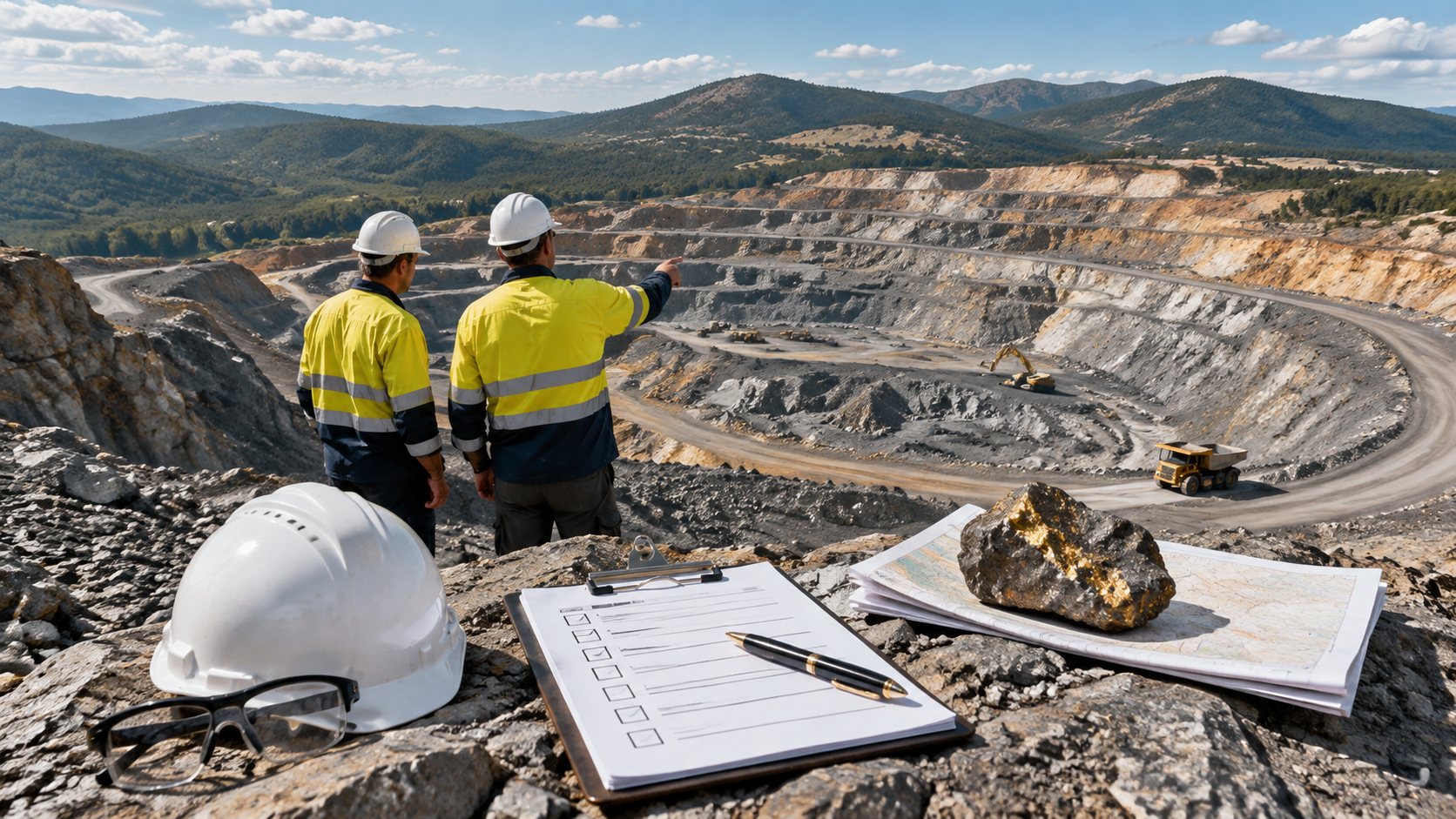
- Representative sampling: does the tested material reflect the wider deposit, rather than one unusually rich piece?
- Laboratory assays: what do tests show about gold concentration?
- Metallurgical testing: how does the material respond to proposed recovery methods?
A small miner might find one excellent sample beside much poorer rock. Testing across the deposit helps reveal whether that sample is typical or exceptional.
Why this matters: more gold in a sample does not automatically mean more profit from a mine.
When does gold-bearing material make economic sense?
Now imagine a baker who knows how many loaves a bag of flour can produce. That is useful, but it does not tell them whether the bakery earns money. Rent, wages, energy and unsold bread still count.
Mining needs the same full-cost thinking.
A simplified starting point is:
Recovered gold × realised selling price = gold sales revenue.
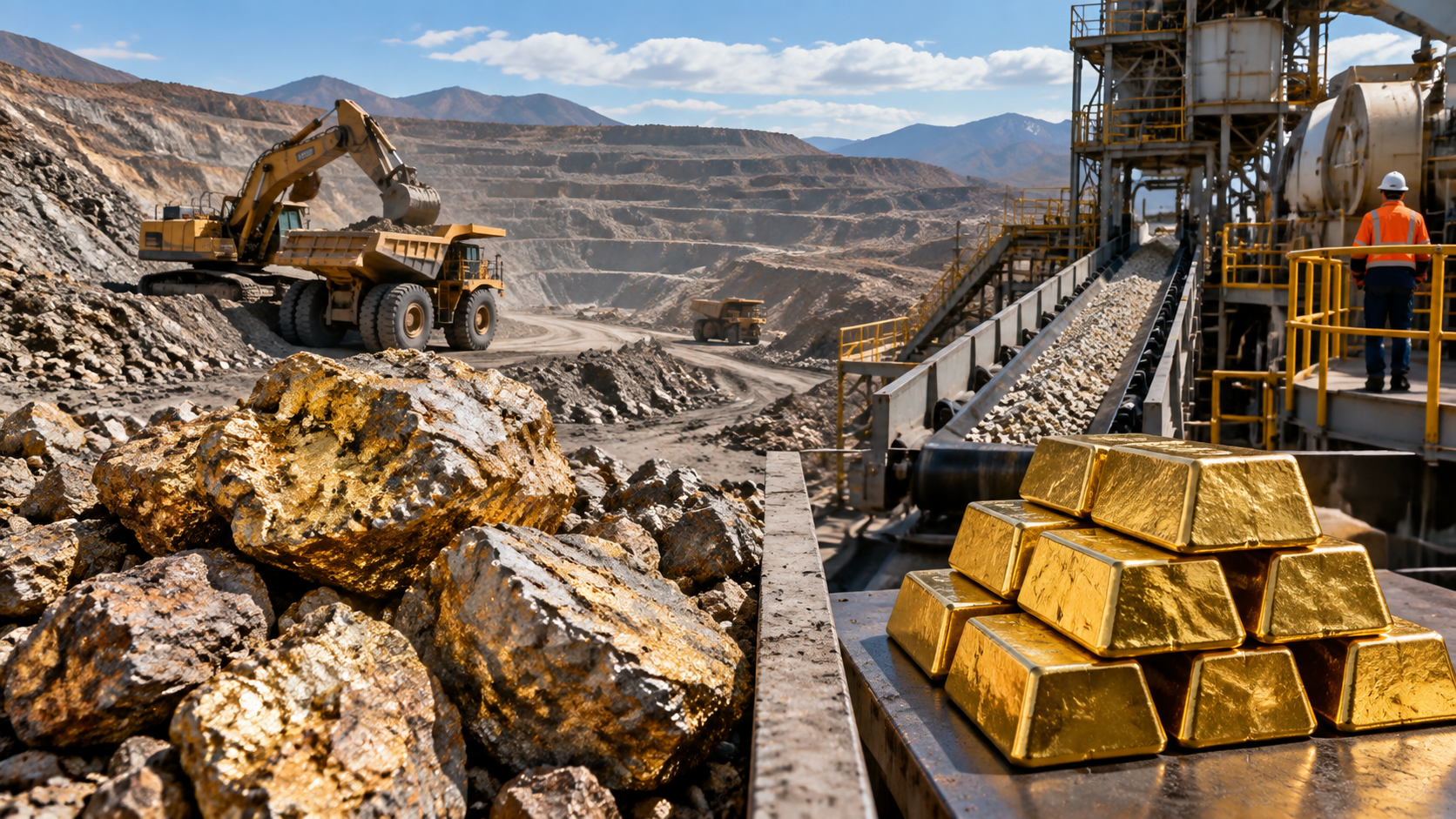
That revenue must be assessed against the relevant costs: moving material, processing it, maintaining equipment, paying workers, supplying energy and water, and transporting and refining the product. Royalties, taxes and other applicable charges can also affect the result.
A complete project assessment goes further. It considers initial investment, ongoing capital needs, environmental obligations, closure costs and the timing of cash flows.
A shallow deposit may be easier to access than a deeper one. Harder rock may demand more crushing energy. Gold trapped within certain minerals may require more complex treatment. These differences explain why two deposits with the same grade can have very different economics.
The cut-off grade is a threshold used to help decide which material is worth processing under stated assumptions. It is not a universal number. Gold prices, costs, recovery and operating constraints can change it.
The practical question is not just “Does it contain gold?” It is “Does the whole plan work?”
What this means for your gold investment decisions
For a young saver, owning physical gold and participating in gold operations answer different needs. Physical gold provides exposure to the metal, alongside buying, selling and holding costs. Mining participation also involves execution: equipment must work, material must be processed and costs must be controlled.
For people who see potential in gold but cannot run a mine themselves, understanding that distinction is empowering.
At Teqwah Capital, we deploy capital across gold mining, physical gold trade, productive machinery and selected real estate. Our participants hold TGC as a proportional participation in our unified pool; they do not choose individual projects.
TGC is not a measure of gold grade or a fixed weight of bullion. Its recorded value is pool value divided by circulating TGC. It is not exchange-traded, and its value can rise or fall.
We invite you to explore the operating journey, not mistake the presence of gold for a promised outcome. Understanding the work behind the metal is a stronger foundation for a decision.
Frequently asked questions
Is gold ore a pure substance?
No. Gold ore is a mixture of gold-bearing material and other minerals or rock components. Pure gold itself is the element Au.
Does every rock containing gold qualify as economic ore?
No. Gold may be present in amounts, forms or locations that make recovery uneconomic. Testing and project assessment are needed.
Does a higher gold grade always mean a better investment?
No. Recovery, access, scale, capital requirements and operating costs also matter. Grade is one input, not a complete investment case.
Ready to look beyond the golden glint? Explore how we connect participation with productive operations at teqwah.com.
Investing involves risk; values can fall. This article is educational and is not financial advice.
Teqwah view
At Teqwah, we put capital to work across gold mining, physical gold trade and productive machinery, with selected real estate also within our unified pool. We welcome people who want to understand the work behind gold: TGC records proportional participation in that pool, and outcomes depend on operating performance rather than the mere presence of metal.
Sources
Investing involves risk. TGC value can fall. This is not investment advice.
Comments
No comments yet — be the first.