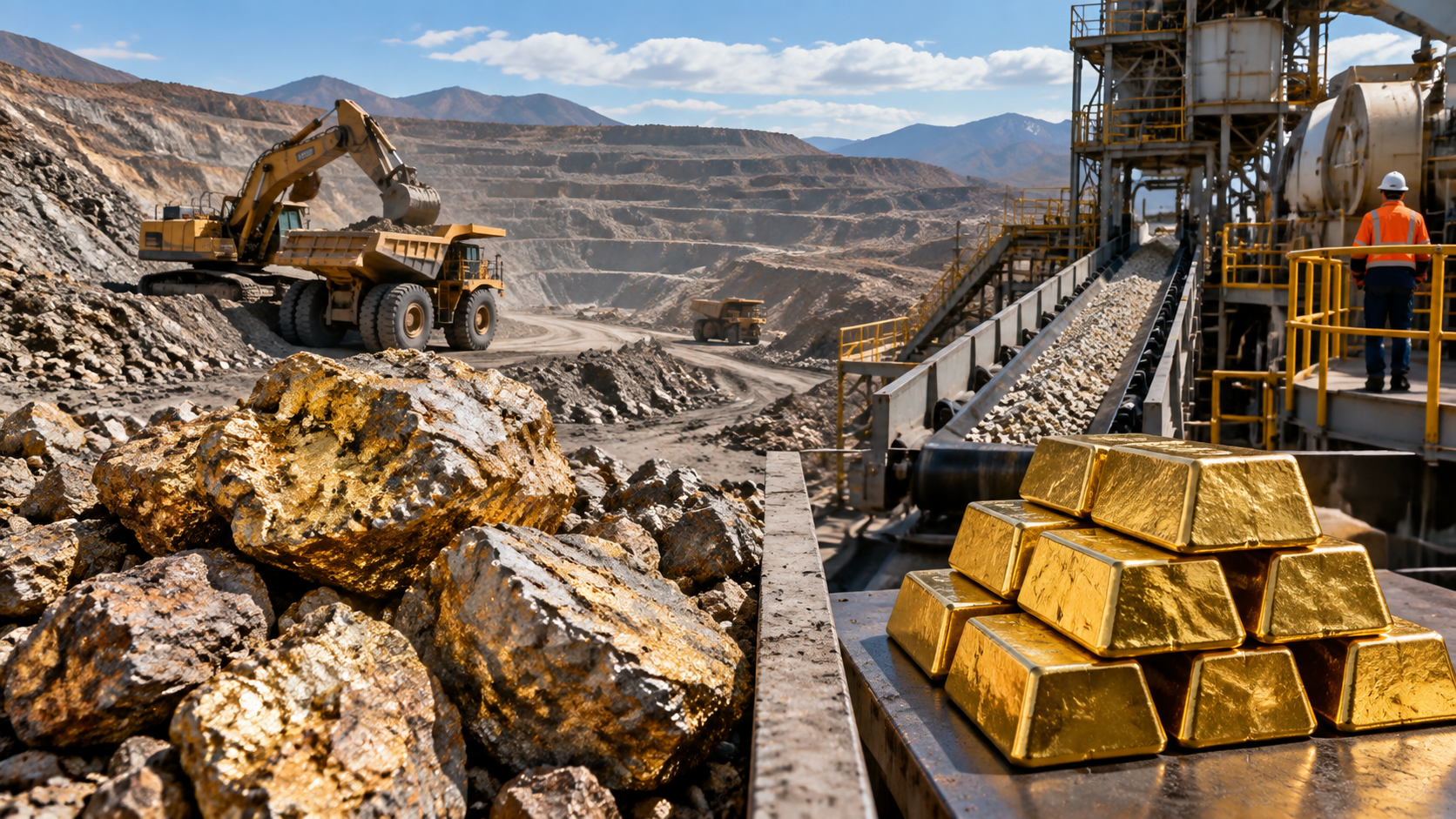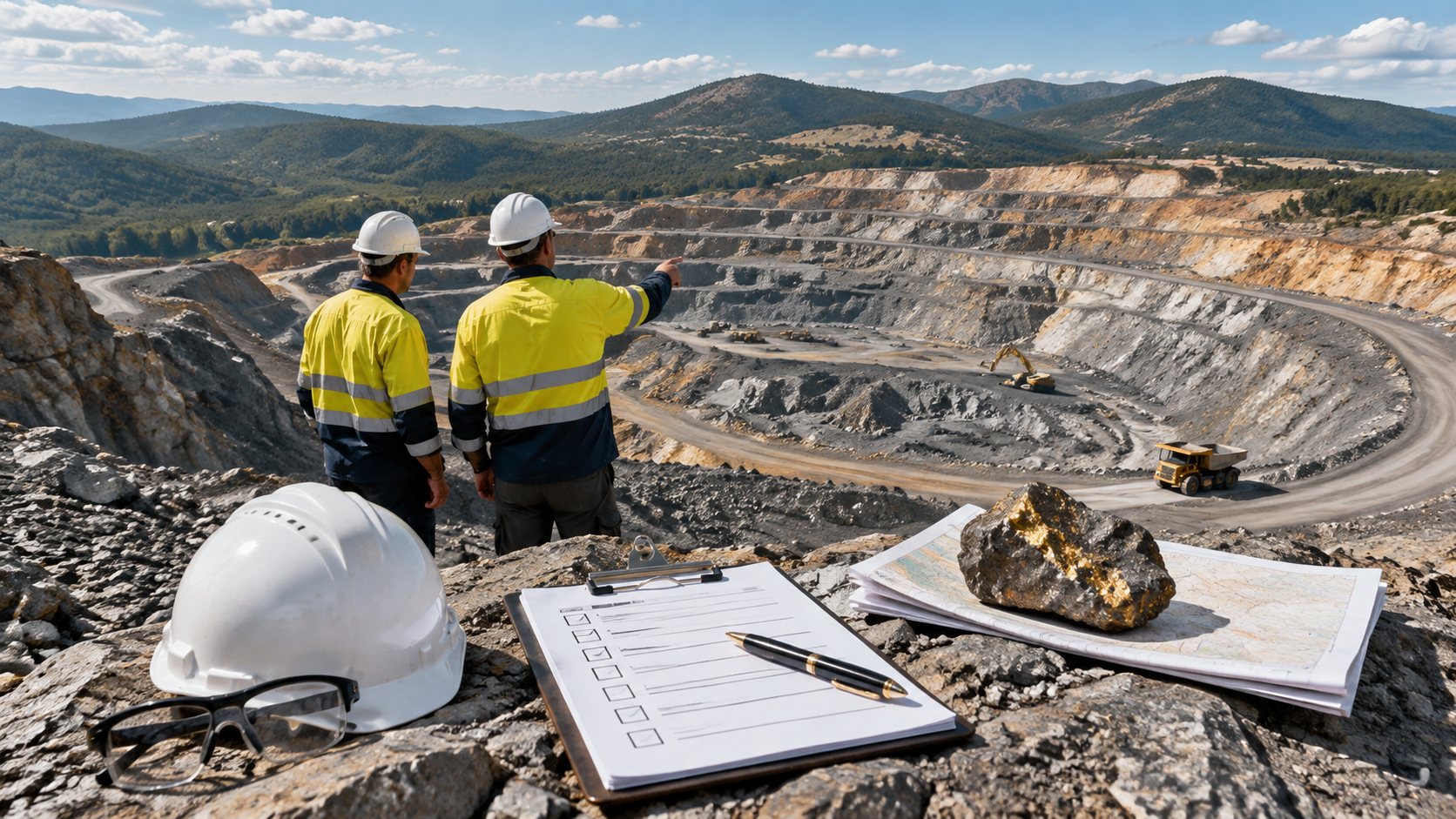
What Is a Mineral? From Everyday Materials to Value
Discover what a mineral is, how minerals become everyday products, and why processing, costs and execution matter to their financial value.
Key takeaways
- A mineral is naturally occurring and has a characteristic chemical composition and ordered internal structure.
- Minerals, rocks and ores are different: economic extractability is central to the meaning of ore.
- Grade, recovery, demand and operating costs help determine whether a mineral can support a viable business.
- Our TGC records participation in a unified operating pool, not direct ownership of a chosen deposit or an exchange-traded gold price.
Look at your phone, a kitchen cable or a gold ring. How did material hidden in the ground become something useful enough for you to buy?
The answer starts with minerals. But it does not end with finding them. A useful material must be identified, extracted, processed and brought to a buyer. Each step adds work, costs and risk.
At Teqwah, we see understanding that journey as the first step toward understanding the opportunity. Let us start with the material itself, then follow the decisions that can turn geological potential into economic value.
What is a mineral, in plain language?
A mineral is a naturally occurring substance with a particular chemical composition and an ordered internal structure. In geology, minerals are generally inorganic solids: their atoms follow a repeating arrangement rather than sitting randomly together.
Think of composition as the ingredients and structure as how those ingredients are assembled. Both determine how a mineral behaves.
Quartz, for example, consists of silicon and oxygen. Native gold is a mineral made predominantly of the element gold. Calcite, common in limestone, is calcium carbonate.
Structure matters just as much as ingredients. Diamond and graphite are both forms of carbon, yet their different atomic arrangements give them very different properties. One can cut hard materials; the other helps a pencil leave a mark.
Why this matters: identifying a mineral tells us more than its name. It helps explain its possible uses and the work needed to make it useful.
Is it a mineral, a rock or an ore?
Imagine a small miner lifting a heavy, glittering stone. Has the miner found something valuable? Appearance alone cannot answer that question.
Three words help us separate the material from the opportunity:
- Mineral: a naturally occurring substance with characteristic chemistry and structure, such as quartz or native gold.
- Rock: an aggregate of one or more minerals or other geological materials. Granite commonly contains quartz, feldspar and mica.
- Ore: naturally occurring material from which a valuable component can be extracted economically under relevant conditions.
That last distinction is crucial. Rock may contain gold without being economical to mine. The concentration may be too low, the gold too difficult to recover, or transport too expensive.
An ore deposit is therefore not simply a geological discovery. Its economic status depends on factors such as prices, technology, costs and applicable requirements.
Why this matters: “contains gold” and “can generate a profit” are two very different statements.
How do minerals reach everyday products?
A shopkeeper buying a refrigerator is not buying a pile of ore. The shopkeeper is buying the result of many stages of transformation.
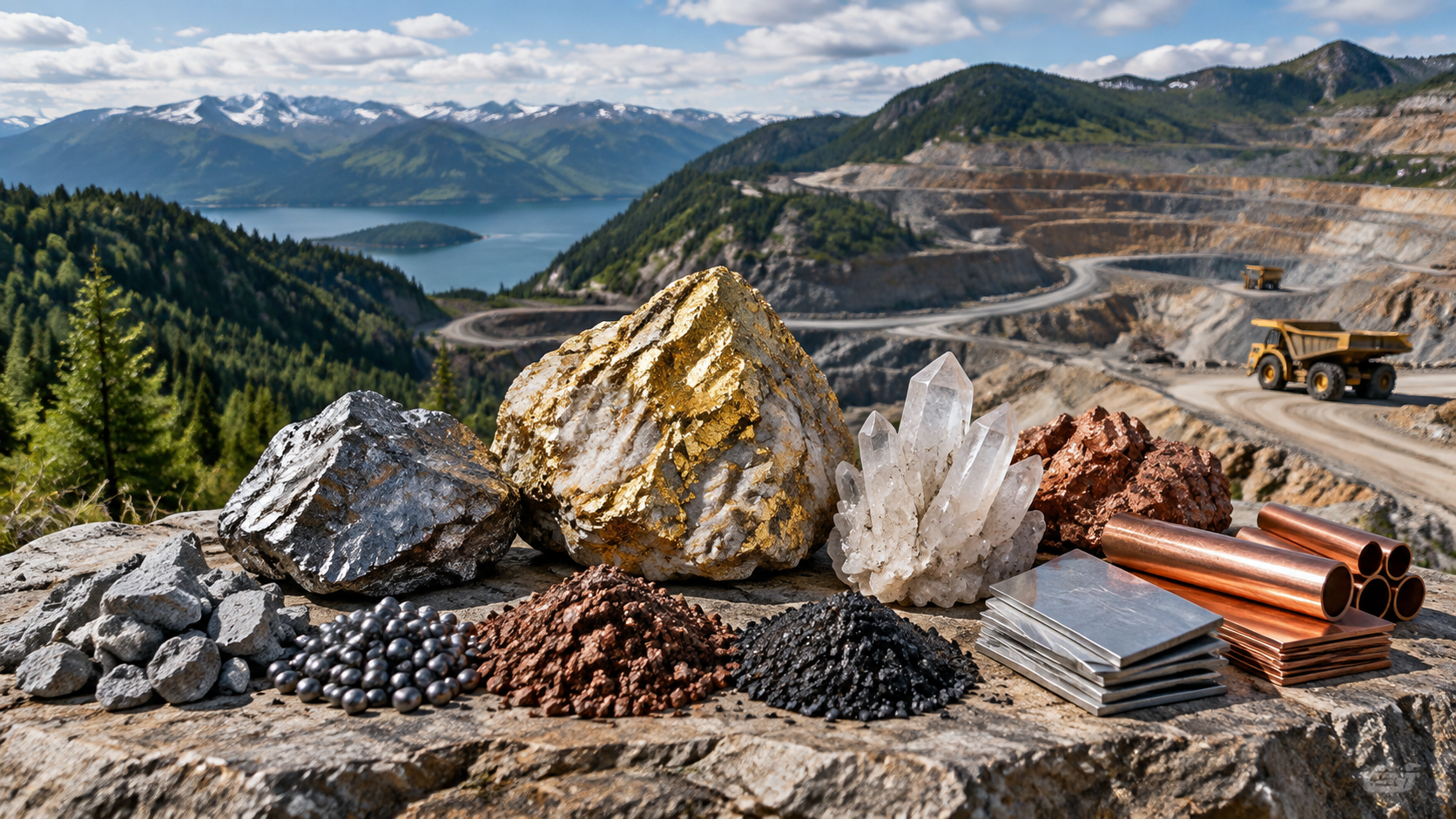
Copper-bearing minerals can supply metal for electrical wiring. Iron-bearing minerals provide raw material for steel used in machinery. Gold is used in jewellery and certain electronic components because of properties including conductivity and resistance to corrosion.
Not every mineral becomes a metal. Gypsum is used in plaster products, while quartz supplies silica for glassmaking.
The mineral value chain is the sequence connecting the deposit to the customer. It usually involves exploration and assessment, extraction, processing, refining where needed, and transport or sale. Different materials follow different routes.
For a small miner, the challenge might be separating valuable particles from unwanted material. For a processor, it might be meeting a buyer’s purity specification. For a trader, it might be verifying quality and arranging documented delivery.
A mineral is the starting material; economic value depends on what people can reliably and responsibly do with it.
What makes a mineral commercially valuable?
Suppose two operations work with gold-bearing rock. One has a higher gold concentration but difficult processing. The other has lower concentration but easier access and simpler recovery. The richer rock does not automatically produce the better business.
We encourage readers to look beyond the headline material and ask practical questions:
- Grade: how much valuable material is present in the rock?
- Recovery: how much of it can the process actually capture?
- Costs: what do labour, power, fuel, maintenance and transport consume?
- Demand and quality: will buyers accept the output, and on what terms?
- Operating conditions: can work proceed lawfully, safely and with appropriate environmental controls?
A simplified example makes this clearer. If processing captures only part of the gold present, the operation cannot sell all the gold identified in the rock. If fuel or maintenance costs rise, less revenue may remain after expenses.
Why this matters: revenue is not profit, and material in the ground is not money available for distribution.
What should a future participant understand?
For a young saver, believing in gold’s usefulness is different from understanding an investment connected to gold operations. Physical bullion, a mining business and a participation in an operating pool do not provide identical exposure.
At Teqwah, our core activities are gold mining and physical gold trade, supported by productive machinery and selected real estate. We deploy equipment and operating capital into mining activity and manage allocation internally.
Our TGC is a divisible participation unit recording a proportional share of our unified pool. Its value is recorded pool value divided by circulating TGC. It is not exchange-traded, and its recorded value is not a traded market price. Participants do not select individual projects.
For people who see potential in gold but cannot run a mine themselves, that is the opportunity we are working to build: participation connected to productive operations. The opportunity is exciting precisely because value must be created through execution, not assumed from the presence of a mineral.
Before participating, understand the fees, lock-up conditions, payout arrangements and possibility of losses. A useful material does not remove investment risk.
Frequently asked questions
Is gold a mineral or a metal?
Both. Gold is a chemical element and a metal. Naturally occurring native gold also qualifies as a mineral because it has characteristic composition and crystalline structure.
Are all minerals valuable enough to mine?
No. Usefulness alone does not establish commercial viability. Concentration, recovery, demand, infrastructure and operating costs help determine whether extraction makes economic sense.
Does a higher gold price ensure mining profits?
No. A higher selling price may help revenue, but output, recovery, downtime and expenses still affect the result. Investment outcomes also depend on the participation’s terms.
Keep following the journey from material to productive work. Explore Teqwah →
Investing involves risk and values can fall. This article is educational, not financial advice.
Teqwah view
At Teqwah, we connect capital with gold mining, physical gold trade and productive operations. We want participants to understand the work behind the material, because our recorded outcomes depend on operating performance—not simply on gold being valuable.
Sources
Investing involves risk. TGC value can fall. This is not investment advice.
Comments
No comments yet — be the first.