
Gulf Oil Finds New Ways Out, but Hormuz Still Carries a War Premium
Crude exports have recovered through alternative routes and offshore transfers, weakening Iran’s leverage without removing the risks and costs facing shippers.
Key takeaways
- Gulf crude exports reached at least 16.5 million barrels a day during September 1–28, matching the prewar average excluding Iran.
- About 40% of September exports bypassed Hormuz through pipelines and other routes via Saudi Arabia and the UAE.
- More than 70% of crude crossing Hormuz in August changed tankers offshore in the Gulf of Oman, according to Kpler.
- Shipping threats, insurance costs and military protection continue to support a war premium in oil prices.
- The crude recovery has not resolved the refinery bottleneck behind high diesel prices.
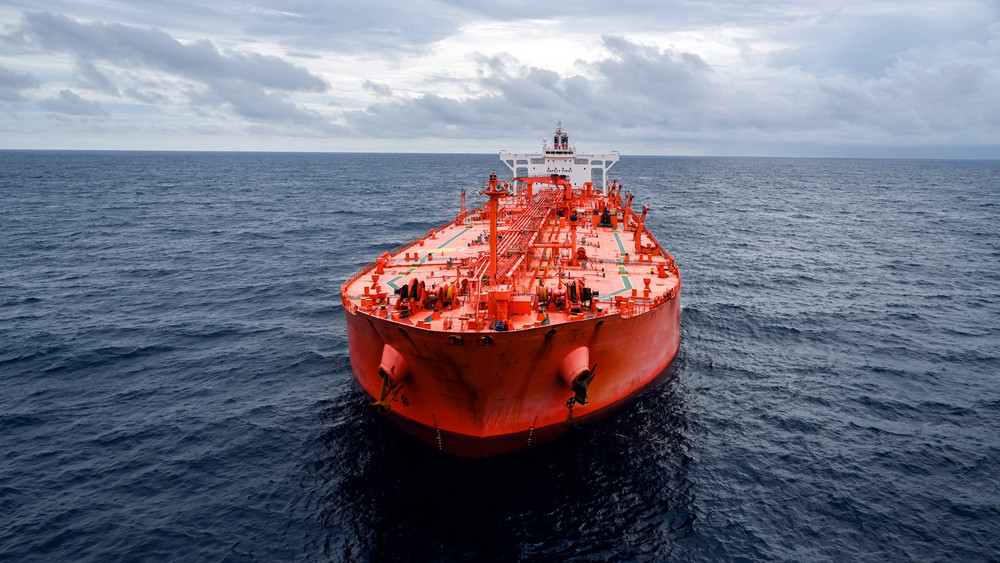
Persian Gulf crude is reaching markets at close to its prewar pace, but the journey has become anything but normal. Some ships ferry oil through the Strait of Hormuz to larger tankers waiting outside the Gulf. Others sail without insurance. According to OilPrice (direct), publishing reporting by RFE/RL, these costly workarounds are helping restore supplies while gradually reducing Iran’s ability to use the waterway as a pressure point.
At least 16.5 million barrels of crude a day left the region between September 1 and 28, according to commodity analytics firm Kpler. That matched the prewar average when Iran is excluded. For buyers, the recovery eases some immediate pressure on supply. But the headline volume conceals a reshaped export system, with producers and shipping companies relying on routes and arrangements that were not in place before the war.
More oil takes the long way around
Before the war, 83% of the region’s crude passed through Hormuz. In September, 40% avoided the strait, moving instead through pipelines and other routes via Saudi Arabia and the United Arab Emirates. The remaining 60%, or about 9.9 million barrels a day, still crossed the chokepoint. Pipelines, Red Sea routes and offshore transfers have become central to keeping exports moving.
Even the oil that uses Hormuz often changes ships before continuing its journey. Kpler said more than 70% of crude crossing the strait in August, the latest month available for that measure, was transferred between tankers offshore in the Gulf of Oman. Such ship-to-ship transfers allow some operators to limit their exposure inside the Gulf, but they also show how far trade remains from its old operating pattern.
The recovery suggests Iran’s power to disrupt shipping has weakened, rather than vanished. Tehran never formally controlled the strait; its influence rested on making passage dangerous enough to deter shipowners or raise their costs. Mohammad Ghaedi, a lecturer at George Washington University, told RFE/RL’s Radio Farda that the current traffic volume was already beyond what Iranian authorities considered acceptable.
Supply recovers, costs stay elevated
Energy markets analyst and author Ellen R. Wald told RFE/RL that Iran’s capacity or willingness to attack ships appeared to be declining, allowing vessels to pass with US military protection. Yet some operators are taking substantial risks, including sailing without insurance or under unusually difficult conditions. Her assessment was clear:
Higher flows do not mean normal shipping has returned; the risks and costs remain substantial, according to Ellen R. Wald.
Those conditions help explain why recovering exports have not brought oil prices back to prewar levels. Wald expects a continuing war premium—the extra cost associated with conflict risk—as threats to vessels, expensive insurance and reliance on US protection persist. Meanwhile, the refinery bottleneck behind the global diesel price surge remains. European Union figures released on October 1 showed record diesel pump prices, while US prices have also climbed despite the crude export recovery.
What matters next is whether these alternative routes and shipping arrangements can keep delivering oil, and at what cost. Ghaedi does not expect Iran to attack regional energy infrastructure, although he warned that portrayals of Tehran as having lost control of Hormuz could provoke a response. For now, the export rebound points to eroding Iranian leverage—not its disappearance—and continued dependence on military cover and costly workarounds leaves the strait a vulnerability.
Sources
Comments
No comments yet — be the first.