Russia’s War Budget Expands as Businesses Pull Back
Falling investment, weaker energy revenues and refinery disruptions are testing Russia’s economy even as the Kremlin commits more money to the war.
Key takeaways
- Only 9% of major businesses surveyed said they had resources to join Putin’s proposed investment push.
- Military spending is set to rise 27% next year to 17.1 trillion rubles.
- The federal deficit reached 5.8 trillion rubles through August, while oil and gas revenues fell 16.7%.
- Refinery strikes have contributed to fuel shortages and extended diesel export restrictions.
- Higher oil prices offer a financial buffer, but the direction of US sanctions remains uncertain.
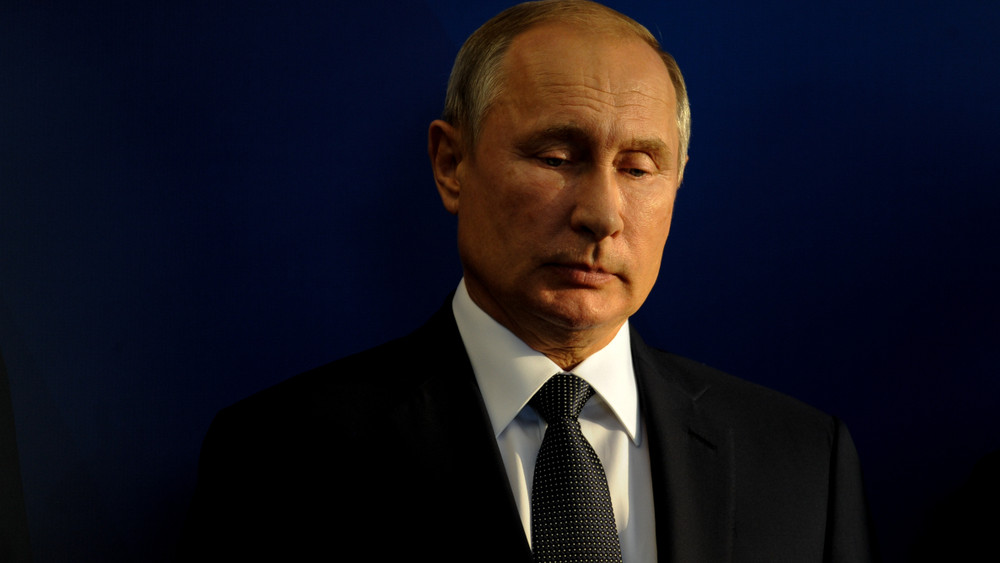
Only 9% of major Russian businesses surveyed say they have the resources to join President Vladimir Putin’s proposed investment push. Yet Moscow plans to raise military spending by 27% next year. Those figures, reported by OilPrice (direct), capture the widening gap between the Kremlin’s spending ambitions and the ability of businesses to finance growth.
Russia’s government expects economic growth of about 0.6% this year, according to the report. Interest rates remain at 14%, making borrowing expensive, while investment has declined for five consecutive quarters. Corporate profits fell 13.3% in the first half, and one in three Russian companies was operating at a loss. The business survey figures cited by OilPrice suggest that companies see little prospect of a quick recovery.
Businesses face a tighter squeeze
The investment constraint goes beyond the cost of money. OilPrice reports that VTB chief Andrei Kostin warned that government asset seizures were making Russian businesses reluctant to invest. The state has seized about 7.6 trillion rubles in assets since 2022, according to the report. In the survey by the Russian Union of Industrialists and Entrepreneurs, just 9% of major businesses said they could fund participation in the proposed investment cycle, while 52% expected economic conditions to worsen through year-end.
OilPrice reports that VTB chief Andrei Kostin warned government asset seizures were making Russian businesses afraid to invest.
The government’s finances are also under pressure. The federal deficit—the gap between spending and revenue—reached 5.8 trillion rubles through August, while oil and gas revenues declined 16.7%. Moscow has roughly doubled its expected 2026 deficit to more than 3% of gross domestic product, the measure of economic output. Nevertheless, its new budget raises military spending to 17.1 trillion rubles next year, with higher taxes, additional borrowing and cuts elsewhere helping to pay the bill.
That does not mean Russia is running out of money to wage war. Unemployment remains very low and wages are rising even after inflation, OilPrice reports. Higher oil prices could also add as much as 1 trillion rubles this year to the readily available portion of the National Wealth Fund, a state financial reserve. Those buffers help explain how Moscow can maintain its military commitments while businesses face deteriorating conditions.
Fuel shortages cloud the energy outlook
Ukrainian strikes on Russian refineries have added a more immediate strain. OilPrice says attacks around Moscow, Samara and Bashkortostan have contributed to domestic fuel shortages, prompting Russia to extend restrictions on diesel exports to retain more supply at home. Putin also restricted access to oil production, refining and transportation data on September 28. That makes it harder to assess the damage to Russia’s energy system and the extent of any supply disruption.
The external pressure remains uncertain. According to OilPrice, President Donald Trump signed sanctions legislation on September 18 giving him broader powers to target Russian energy revenues and countries buying Russian oil. But Russian envoy Kirill Dmitriev also met US Treasury and Energy officials in Washington to discuss possible energy projects after the war. Former US sanctions coordinator Daniel Fried said Trump had stronger tools to squeeze oil income but was sending mixed signals about using them.
The next test is whether energy income can keep cushioning the budget as military costs rise. The reach of US sanctions, the availability of diesel and businesses’ willingness to invest will help show how much room Moscow retains. Restrictions on energy data, however, will make that picture harder for markets to read.
Sources
Investing involves risk. TGC value can fall. This is not investment advice.
Comments
No comments yet — be the first.