Why Recycled Gold Matters to Supply and Responsible Sourcing
Discover how recycled gold returns to market, why mining is only one source of supply, and what responsible sourcing means for both.
Key takeaways
- Recycled gold returns existing metal to the market through old jewellery, manufacturing scrap and industrial materials.
- New mine production is only one source of gold supply; recycling depends on collection, economics and owners’ willingness to sell.
- Properly refined recycled gold can meet the same purity specifications as newly mined gold, but recovery costs affect transaction economics.
- Responsible sourcing requires scrutiny of both newly mined and recycled gold; a recycled label alone does not prove responsible origin.
Could the broken bracelet in your drawer become part of a new gold bar? Yes—but its journey involves more than melting metal.
Old jewellery, manufacturing leftovers and discarded electronics can all contain gold worth recovering. That means the gold market draws on more than what miners extract today. It also draws on metal already above ground.
At Teqwah, we see understanding that journey as a useful first step towards understanding gold businesses. The opportunity is not simply owning something valuable. It is knowing how value is recovered, assessed and moved responsibly.
Gold can have many lives. Every journey back to market still deserves questions about its source.
What is recycled gold—and where does it come from?
Imagine a jeweller buying an unwanted necklace. The clasp is broken, and the design no longer appeals to its owner. Yet the gold inside still has a use.
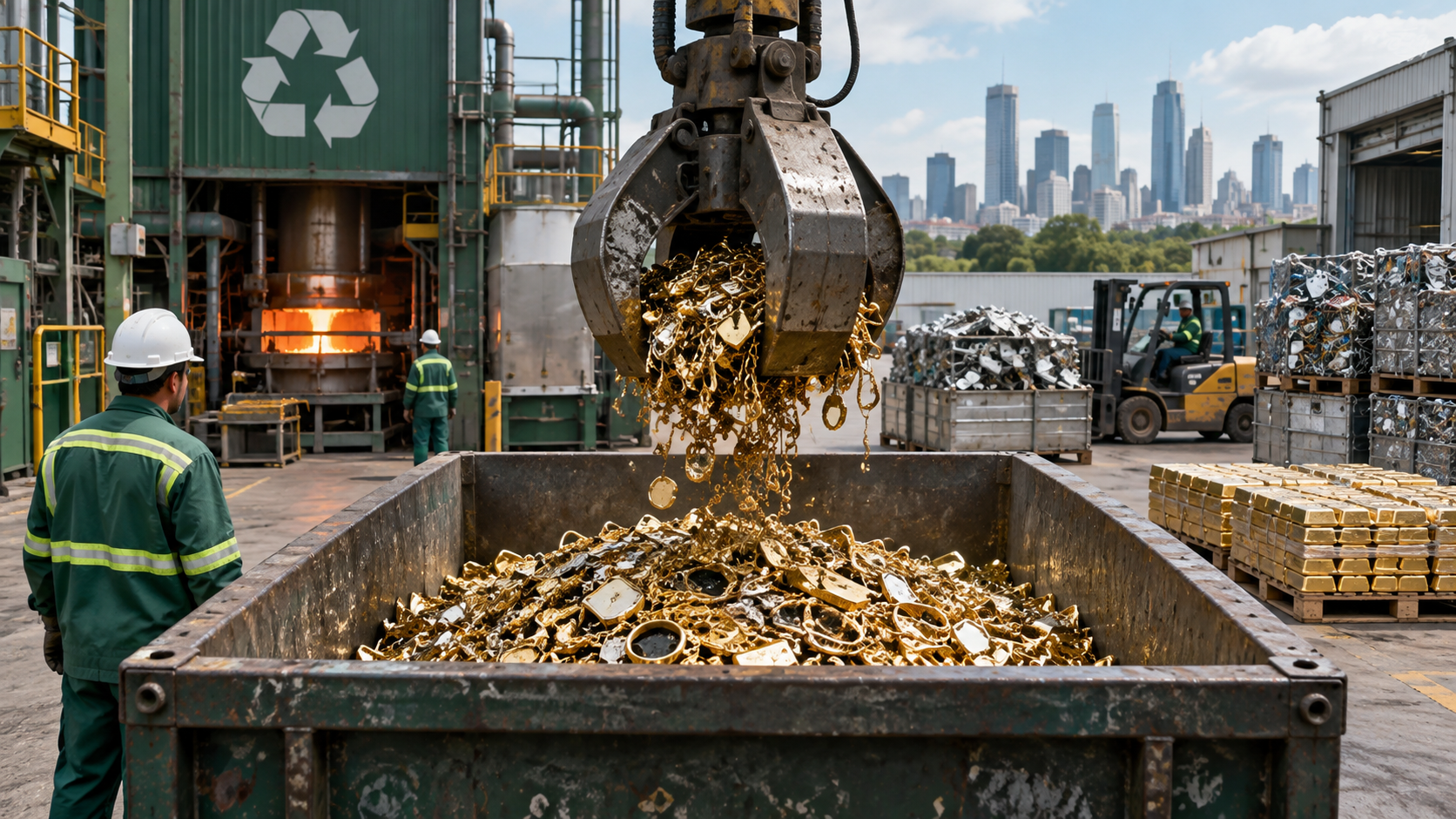
Recycled gold is gold recovered from existing products or scrap and processed for reuse. Common sources include:
- Old jewellery: rings, chains and other pieces sold for their metal content.
- Manufacturing scrap: offcuts, filings and residues from making gold products.
- Industrial and electronic scrap: components containing gold, such as certain electrical contacts and circuit boards.
These sources are not equally easy to process. A necklace may contain a relatively concentrated amount of gold. An electronic device may hold only tiny quantities mixed with many other materials.
Gold does not lose its identity because it has been used before. Once properly refined and tested, recycled gold can meet the same purity specifications as newly mined gold.
Why this matters: “recycled” describes a supply route, not an inferior grade of gold.
Why new mines are only part of gold supply
A young saver following gold headlines might assume that more supply always means more mining. Recycling changes that picture.
Mining brings additional gold out of the earth. Recycling returns existing gold to circulation. Both can supply manufacturers, jewellers and bullion markets, but they respond to different pressures.
A mine depends on geology, equipment, permits, labour and operating costs. A household deciding whether to sell old jewellery faces another calculation: the offered price, a need for cash and the piece’s sentimental value.
Higher gold prices can encourage selling, but they do not make every owner willing to part with their gold. Nor can every piece of industrial scrap be collected and processed economically.
Recycling therefore adds flexibility to supply without creating an unlimited stream of available metal. Gold sitting in a drawer is not market supply until someone chooses to sell it and a buyer can process it.
For readers assessing gold opportunities, the lesson is simple: watch the whole supply chain, not just mine output. No single supply change determines the gold price by itself.
How old gold becomes usable metal again
Suppose a shopkeeper receives a bag of mismatched earrings. Before offering a price, the shopkeeper needs to understand what is actually there.
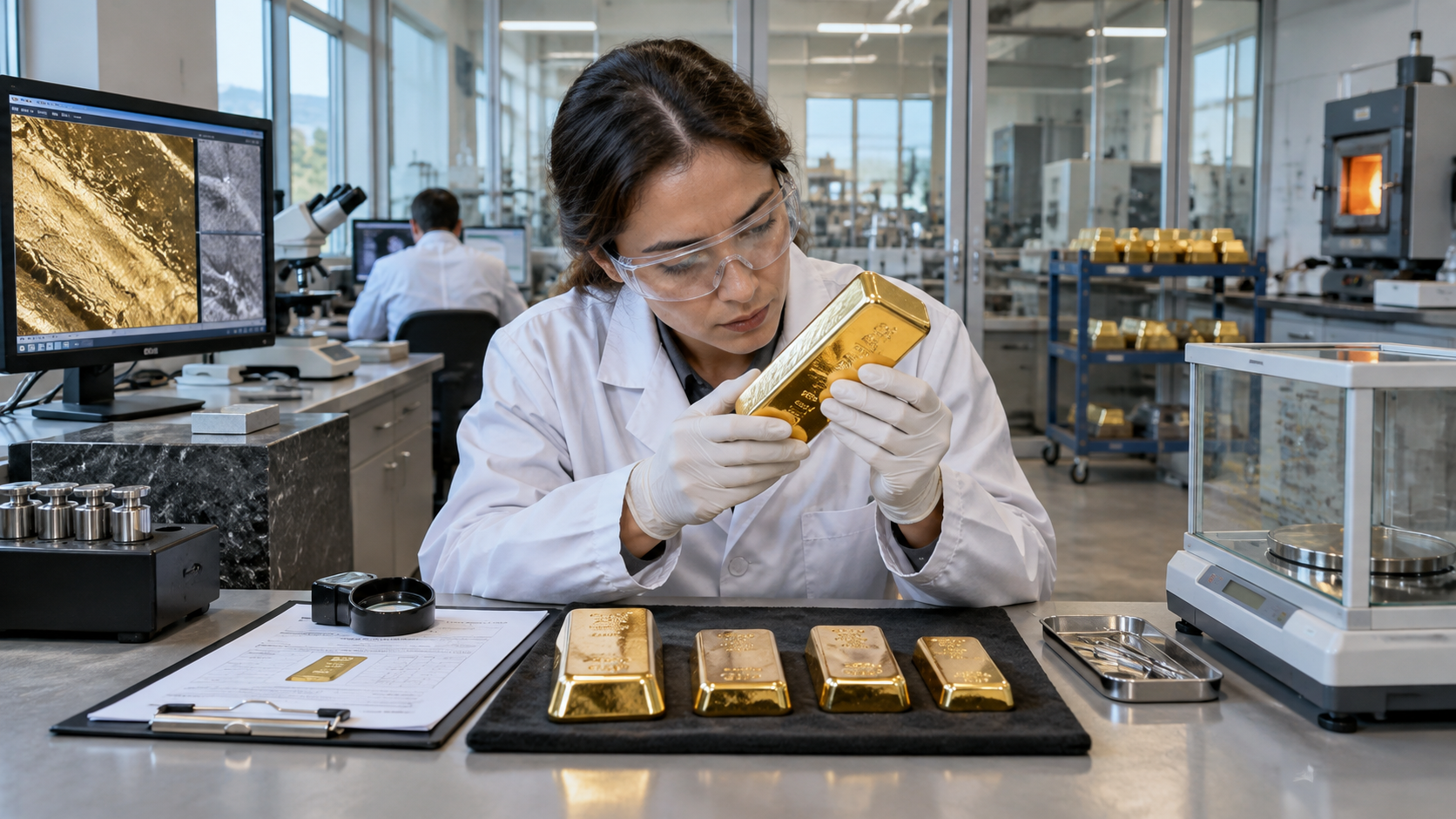
The process usually involves collecting and sorting the material, testing its gold content, and refining it where necessary. Refining separates gold from other metals and impurities. An assay is a test that measures precious-metal content.
Weight alone is not enough. A jewellery item weighing ten grams does not necessarily contain ten grams of pure gold: it may include other metals, stones or non-gold parts.
The seller’s payment can also reflect testing, processing and refining charges, as well as the buyer’s commercial margin. A headline gold price is therefore not automatically the cash offer for an old ring.
Industrial recovery adds another challenge. Small amounts of gold must be separated from complex materials, using suitable equipment and safeguards for workers and waste.
Why this matters: valuable metal does not automatically mean a profitable transaction. Recovery costs, accurate testing and disciplined execution matter.
Does recycled automatically mean responsibly sourced?
No. Recycling can reduce the need for fresh extraction for the gold it supplies. But an environmental benefit is not a substitute for checking origin or business conduct.
Consider a buyer offered gold described only as “recycled scrap.” That label does not establish who owned it, whether it was stolen, or whether newly mined material has been misrepresented as recycled.
Responsible sourcing means examining risks along the supply chain and responding to them. Useful questions include:
- Who supplied the material, and what records support its origin?
- Do the description, quantities and transaction history make sense?
- How are worker safety, processing chemicals and waste managed?
- What happens when documents are incomplete or something looks unusual?
Newly mined gold needs scrutiny too, including the circumstances of extraction, labour conditions and relevant legal requirements. The questions differ by source, but neither route deserves an automatic clean bill of health.
Recycling also uses energy and can involve hazardous processes. Its environmental footprint depends on the material and recovery method. We should avoid treating every recycled product as equally low-impact—or every label as proof.
What this means for your view of gold investment
At Teqwah, our activities include gold mining and physical gold trade, alongside productive machinery and selected real estate. Understanding recycling helps explain the wider market around those activities; it does not establish that we operate a recycling business.
For people who see potential in gold but cannot run a mine themselves, our TGC participation connects them to one unified pool. Participants do not select individual projects. TGC is a divisible participation unit, not an exchange-traded gold price.
The distinction matters: a gold-related business depends on operating results, not just the metal’s appeal. That is the opportunity we are working to build through productive operations—and the reason we encourage readers to understand both the assets and the risks.
Frequently asked questions
Is recycled gold real gold?
Yes. Its previous use does not change the element itself. Testing and refining establish the purity of the recovered material.
Can recycling replace gold mining completely?
Recycling contributes supply, but collection, recovery costs and owners’ willingness to sell limit availability. It is not an unlimited substitute for mining.
Is recycled gold always the more responsible choice?
Not automatically. Origin, processing conditions and credible documentation matter for recycled and newly mined gold alike.
You can keep learning with us and explore how our participation model works at Teqwah.
Investing involves risk and values can fall. This article is education, not financial advice.
Teqwah view
At Teqwah, we bring gold mining, physical gold trade and productive assets together through one TGC participation. We believe understanding gold’s different supply routes helps readers see why assessment, documented channels and operating execution matter. We invite you to learn how our model works, with the understanding that results are variable and value can fall.
Sources
Investing involves risk. TGC value can fall. This is not investment advice.
Comments
No comments yet — be the first.