Dangote’s $1.62 Billion IPO Could Open an Exit Door for Nigerian Startups
The refinery’s planned share sale will test whether local investors can supply the market depth that Nigeria’s venture-backed companies have long lacked.
Key takeaways
- Dangote Refinery’s planned $1.62 billion IPO will test the depth of demand from Nigerian investors.
- The offering targets up to 10 million individual investors, compared with about 2.7 million currently in Nigeria.
- Nigeria has listing frameworks for technology companies but has not yet produced a venture-backed IPO.
- Currency exposure, valuation differences and founders’ limited familiarity with listings remain barriers.
- A successful offering could broaden the investor base, but sustained trading will be the more important test.
Nigeria has yet to see a venture-backed startup go public. Now, a refinery is preparing a share sale that could help change how founders and their investors think about leaving a business. Dangote Refinery’s planned $1.62 billion initial public offering, or IPO—the first sale of shares to public investors—could test whether Nigeria has enough local money to make a domestic listing a credible exit, according to TechCabal.
The scale is striking. Nigerian banks raised ₦4.65 trillion ($3.49 billion) over 24 months in a capital-raising exercise completed in March. Local investors supplied $2.54 billion. Dangote Refinery is seeking almost half the banks’ total in one offering. It plans to sell 4.1 billion shares and reach as many as 10 million retail investors, meaning individual buyers, through digital investment platforms. Nigeria currently has about 2.7 million such investors.
A missing route for startup investors
For investors who fund young companies, growth is only part of the story. They also need a way to sell their stakes and realise returns. In Nigeria, those choices have largely meant selling the company, finding another private buyer or waiting for another funding round. Mergers and acquisitions remain Africa’s main route out, with 63 deals recorded in the first half of 2026. The African Private Capital Association recorded just one venture-capital-backed IPO exit across the continent in 2025.
Nigeria already has listing routes for smaller and technology businesses. The Nigerian Exchange Limited, or NGX, operates a Growth Board and a Technology Board, while the Nigerian Startup Act includes provisions intended to help labelled startups list. Yet a 2025 report by venture law practice TLP Advisory found that 53% of founders surveyed had not considered an NGX listing because they did not understand the process or its benefits.
Money brings another obstacle. TLP found that 76.5% of funded startups raise capital in dollars, although much of their revenue comes in naira. Foreign investors generally seek dollar returns because the naira can lose value. Valuations may also disappoint: TLP illustrated how a technology company worth $100 million privately could potentially command only $60 million on the NGX. Local investors’ focus on earnings and dividends may not suit fast-growing technology businesses.
A bigger market, but not a ready-made solution
Dangote’s listing could add roughly $60 billion to the exchange’s equity-market value. Against the ₦163.11 trillion ($122.72 billion) recorded on September 30, that would bring it closer to $200 billion. It would also leave one company representing about a third of the market, highlighting the risk of relying heavily on a single business.
Startups cannot easily copy Dangote’s approach. The refinery belongs to a mature conglomerate with assets, revenue and an operating record investors can assess. Its offering will cost at least $31.22 million and involve more than 50 investment intermediaries. But a wider base of active shareholders could benefit businesses such as Flutterwave, which has previously discussed an IPO.
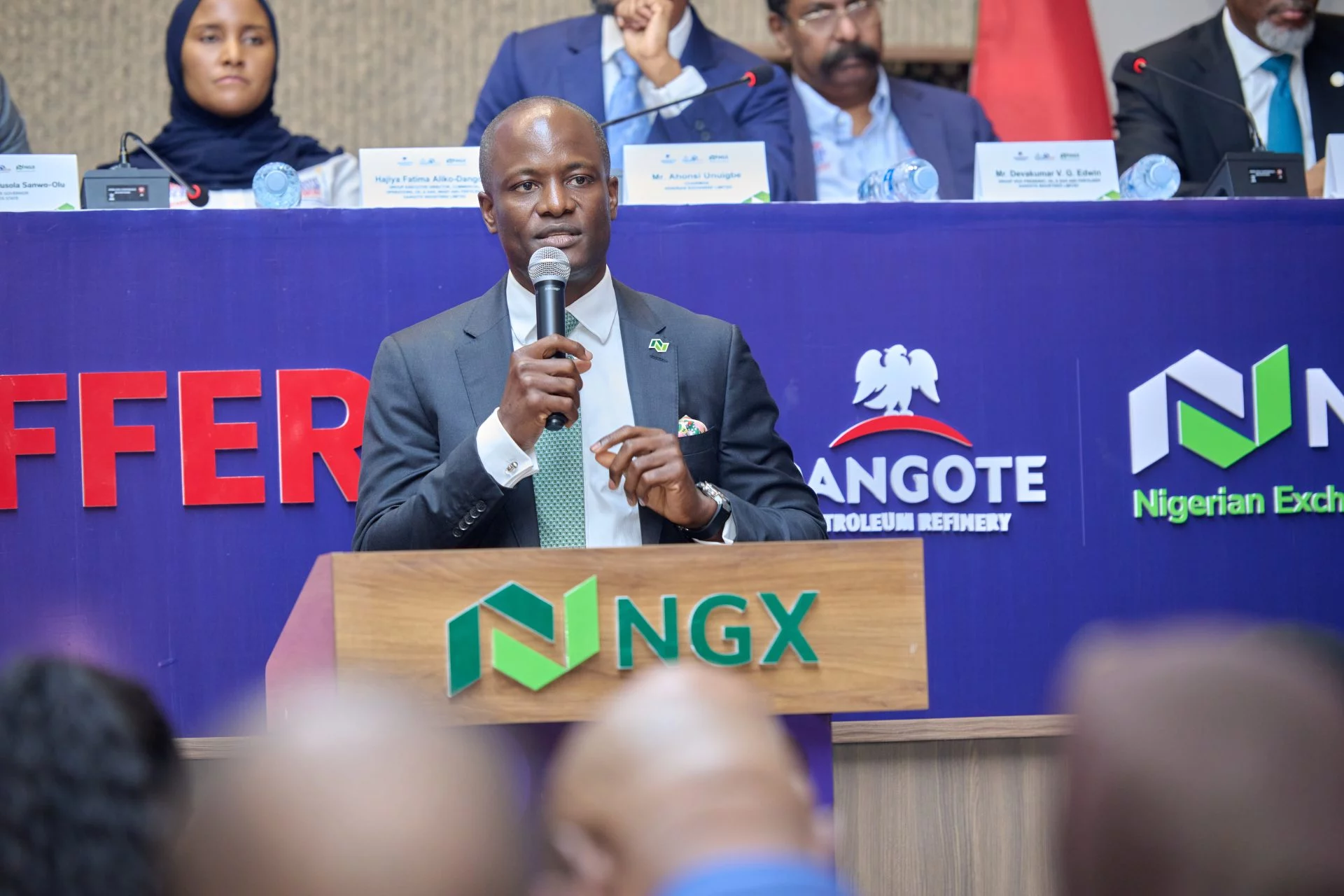
Nigeria’s markets still face obstacles, but they are evolving, NGX Group Managing Director Temi Popoola said in April.
The exchange says reforms introduced since 2023 have improved how prices are set and how capital moves. Currency risks and valuation gaps remain. What matters next is not simply whether Dangote completes a large sale, but whether investors continue buying and trading its shares afterward. Sustained demand would offer stronger evidence that Nigerian public markets can become an alternative exit route for startup investors.
Sources
Investing involves risk. TGC value can fall. This is not investment advice.
Comments
No comments yet — be the first.