Dubai’s $35 billion airport expansion targets a second runway in 2027
Al Maktoum International’s next runway is a step toward a 150-million-passenger first phase in 2032 as Dubai’s existing hub runs short of room.
Key takeaways
- Al Maktoum International’s second runway is scheduled to become operational in 2027.
- The $35 billion expansion targets annual capacity of 150 million passengers in its first phase, due in 2032, and up to 260 million upon full completion.
- Flydubai is expected to begin moving some operations in 2027 as Dubai International approaches its operating limits.
- Plans include facial recognition, streamlined passenger processing and advanced baggage handling.
- Cargo connections, passenger infrastructure testing and road and metro links are central to the airport’s development.
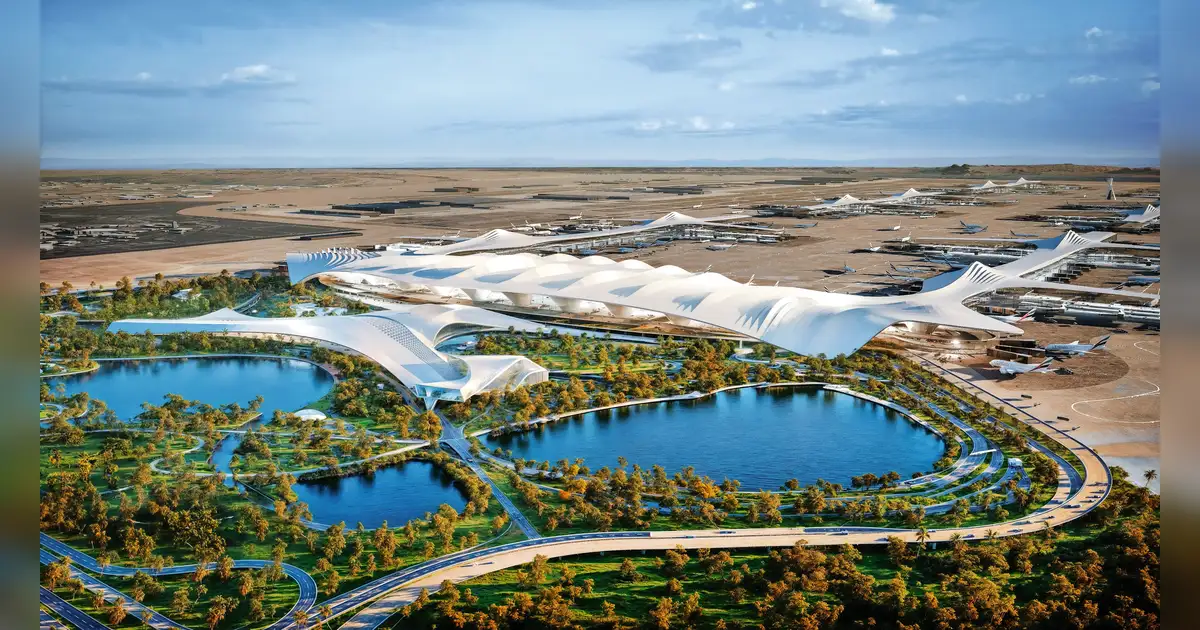
Dubai is building an airport where passengers could eventually leave their bags and head for the gate without stopping at a traditional check-in desk. But before that vision can take shape, Al Maktoum International Airport must meet a more immediate milestone: opening its second runway in 2027. According to Khaleej Times, the work remains on schedule, part of a $35 billion expansion intended to give Dubai room to grow beyond the limits of its existing aviation hub.
The airport, also known as Dubai World Central, or DWC, already handles cargo and a limited number of commercial passenger flights. Its first major expansion phase is due to open in 2032, with capacity for 150 million passengers a year. Upon full completion, the project is designed to accommodate as many as 260 million passengers annually across an airport with five runways. Those are planned handling capacities, not current passenger numbers.
A new home for Dubai’s aviation growth
Dubai Airports chief executive Paul Griffiths said construction was advancing at full speed and remained on schedule. Two runways will be available from 2027, with the third and fourth added as terminal space grows. The fifth is intended as a backup when another runway is unavailable. The challenge is to expand the airfield and passenger facilities together, rather than simply add places for aircraft to land.
Flydubai, which is expanding its fleet beyond 100 aircraft, is expected to be among the first carriers to shift some operations to DWC. The transition is likely to begin in 2027 and proceed in stages, Khaleej Times reported. Emirates and flydubai are both expected to use the airport’s growing capacity as Dubai International, or DXB, approaches its operating limits. Other airlines would follow later. Aviation advisers cited in the report described DWC as the eventual replacement for DXB, although that transition will require substantial preparation.
John Strickland, director of UK-based JLS Consulting, said completing and testing passenger infrastructure would be central before the switch. Saj Ahmad, chief analyst at StrategicAero Research, pointed to the physical constraints at DXB: nearby homes and businesses leave little space for expansion. At DWC, he expects construction to accelerate across the airfield, alongside road and metro links to downtown Dubai. He said the second runway, expected in mid-to-late 2027, would also give the cargo airlines already based there more operating flexibility.
Technology must work at airport scale
The passenger plan is equally ambitious. Dubai Airports is developing facial recognition supported by cameras mounted on ceilings and walls, rail-based passenger processing and advanced baggage systems. Griffiths said the aim was to capture passenger and passport details when tickets are purchased, removing the need for conventional check-in. The wider vision includes journeys without presenting passports at immigration or taking laptops and liquids out at security. These remain features of the future operating plan, rather than a description of today’s service.
Griffiths said Dubai Airports wants to eliminate traditional check-in by collecting passenger and passport details when a ticket is bought.
The economic stakes extend beyond travellers. Ahmad said proximity to Jebel Ali could make cargo transfers smoother and help goods reach their markets faster. Bringing passenger airlines’ freight operations together at DWC could also reduce logistical bottlenecks. Strickland described the development as a catalyst for employment in Dubai South and for wider trade and tourism.
The next milestones are practical: the second runway in 2027, flydubai’s expected phased move, and the terminals and support services needed for the 2032 opening. Andrew Charlton, managing director of Aviation Advocacy, cautioned that much of the next stage would be less visible than construction itself: the planning needed to ensure the airport can meet future demands.
Sources
Comments
No comments yet — be the first.