
Spare Parts Budget: Why Maintenance Belongs in the Plan
A spare parts budget helps protect working time and manage costs. Learn why wear parts, repair access and maintenance matter to productive equipment.
Key takeaways
- Replacement parts are a normal cost of productive equipment, not merely an emergency expense.
- Budget for labour, delivery and downtime as well as the parts themselves.
- Balance critical spare inventory against delivery times and the cash tied up in stock.
- Equipment quality and access to qualified maintenance both matter, but neither removes investment risk.
Imagine a shopkeeper opening for a busy day, only to find the delivery van cannot leave because a small hose has failed. The vehicle is valuable. The orders are ready. But one missing component holds everything up.
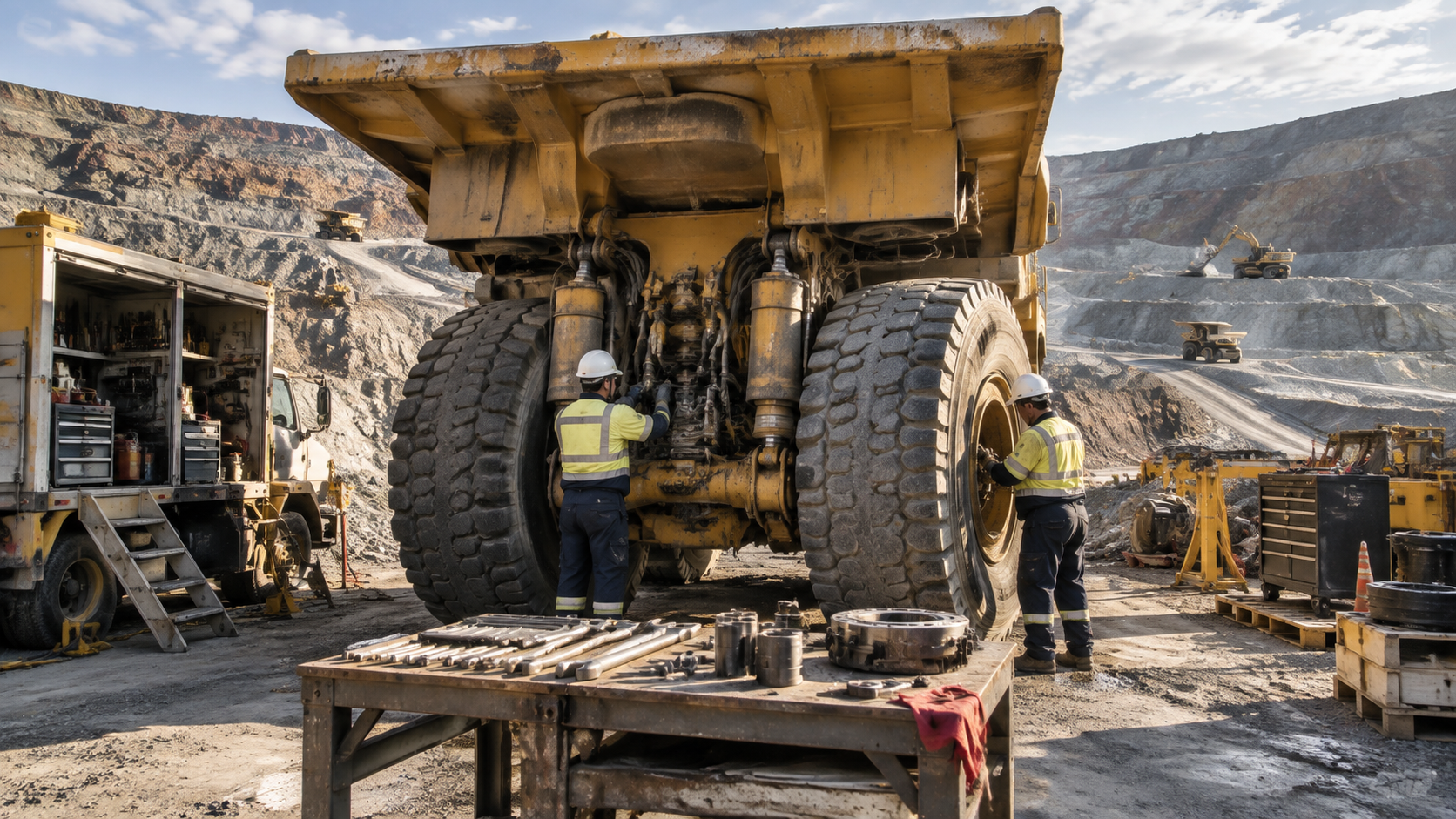
Mining and machinery operations face the same practical problem. Buying good equipment is only the beginning. Keeping it working requires replacement parts, skilled maintenance and cash available when needed.
At Teqwah, we see a useful financial lesson here: productive assets need more than a purchase budget. They need a realistic plan for staying productive. For people exploring investment in real operations, understanding that plan helps make the opportunity clearer.
A machine’s purchase price gets it into the operation. A spare-part plan helps keep it there.
Why budget for parts before anything breaks?
A new machine can feel like a finished investment. In reality, its working life brings continuing costs. Filters collect contaminants. Hoses age under pressure and heat. Wear parts, such as cutting edges or bucket teeth, gradually lose material through use.
These replacements are not automatically signs of poor equipment. Many are part of ordinary operation. Their timing depends on working conditions, usage and the manufacturer’s guidance.
Consider a small miner estimating income from an excavator. If the budget includes fuel and wages but ignores replacement parts, the expected surplus may look larger than it really is.
The lesson is simple: money left after today’s bills is not necessarily money available to distribute. Future maintenance still needs funding. Planning for it makes operating expectations more honest and cash needs less surprising.
What should a spare parts budget include?
Start with the equipment’s service requirements, then account for its actual workload. A machine working in abrasive material may face different replacement needs from one doing lighter work.
A practical budget should distinguish between predictable servicing and uncertain repairs. The first follows known maintenance requirements. The second needs a contingency: money set aside for unexpected problems.
Useful budget lines include:
- Routine service items: filters, seals and other items specified for scheduled maintenance.
- Wear parts and hoses: components replaced according to inspection, condition and service guidance.
- Repair support: labour, diagnosis, delivery and access to appropriate tools.
- Critical spares: selected parts whose absence could stop important work.
- Contingency cash: a cushion for faults or delays the schedule cannot predict.
Avoid assuming every part must sit on a shelf. Some need to be stocked; others can be ordered reliably when required. The decision depends on delivery time, failure consequences and the cash tied up in inventory.
Why this matters: a realistic budget covers the cost of restoring useful work, not just the price printed on a replacement box.
How much is a missing part really costing?
Suppose a small operation needs a replacement hose. Buying the hose is one expense. Getting a technician to site and delivering the correct fitting may add others.
Then comes downtime: the period when equipment cannot do its job. Some wages or other ongoing costs may continue while production stops. Lost output can also mean revenue that cannot be recovered later.
We find it helpful to separate three questions:
- What will the repair itself cost?
- Which costs continue while the machine is unavailable?
- What useful work or income could be lost during the delay?
Do not simply count all missed revenue as lost profit. Some operating costs may be avoided while equipment is idle. The financial impact depends on what stops, what continues and whether delayed work can be completed later.
This is why the cheapest replacement option is not always the least expensive overall. Availability, compatibility and safe installation matter alongside price.
Buy better equipment—or improve repair access?
Ideally, both. Equipment quality matters, but quality alone cannot remove the need for maintenance.
Imagine choosing between two machines. One has an attractive purchase price, but replacement components require a long wait. The other costs more initially, yet qualified technicians and suitable parts are easier to reach. The better financial choice depends on expected use and total ownership cost: the cost of buying, running, maintaining and eventually disposing of the asset.
Before buying, ask whether service information is available, which parts are interchangeable across the fleet and how quickly qualified support can respond. Check compatibility rather than assuming similar-looking parts will work safely.
Stocking everything is not the answer either. Excess stock ties up working capital—cash needed for everyday operations—and may deteriorate or become obsolete. A sensible spare-part plan balances the cost of waiting against the cost of holding stock.
For us at Teqwah, this is an important way to explain productive investment: the asset matters, but so does the practical work that allows it to earn.
What should participants take from this?
For a young saver, a photograph of a machine can make an investment feel tangible. That is understandable. But a tangible asset is not the same as uninterrupted income.
We encourage readers to look beyond acquisition. Ask how maintenance affects utilisation, meaning how much the equipment is actually used. Ask how parts purchases affect cash flow, and whether projected results allow for operating interruptions.
Our operations at Teqwah include gold mining, physical gold trade and productive machinery, with selected real estate considered when it fits our mandate. Participants hold TGC as one participation in our unified pool rather than choosing individual machines or projects.
That makes the wider operating picture important. A spare-part budget does not eliminate breakdowns or investment risk. It helps explain why sound expectations must account for the costs behind production.
The opportunity is exciting precisely because value must be created through execution. A machine ready to work is more useful than an impressive machine waiting for a small component.
Frequently asked questions
Is a spare parts budget the same as an emergency fund?
Not quite. Scheduled replacements belong in the normal operating plan. A contingency supports unexpected repairs. Keeping these categories separate helps prevent routine maintenance from consuming the entire emergency cushion.
Should every replacement part be kept on site?
No. Prioritise parts according to how essential they are, how quickly they can arrive and how they must be stored. Easy-to-source items may not justify holding large quantities.
Does better maintenance guarantee investment returns?
No. Maintenance can support equipment availability, but results also depend on demand, production conditions and other costs. Equipment can still fail, and investment values can fall.
You do not need to run a mine yourself to understand why these details matter. We invite you to explore how we connect participation with real operations at Teqwah, one practical lesson at a time.
Investing involves risk and values can fall. This article is education, not financial advice.
Teqwah view
At Teqwah, we put capital to work across gold mining, physical gold trade and productive machinery, where operating performance matters. We want participants to understand the practical costs behind productive assets, not just their purchase price. Through TGC, we bring these operations together in one participation whose value can rise or fall.
Sources
Investing involves risk. TGC value can fall. This is not investment advice.
Comments
No comments yet — be the first.