
Fuel Costs in Gold Mining: Why Every Litre Matters
Learn how fuel costs affect gold mining margins, why litres per productive hour matter, and what equipment activity can hide.
Key takeaways
- Fuel prices and fuel consumption can change operating margins even when recovered gold stays similar.
- Litres per productive hour helps expose the cost of idling and delays when measured over a consistent period.
- Fuel metrics should be paired with useful output and comparable working conditions.
- Better fuel efficiency can support profitability, but it does not establish a participant return.
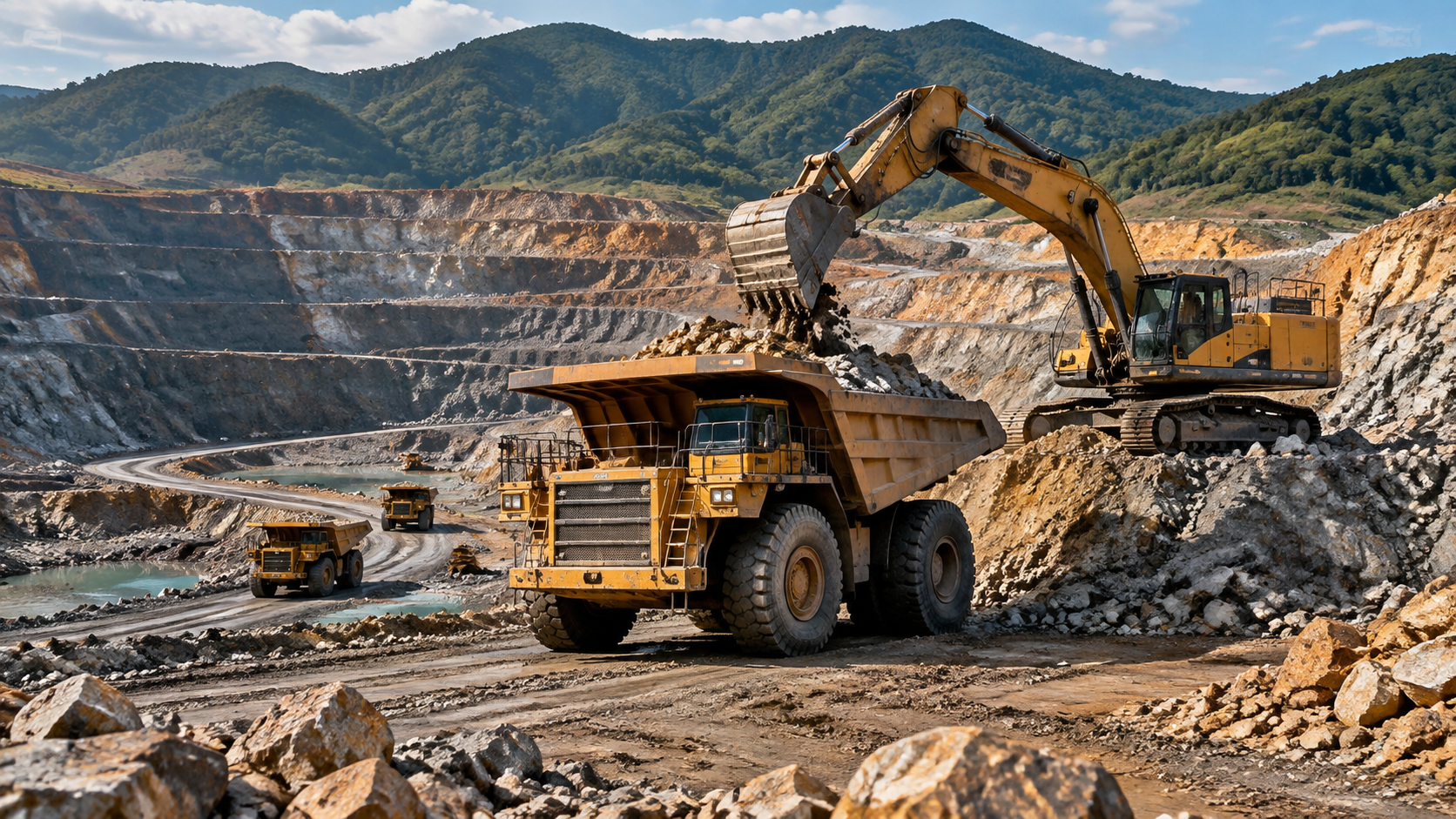
An excavator works all morning. A pump keeps running. Trucks move between the working area and the processing site. Everything looks busy—but is that activity creating enough value?
Think of a shopkeeper whose sales stay steady while delivery bills rise. The shop still looks successful, yet less money remains at closing time. Gold operations can face the same squeeze.
At Teqwah, we want readers to look beyond visible activity and understand the economics beneath it. Fuel costs in gold mining deserve attention because similar gold recovery can produce very different financial results when fuel consumption or prices change.
The same gold can leave less money behind
Gold recovery tells us something important: how much gold an operation captures. It does not, by itself, tell us how much money remains after the work is paid for.
Excavators may burn fuel to move material. Fuel-powered pumps may supply processing water or remove water from working areas. Transport may consume fuel moving people, equipment and material. Together, those tasks can create a substantial operating expense.
Two basic variables drive that expense:
Fuel cost = litres consumed × cost per litre
If consumption rises while the price stays unchanged, the bill increases. If the price rises while consumption stays unchanged, the bill also increases. Both can happen together.
Operating margin is the portion of revenue left after operating costs. If gold revenue stays the same and fuel becomes more expensive, that margin narrows unless another saving offsets the increase.
Why this matters: steady production is not the same as steady profitability.
Ask what each running hour actually achieves
Watching a pump run tells you that it is operating. It does not tell you whether it is moving the required water efficiently. Likewise, an excavator with its engine on may be digging, waiting for a truck or idling during a delay.
That is why litres per productive hour can be more informative than engine hours alone:
Litres per productive hour = fuel consumed during a period ÷ productive hours during that period
The fuel total should include fuel used while waiting or idling within that same measurement period. Otherwise, the calculation can hide the cost of delays.
Imagine a small miner uses 120 litres across a shift with six productive hours. That equals 20 litres per productive hour. If the same fuel supports only four productive hours, the figure rises to 30 litres—even though the fuel purchase has not changed.
These are hypothetical teaching figures, not our operating results.
A running engine shows activity. Fuel used per productive hour helps reveal what that activity costs.
Define “productive” carefully. For an excavator, it might mean useful digging and loading. For a pump, necessary water removal can be productive even when no gold is being processed at that moment.
Pair fuel use with useful output
A lower litres-per-hour figure is not automatically better. A machine could burn less fuel because it is doing less work.
Suppose one excavator uses more fuel each productive hour but moves much more material. It may still have a lower fuel cost per tonne moved. Conversely, a lightly loaded truck may look economical per hour while making too many trips.
We encourage readers to ask two questions together: “How much fuel did the task consume?” and “What useful output did it deliver?”
Useful companion measures include:
- Excavation: litres per tonne or cubic metre moved.
- Pumping: litres per cubic metre of water moved, with pumping height and distance considered.
- Transport: litres per tonne delivered over a comparable route.
- Overall production: fuel cost per unit of gold recovered, read alongside other costs.
Compare like with like. Harder ground, longer routes, heavier loads or greater pumping height can change fuel requirements without proving poor management.
Why this matters: efficiency means using resources well, not simply using fewer resources.
Separate price pressure from operating problems
When a fuel bill grows, the first decision is whether to examine purchasing, operations or both.
A higher delivered fuel price points to a different problem from extra idling. A longer haul route calls for a different response from a poorly maintained engine. Without that distinction, a team can spend time fixing the wrong issue.
A useful basic record links fuel consumed, price per litre, engine hours, productive hours and useful output over the same period. Fuel purchased is not always fuel consumed: some may remain in storage, so opening and closing stock matter too.
For a general operating review, we suggest asking:
- Did fuel prices change, or did litres consumed increase?
- Were delays leaving engines running without useful work?
- Did routes, ground conditions or pumping needs change?
- Were output and equipment condition comparable?
Savings should never come from skipping necessary maintenance or compromising safety. The goal is reliable work at a sensible cost.
What this means for participation in real operations
For people who see potential in gold but cannot run a mine themselves, understanding costs offers a practical way into the story. You do not need to operate an excavator to understand why unnecessary waiting can reduce the money left from production.
At Teqwah, we deploy capital across gold mining, physical gold trade and productive machinery, with selected real estate also within our unified pool. Participants hold TGC as proportional participation in that pool rather than choosing individual projects.
Our risk disclosure identifies fuel among the costs deducted in calculating net operating profit. That makes fuel discipline relevant to understanding operating outcomes—not evidence of any particular return.
This is the opportunity we are working to build: participation connected to productive assets and real execution. Understanding a Teqwah investment means considering costs alongside output, not treating visible machinery as proof of profit.
Frequently asked questions
Can fuel costs rise when gold recovery stays similar?
Yes. Higher fuel prices, extra idling, longer transport routes or greater pumping needs can increase costs without increasing recovered gold. If revenue and other costs stay unchanged, profit falls.
Is litres per productive hour enough to judge efficiency?
No. It is a useful starting point, but it should be paired with output and working conditions. Lower hourly consumption can still mean higher cost per tonne if productivity falls.
Does better fuel efficiency mean higher participant returns?
Not necessarily. It can support operating margins, but gold revenue, other costs, downtime and losses elsewhere also affect results. TGC value can rise or fall and is not an exchange-traded price.
Keep exploring the connection between productive work and recorded value at your own pace. Explore TGC at teqwah.com →
Investing involves risk, values can fall, and this article is education—not financial advice.
Teqwah view
At Teqwah, we connect participation with gold mining, physical gold trade and productive assets through one unified pool. We see understanding operating costs as part of understanding that opportunity: real work must create value after expenses, and outcomes can be positive or negative.
Sources
Investing involves risk. TGC value can fall. This is not investment advice.
Comments
No comments yet — be the first.