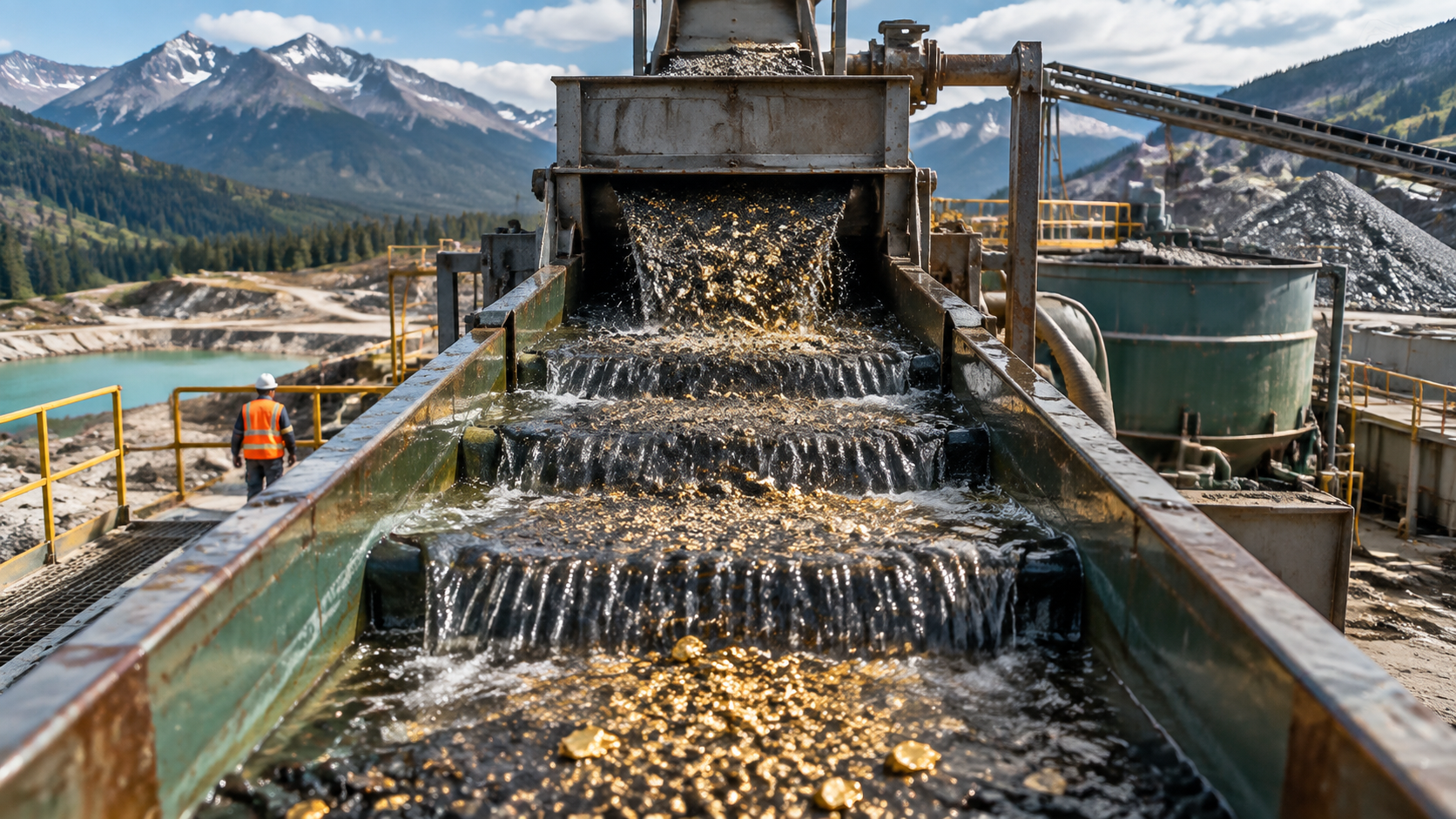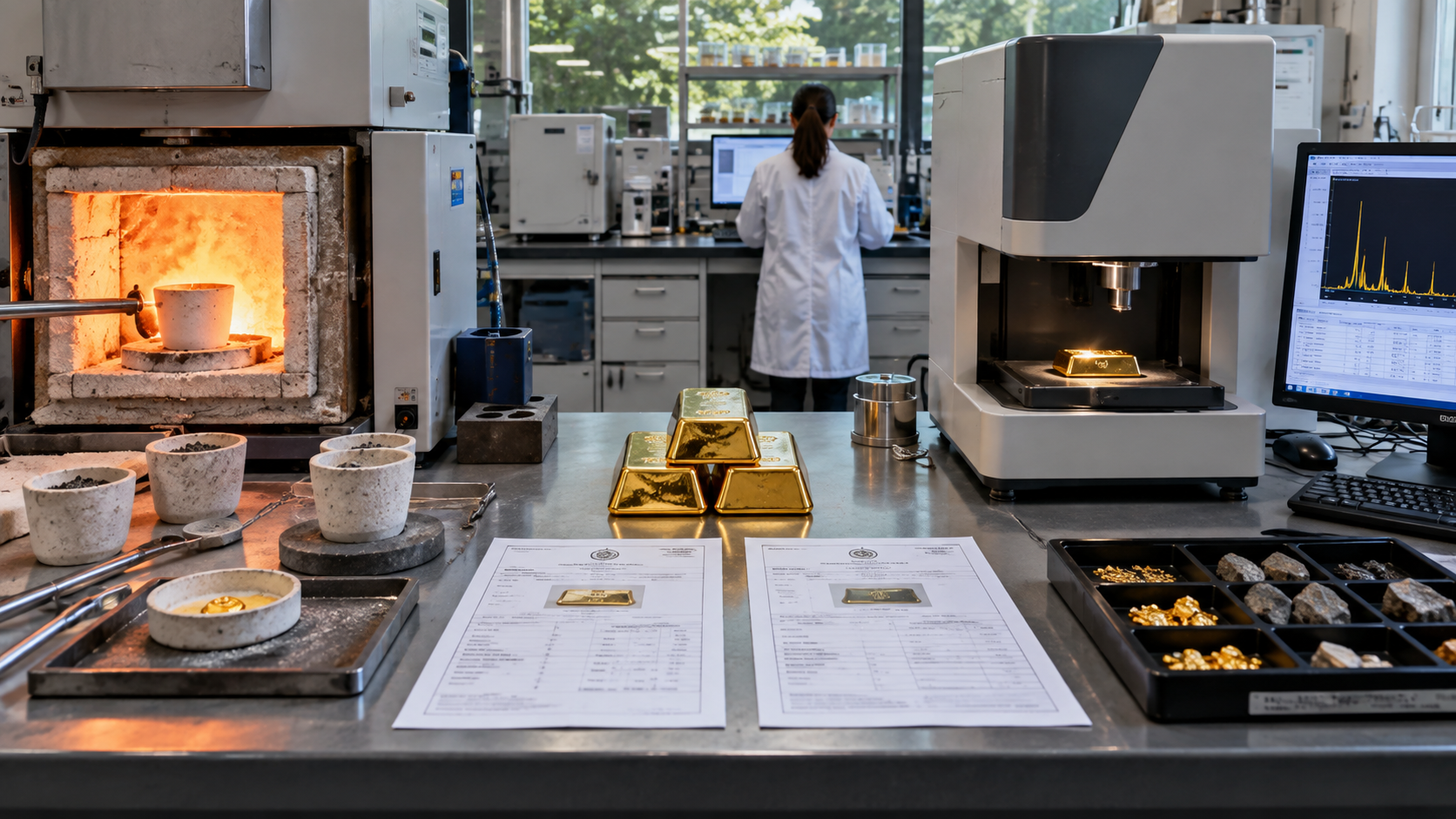
Feed Rate Versus Recovery: Why More Tonnes Can Mean Less
Learn how gold processing balances feed rate, recovery and operating costs—and why tonnes per hour alone cannot tell you whether value is growing.

Key takeaways
- Feed rate measures material entering a process; recovery measures the share of contained gold successfully captured.
- Faster feeding can reduce separation time or overload equipment, but the effect depends on the ore, plant and operating conditions.
- Compare recovered value after relevant costs, not throughput or recovery alone.
- Grade, sampling quality, downtime and maintenance all matter when interpreting processing performance.
Imagine a shopkeeper serving twice as many customers but losing money on every extra sale. The shop looks busy. The till tells a different story.
Gold processing can face a similar problem. Pushing more material through a plant may look productive, yet leave more gold behind or raise costs faster than recovered value.
At Teqwah, we want to bring you closer to the economics behind real gold operations. Feed rate versus recovery is a useful place to start: the opportunity is not simply to move more earth, but to turn productive work into value after costs.
What are you actually measuring?
Feed rate is the amount of material entering a processing system over time, often expressed in tonnes per hour. Throughput usually describes how much material the system handles over a period.
Recovery is different. It is the share of the gold entering a process that the process successfully captures. If gold enters with the ore but leaves in discarded material, it has not been recovered by that process.
A third measure matters just as much: grade, meaning how much gold the material contains per tonne.
Think of squeezing oranges. The number of oranges you put through the press is throughput. Their juice content resembles grade. The proportion of available juice you collect resembles recovery.
More oranges do not automatically mean more juice sold profitably. Their quality, the press setting and the cost of running it all matter.
Why this matters: a production headline needs context before it becomes useful financial information.
Why can feeding faster leave gold behind?
Picture a small miner trying to finish a stockpile before the end of a shift. Increasing the feed seems like the obvious answer. But the separation equipment has limits.
In many processes, material needs enough time—and the right conditions—for gold-bearing particles to separate. At a given working volume, a higher flow can shorten the time material spends in the system. Operators call this residence time.
Overloading can also disturb water flow, increase crowding or reduce the effectiveness of sorting and separation. Depending on the processing method, valuable particles may pass through without being captured.
That does not mean faster feeding always lowers recovery. A plant running below its effective capacity may handle more material without a meaningful loss. Ore characteristics, equipment settings and the processing route all influence the outcome.
The practical question is not, “How fast can the conveyor move?” It is, “How much can this system process effectively under today's conditions?”
The best feed rate is the one that creates the most recoverable value after costs—not the one that moves the most tonnes.
When does extra throughput stop paying?
For a young saver learning about mining, a simple relationship helps:
Recovered gold per hour = tonnes processed per hour × gold content per tonne × recovery rate.
Keep the units consistent and express recovery as a fraction. This relationship describes recovered metal, not profit.
To understand the money, we then consider the realised value of saleable gold and subtract the relevant costs. Depending on the operation, these may include mining, fuel, power, water, labour, consumables, maintenance and downstream charges.
Consider two hypothetical plant settings using comparable ore. A gentler setting recovers a larger share of the gold in each tonne. A faster setting handles more tonnes but captures a smaller share.
Either could produce more gold per hour. And even the setting producing more gold might leave less money after additional costs.
A lower cost per tonne can also mislead. Spreading some costs across more tonnes may look efficient while the cost per unit of recovered gold rises.
Why this matters: the goal is neither maximum throughput nor maximum recovery in isolation. It is the strongest economic result within safe, responsible operating limits.
What should you look for beyond a busy plant?
A sensible comparison needs more than one impressive shift. Different ore can make a setting look better or worse without the setting being responsible.
To understand a processing result, we would encourage you to ask:
- Were feed grade and material characteristics comparable?
- How much gold was recovered, and how much remained in the tailings—the material left after processing?
- What happened to total costs and cost per unit of recovered gold?
- Was the result sustained after downtime, wear and maintenance were included?
Sampling matters because neither feed nor tailings necessarily contains gold evenly. Poor samples can make calculated recovery misleading. Repeated measurements and a check that incoming gold broadly matches recovered gold plus losses help build a more credible picture.
A fast hour is not the same as a strong month. If aggressive operation leads to more stoppages, higher hourly throughput may fail to improve total production.
For the reader comparing investment opportunities, this is a useful habit: ask what a production number leaves out, not only what it shows.
How does this connect to participation in real operations?
For people who see potential in gold but cannot run a mine themselves, understanding these trade-offs makes participation more tangible. You do not need to operate the equipment to recognise why execution matters.
At Teqwah, we deploy equipment and operating capital into gold mining alongside our physical gold trade and productive machinery activities. Our participants hold TGC, a divisible participation unit representing a proportional share of our unified pool, rather than choosing individual projects.
That is the opportunity we are working to build: a connection to productive operations, where outcomes depend on actual work and recorded results. This article explains general processing economics; it does not report a feed-rate policy, recovery result or plant test from our operations.
For a Teqwah investment, TGC value is recorded pool value divided by circulating TGC. It is not an exchange-traded market price, and its value can rise or fall. More tonnes at one operation should never be read as an automatic increase in participant value.
Frequently asked questions
Is a higher feed rate always better?
No. It helps only when the additional recovered value justifies the additional costs and any operational consequences. More material processed is not automatically more profit.
Should an operator always maximise gold recovery?
No. Capturing an additional portion of gold can require more time, energy or processing expense than that gold is worth. Recovery needs to be assessed alongside throughput and costs.
What should an investor examine alongside tonnes per hour?
Look at feed grade, recovery, operating availability, saleable output and relevant costs together. No single production measure establishes profitability or predicts participant outcomes.
Ready to look beyond the tonnes and explore how we connect participation with productive work? Explore Teqwah and TGC →
Investing involves risk; values can fall. This article is education, not financial advice.
Teqwah view
At Teqwah, we connect participation with gold mining, physical gold trade and productive machinery through our unified pool. We see this topic as a clear way to explain why real operating results matter more than busy-looking equipment. Through TGC, our participants share in recorded pool value, which can rise or fall.
Sources
Investing involves risk. TGC value can fall. This is not investment advice.
Comments
No comments yet — be the first.