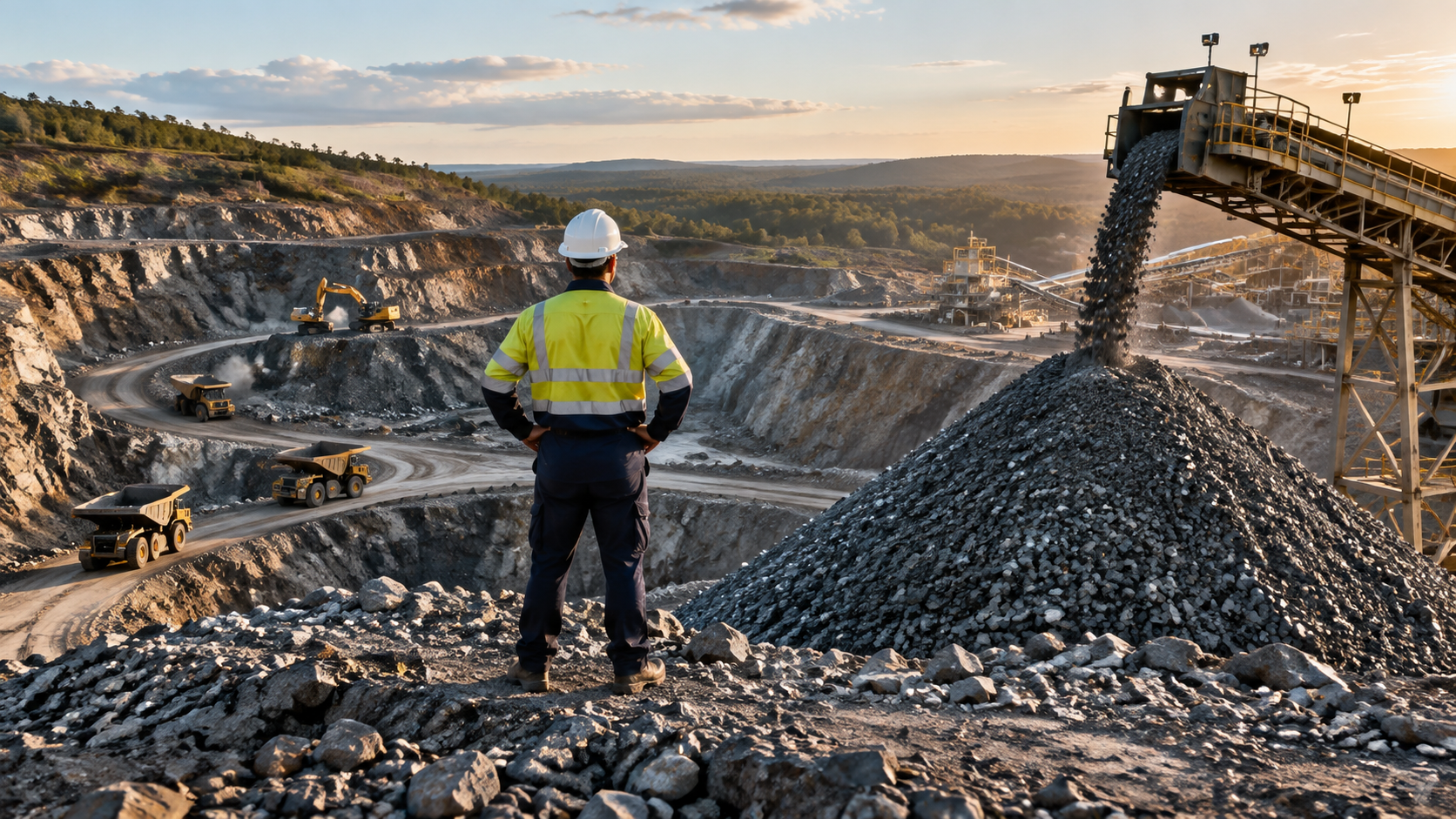
Gravity Separation: How Gold Recovery Really Works
Learn how gravity separation recovers gold, why particle size and shape matter, and what recovery results can tell you about mining economics.
Key takeaways
- Gravity separation uses density differences to concentrate gold rather than treating every particle as identical.
- Particle size, shape and liberation from surrounding minerals influence what equipment can capture.
- Recovery, concentrate grade and profitability are different measures; improving one does not automatically improve the others.
- Representative testing and operating costs matter more than a machine name or an isolated recovery result.
Imagine washing a muddy handful of gravel and finding a glint of gold. Why does that tiny piece stay behind while other material washes away? And if gold is heavy, why can a mine not simply catch all of it?
The answer is where an exciting resource becomes a practical operating challenge. Gravity separation can recover some gold, but different particles behave differently. At Teqwah, we believe understanding that difference helps you look beyond the sparkle and ask better questions about how mining creates value.
What is gravity separation in gold mining?
Gravity separation sorts materials by how differently they move because of their density, usually in water. Density means how much mass fits into a given space. Think of a stone and a sponge of similar size: their size alone does not tell you how heavy they are.
Gold is much denser than many common minerals found alongside it. Under suitable conditions, equipment can use that contrast to collect a smaller, gold-rich portion while directing much of the lighter material elsewhere.
That collected portion is called a concentrate. It is not necessarily pure gold. Other dense minerals can collect with it, so further processing may be needed.
A gold pan demonstrates the principle. Water and controlled movement help lighter material move away while denser particles collect near the bottom. Mining equipment applies related principles with greater capacity and different controls.
Gravity separation uses density differences, but particle size, shape and freedom from surrounding rock determine what it can actually capture.
Why does some gold escape even when it is heavy?
Picture a small miner handling two gold particles: a compact grain and a thin flake. Both contain dense gold, but they do not meet moving water in the same way.
A flake exposes more surface area relative to its mass. Water can carry it differently from a compact grain. Very fine particles can also be difficult to settle and retain, particularly when flows are fast or unstable.
Three questions help explain the challenge:
- How big is the particle? Fine gold generally needs different capture conditions from coarse gold.
- What shape is it? Flat flakes and rounded grains experience different drag, or resistance from water.
- Is the gold free? Gold enclosed in another mineral behaves as part of that combined particle, not as a separate gold grain.
Freeing gold from surrounding rock is called liberation. Crushing or grinding may help, but excessive grinding can create finer material that is harder to recover with some gravity methods.
Why this matters: more processing is not automatically better processing. The task is to prepare the material for the recovery method, rather than assume one setting suits every particle.
Which gravity methods suit different challenges?
Choosing equipment is like choosing a delivery vehicle. A bicycle, van and truck all move goods, but the best choice depends on the load and route.
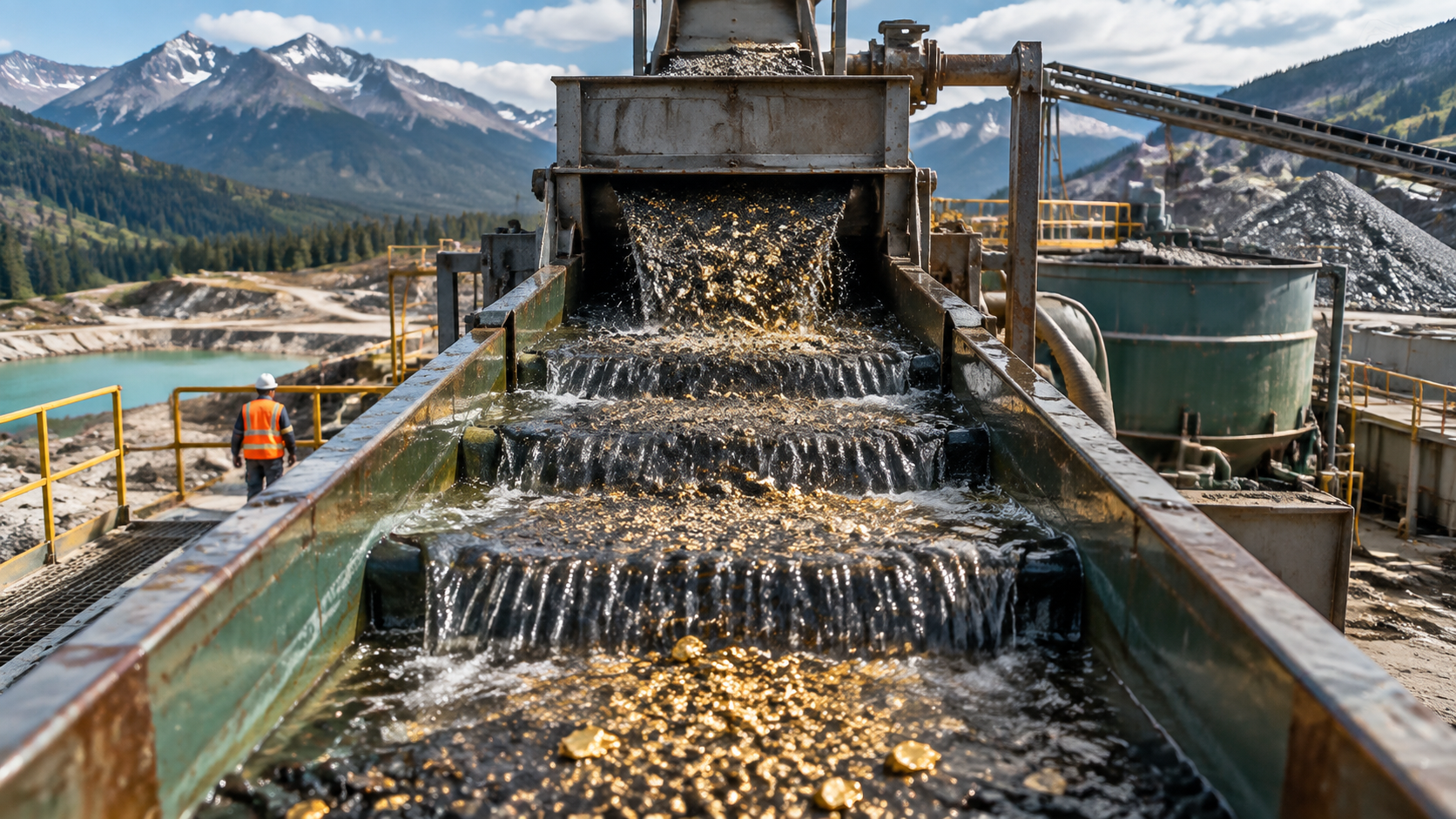
Sluices pass water and material along a channel. Riffles or capture surfaces create places where dense particles can settle and remain. Feed consistency and water flow matter: poorly controlled conditions can send recoverable gold past the collection area.
Jigs use pulsating water to help particles rearrange and separate. Their performance depends on suitable feed characteristics and operating settings.
Shaking tables combine a moving deck with flowing water. Particles follow different paths according to their density, size and shape, allowing operators to collect separate streams.
Centrifugal concentrators use rotation to strengthen the separating effect. They can help capture some fine gold that simpler equipment may miss, but they do not make every fine particle recoverable.
These are general examples, not a description of equipment at our operations. No machine name proves a recovery result. Representative testing helps establish which method, or combination of methods, suits the material.
When does better recovery become better economics?
A shopkeeper would not celebrate higher sales without checking the cost of stocking the shelves. Mining needs the same discipline.
Recovery is the share of gold in the feed that reaches a chosen product. If a hypothetical batch contains ten units of gold and seven enter the concentrate, that stage has recovered seven-tenths. It does not mean seven-tenths of the material is gold, or that the operation has made a profit.
Grade describes how much gold is present in a quantity of material. A richer concentrate and a higher recovery are different achievements. Settings that collect more gold may also collect more unwanted material, increasing downstream work.
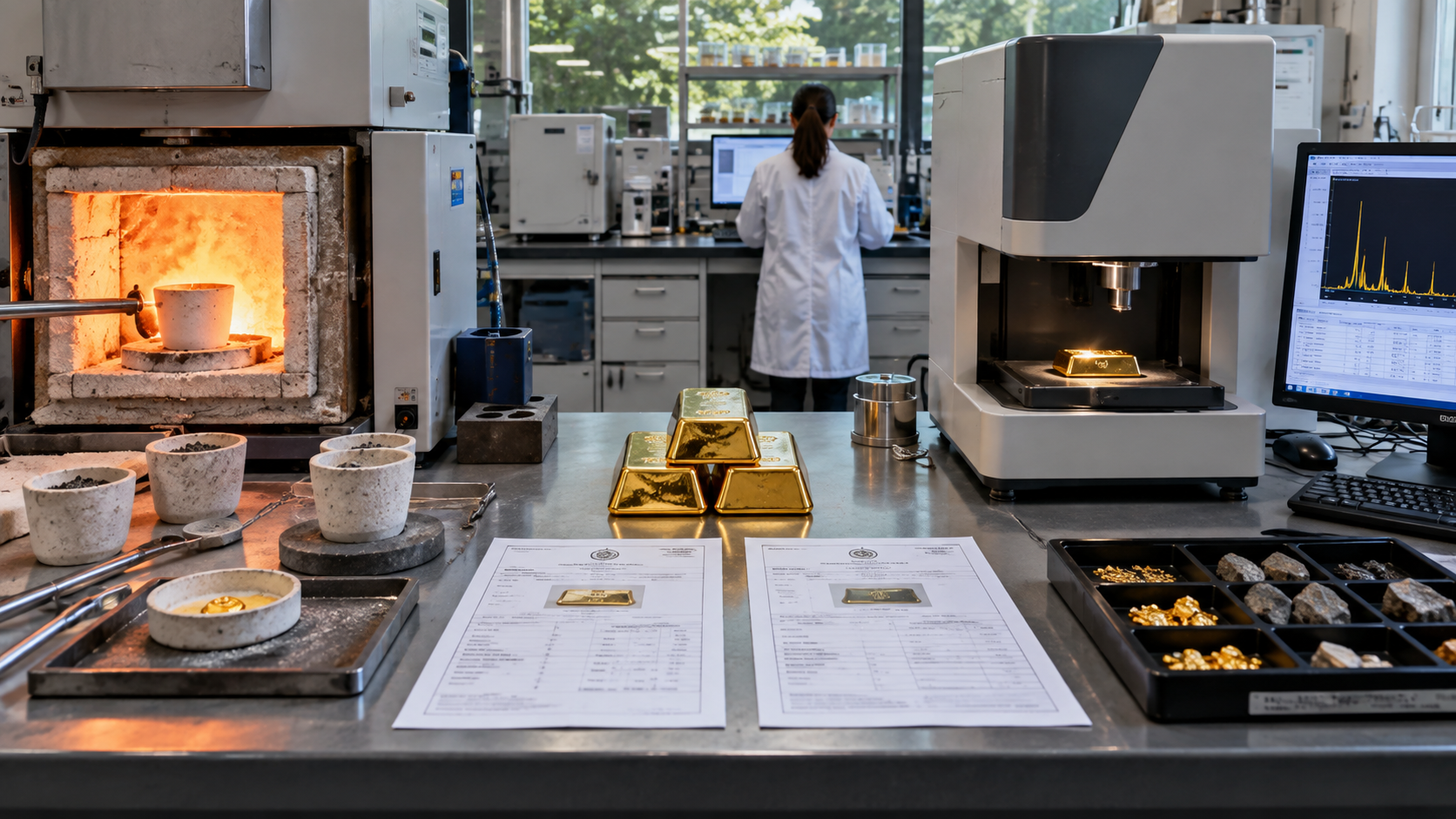
An investor should therefore ask what was tested, whether the sample represented the deposit, how much material was processed, and what remained in the tailings, the material leaving the recovery stage.
Then comes the cost question. Extra recovery may require more power, water management, labour, maintenance or treatment. Gravity separation does not itself need chemicals to dissolve gold, but that does not make an entire mine chemical-free or environmentally impact-free.
Why this matters: useful technology creates an opportunity. Operating discipline determines whether that opportunity becomes economic value.
How we connect this lesson to participation
For people who see potential in gold but cannot run a mine themselves, understanding the process is a powerful starting point. You do not need to operate a shaking table to recognise why testing, equipment readiness and costs matter.
At Teqwah, we deploy equipment and operating capital into gold mining, alongside physical gold trade, productive machinery and selected real estate. Our participants hold TGC as proportional participation in our unified pool; they do not select individual projects.
That is the opportunity we are working to build: connecting participation with productive work. TGC is a divisible participation unit whose recorded value is pool value divided by circulating TGC. It is not exchange-traded, and its value can fall. A recovery result alone cannot predict a participant’s outcome.
Frequently asked questions
Can gravity separation recover all the gold?
No. Very fine gold, certain particle shapes and gold locked inside other minerals can limit recovery. Testing is needed to assess what a particular system can capture.
Is gravity separation the same as producing pure gold?
No. It generally produces a concentrate containing gold and other minerals. Further separation or refining may be needed before a saleable final product is obtained.
Does higher recovery mean a better investment?
Not by itself. Grade, throughput, costs and other operating factors also matter. We encourage you to understand the whole operating picture, not just one attractive number.
Explore how we connect participation with real operations at teqwah.com.
Investing involves risk; values can fall. This article is education, not financial advice.
Teqwah view
At Teqwah, we put equipment and operating capital to work in gold mining as part of our unified pool. We see this topic as an invitation to understand the productive work behind participation: the opportunity is exciting precisely because value must be created through execution.
Sources
Investing involves risk. TGC value can fall. This is not investment advice.
Comments
No comments yet — be the first.