Mekelle’s shops stay shut as Ethiopia’s battlefield shifts toward regional diplomacy
Federal troops have taken Tigray’s capital without a fight, while a planned meeting of Ethiopia’s regional rivals raises the stakes beyond its borders.
Key takeaways
- Federal forces entered Mekelle without a fight after TPLF leaders and troops withdrew.
- Shops remained closed on Sunday, while residents reported organising security in the absence of police.
- Leaders from Egypt, Eritrea, Somalia and Sudan were scheduled to discuss the conflict in Alamein.
- Ethiopia’s accusations of foreign support for the rebels are denied by Eritrea, Sudan and Egypt.
- The TPLF’s signals of guerrilla warfare leave the outlook uncertain despite the loss of its regional capital.
Mekelle’s shopkeepers had moved their goods to safer places before federal troops arrived, fearing theft and damage. By Sunday, businesses remained closed and residents were organising their own security. Ethiopia’s government had regained the Tigray regional capital without a fight, but the accounts reported by The Africa Report showed a city still facing uncertainty as neighbouring leaders prepared to discuss the conflict in Egypt.
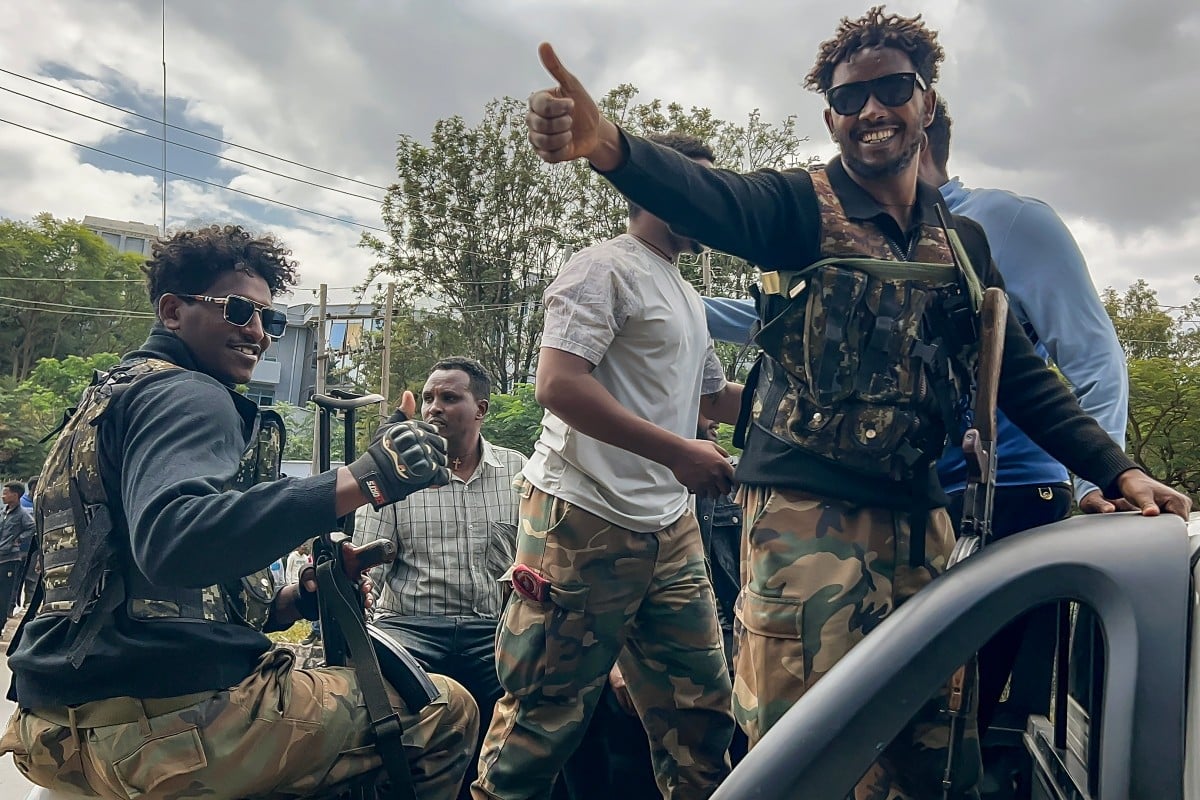
Federal forces entered Mekelle on Saturday after a counter-offensive drove them deep into territory held by the Tigray People’s Liberation Front (TPLF). The group’s leaders and fighters left the city. A local journalist told AFP that government troops controlled Mekelle on Sunday, patrolling its streets and guarding key institutions. Communications had also returned after an interruption lasting more than a week. One resident told AFP that, with no police present, people had taken responsibility for security themselves.
The advance followed renewed fighting between federal forces and the TPLF on September 23. It has raised fears of another devastating war after the 2020–2022 conflict. A commander in a pro-government militia told AFP that his forces had secured Mekelle and were continuing their advance. Yet taking the city does not necessarily mark the end of the rebel campaign: TPLF leader Debretsion Gebremichael signalled this week that his forces could return to guerrilla attacks, using mobile strikes rather than defending fixed positions.
A city captured, a regional dispute unresolved
The TPLF followed that approach after government forces took Mekelle in 2020, eventually recapturing the city the next year. The group has long dominated Tigray and ousted a government-appointed administration this year. Its national influence stretches back further: it ruled Ethiopia from 1991 until 2018, before being sidelined following the rise of Prime Minister Abiy Ahmed, who comes from the Oromia region.
Meanwhile, Egyptian President Abdel Fattah al-Sisi, Eritrean President Isaias Afwerki, Somali President Hassan Sheikh Mohamud and Sudanese Armed Forces chief Abdel Fattah al-Burhan were due to meet in Alamein on Sunday. The gathering, on the sidelines of an African Business Forum, brought together neighbours with strained relations with Ethiopia. Addis Ababa accuses Eritrea of directly supporting the Tigray rebels, with additional backing from Sudan and Egypt. All three countries deny those allegations.
Borders, water and the risk of a wider war
Eritrea shares a long border with Tigray and accuses landlocked Ethiopia of preparing to invade to gain access to its coastline. Analysts cited in the report say Eritrea has supported the rebels to keep fighting away from its own frontier. Those competing claims frame concerns that Ethiopia’s domestic conflict could spread across borders or become a war fought through rival local forces.
Sisi urged restraint before the talks. Addressing the African Union’s mid-year coordination summit, he opposed foreign interference and unilateral policies, calling instead for respect between neighbours and cooperation over shared challenges. His appeal included natural resources and rivers crossing national borders, against the backdrop of Egypt’s longstanding dispute with Ethiopia over the Grand Ethiopian Renaissance Dam on the Blue Nile.
Sisi called for “dialogue, not confrontation”.
The African Union estimates that the 2020–2022 civil war killed more than 600,000 people. The 2022 Pretoria peace agreement, brokered by African institutions and Washington, was never fully carried out, though it helped preserve some peace until last year. Attention now turns to the Alamein discussions and whether the TPLF follows through on its signals of renewed guerrilla warfare.
Sources
Comments
No comments yet — be the first.