Shariah-aligned investing: profit-and-loss sharing
Learn how profit-and-loss sharing works, what Shariah alignment means, and how our TGC participation model connects capital with real operations.

Key takeaways
- A profit-sharing ratio describes a share of business profit, not a promised return on invested capital.
- Loss allocation depends on the contract; it does not automatically follow the profit-sharing ratio.
- TGC connects participants with our combined operations, with recorded pool value determining the value per unit.
- Review the profit basis, commissions, fees, lock-up and loss provisions; our Shariah-aligned description is not a claim of external certification.
Have you ever seen a busy shop or a working gold mine and wondered: could my savings help build something productive, without my having to run it?
That question sits at the heart of profit-and-loss sharing. One person brings capital. Another brings practical skill and management. The opportunity comes from what they build together—not from a fixed payment simply for providing money.
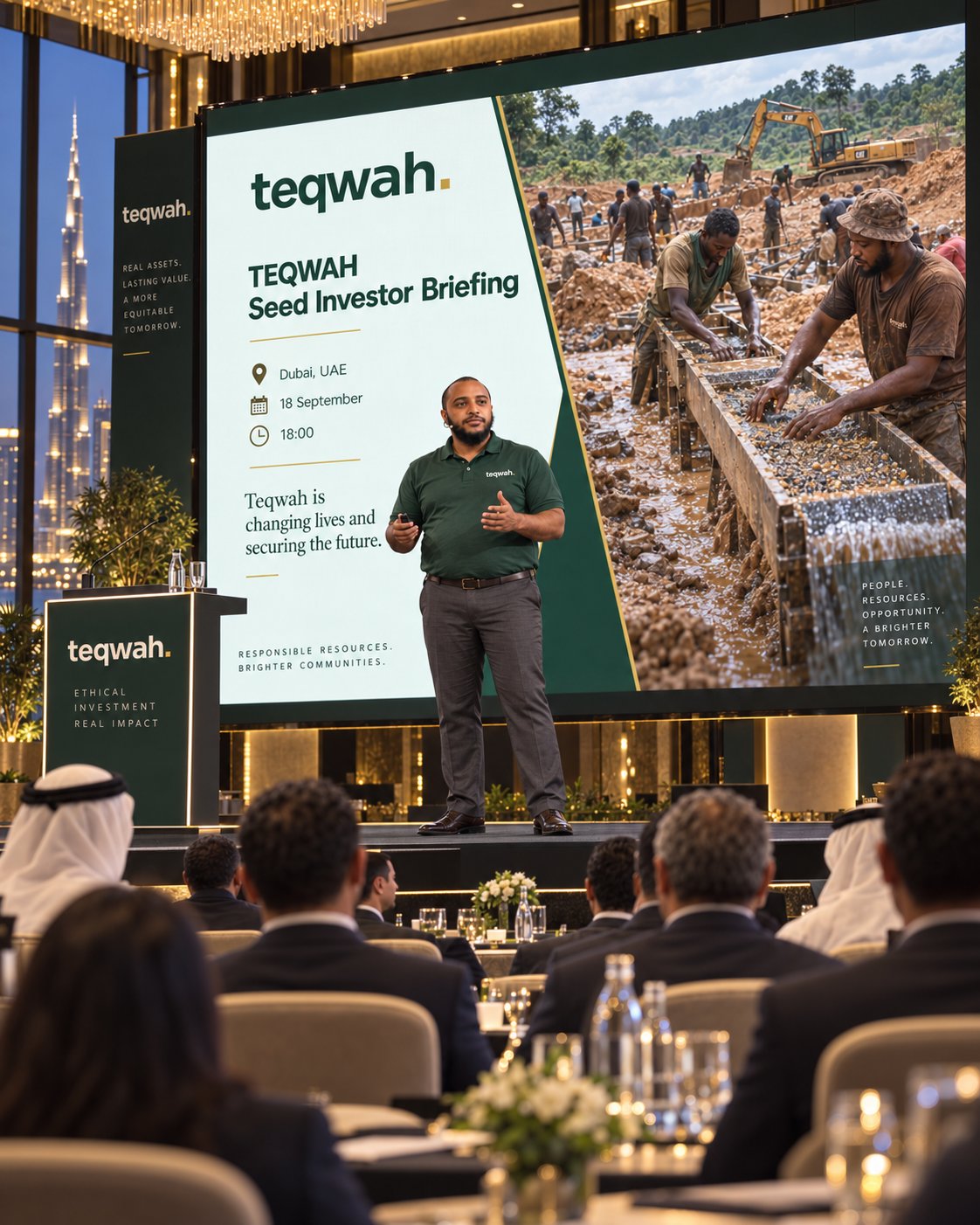
At Teqwah, we connect that idea with gold mining, physical gold trade and productive machinery. But understanding the opportunity starts with understanding the agreement, including what happens when business goes badly.
Profit-sharing means taking part in business results—not buying a promise of income.
1. What makes an investment Shariah-aligned?
Imagine a shopkeeper who needs equipment to expand. A conventional interest-bearing loan requires interest under the loan agreement regardless of whether the expansion succeeds. A profit-sharing arrangement instead links the capital provider’s reward to business profit.
Shariah-aligned investing generally seeks to avoid riba, commonly understood as prohibited interest, as well as prohibited activities, gambling and excessive contractual uncertainty. It also asks whether the assets, transactions and responsibilities fit Islamic finance principles.
That matters because an appealing label is not enough. A productive asset does not, by itself, make every investment structure compliant. The contract matters too.
We describe our operating principles as Shariah-aligned: productive assets, no fixed return and shared outcomes. We do not claim external Shariah certification. For readers seeking a religious assessment, qualified independent review of the actual agreement is an important step.
2. How are profits—and losses—actually shared?
Suppose a small business has distributable profit after the costs specified in its agreement. If the agreed investor share is 70%, investors collectively receive 70% of that profit—not 70% of their original investment.
This is the crucial distinction: a profit-sharing ratio is not a rate of return.
Loss allocation needs separate attention. Two familiar Islamic finance structures illustrate why:
- Mudarabah: one party supplies capital and another manages it. Financial losses generally fall on the capital provider, unless caused by the manager’s negligence, misconduct or breach; the manager loses their effort and expected profit.
- Musharakah: partners contribute capital. Profits follow an agreed ratio, while losses generally follow capital contributions.
“Profit-and-loss sharing” therefore does not mean every contract divides every loss using its profit ratio. Ask what counts as a loss, who bears it and how it affects your capital.
Why this matters: shared opportunity only becomes understandable when responsibilities are clear.
3. How does our TGC participation work?
For people who see potential in gold but cannot run a mine themselves, our Teqwah investment model offers one participation across operations we manage internally.
Participants hold TGC, a divisible participation unit, and can start fractionally from $15. They do not select individual mines, projects or assets. We allocate capital across gold mining, physical gold trade and productive machinery, including managed fleet rental. Selected real estate opportunities may also be considered when they fit our mandate.
Recorded capital and productive assets form the pool behind TGC. Its recorded value follows this formula:
TGC value = recorded pool value ÷ circulating TGC.
The recorded investor share of profit enters that pool. Losses can reduce it. This is not an exchange-traded market price, and new purchases are designed to be value-neutral.
Think of participation in a working business rather than a savings account paying a fixed rate. Recording results daily does not mean receiving daily cash payments.
4. What should you check behind a 70/30 split?
A percentage is easy to remember. The amount it applies to deserves closer attention.
Our overview describes daily gross profit or loss using a 70% investor and 30% Teqwah split. Our Risk & Performance Notice describes distributions from net profit: production output less the landowner’s agreed share, fuel, labour and operating costs, followed by a 70/30 division.
Those descriptions use different profit bases. They should not be treated as interchangeable. Before participating, read the agreement and ask us to clarify the applicable calculation and loss treatment.
Our risk notice also explains that approved partner referral commissions come from participants’ 70% share of recorded positive daily profit before it enters TGC value. Loss days pay no commission.
The practical lesson applies to any investment: ask “70% of what, after which deductions?” A headline allocation alone cannot tell you what reaches your holding.
5. Can you leave when you need the money?
Imagine a young saver setting aside money for an upcoming expense. Even an attractive business opportunity may be unsuitable if the money is locked up when that bill arrives.
Our published process includes a 30-day deployment period. Seed TGC has a 60-day lock-up; later rounds have lock-ups of 6–12 months. Sales take place at the current recorded TGC value, with a three-day payout target—not an unconditional deadline.
The administration fee is 4%, or 2% with a partner link, and is shown before confirmation. TGC is not exchange-traded.
Before deciding, check:
- Whether you can leave the money committed for the applicable period.
- How fees and deductions affect your participation.
- Whether a fall in value would disrupt essential spending.
Asset backing does not remove operating risk. Machinery can need maintenance, mining conditions can vary and gold-trading margins can change. The opportunity is exciting precisely because value must be created through execution.
Frequently asked questions
Is profit-and-loss sharing the same as interest?
No. A profit share depends on business results and the agreed calculation. Interest is a contractual charge for lending money, rather than a share of business profit.
Does Shariah-aligned mean externally certified?
No. We use the term to describe our operating principles, not external certification. Assess the actual terms and seek qualified advice where needed.
Does holding TGC mean owning a specific gold bar?
No. TGC represents proportional participation in our combined operations, not a selected bar or mine. Physical bullion is available as a withdrawal option in Dubai, which is distinct from selecting a particular asset when investing.
If this approach speaks to you, explore Teqwah and take time to understand how participation works. Explore TGC →
Investing involves risk, values can fall, and this article is education, not financial advice.
Teqwah view
At Teqwah, we bring capital closer to productive gold operations and machinery through one fractional participation. We believe the opportunity deserves a clear explanation of both how value is recorded and how losses can affect it. We invite you to understand the terms before deciding whether our approach fits your needs.
Sources
Investing involves risk. TGC value can fall. This is not investment advice.
Comments
No comments yet — be the first.