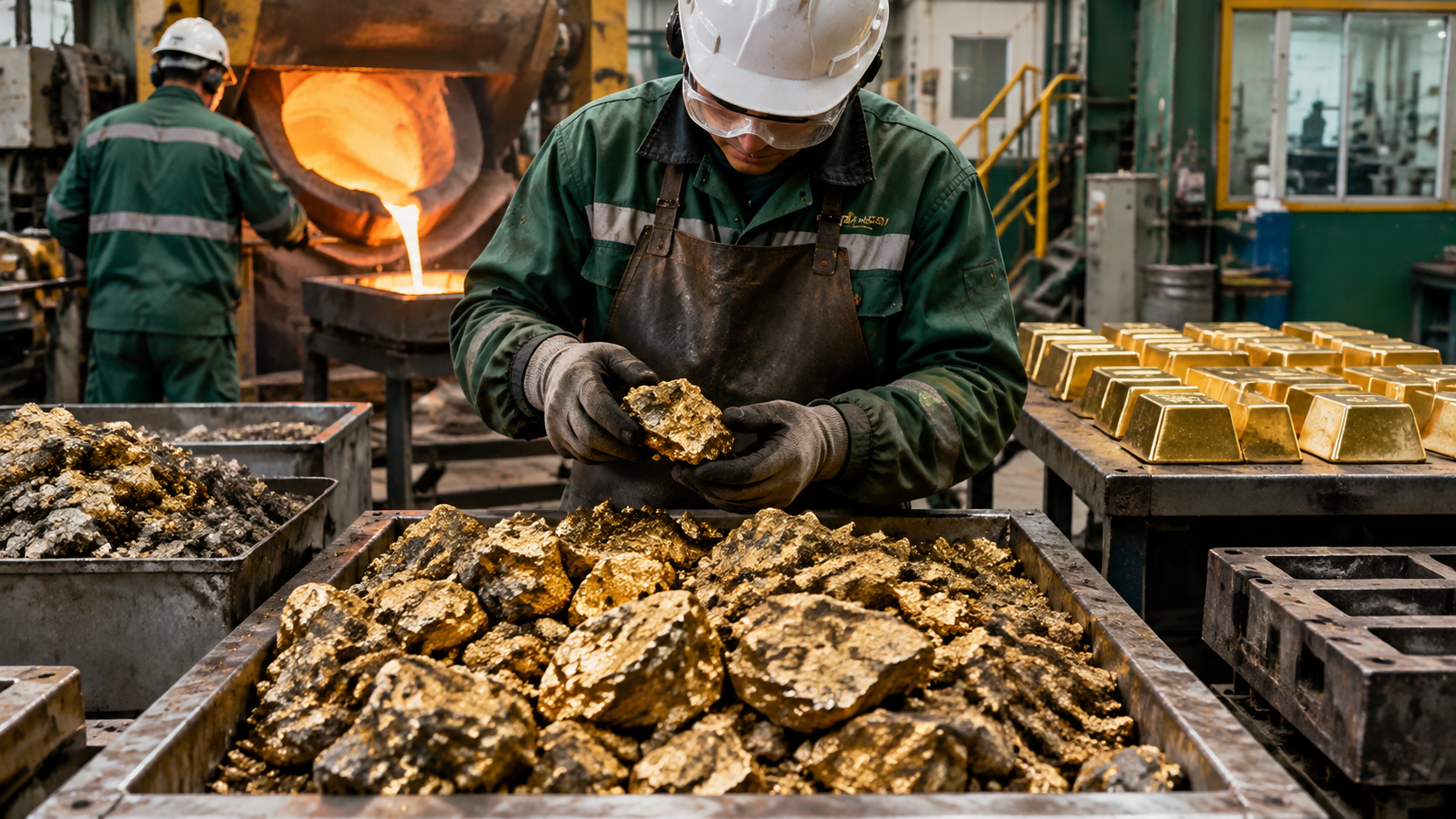
What Is Doré? Understanding Gold Before Refining
Discover what doré is, why its gold and silver content varies, and how a refinery assay helps establish metal content before refining or settlement.
Key takeaways
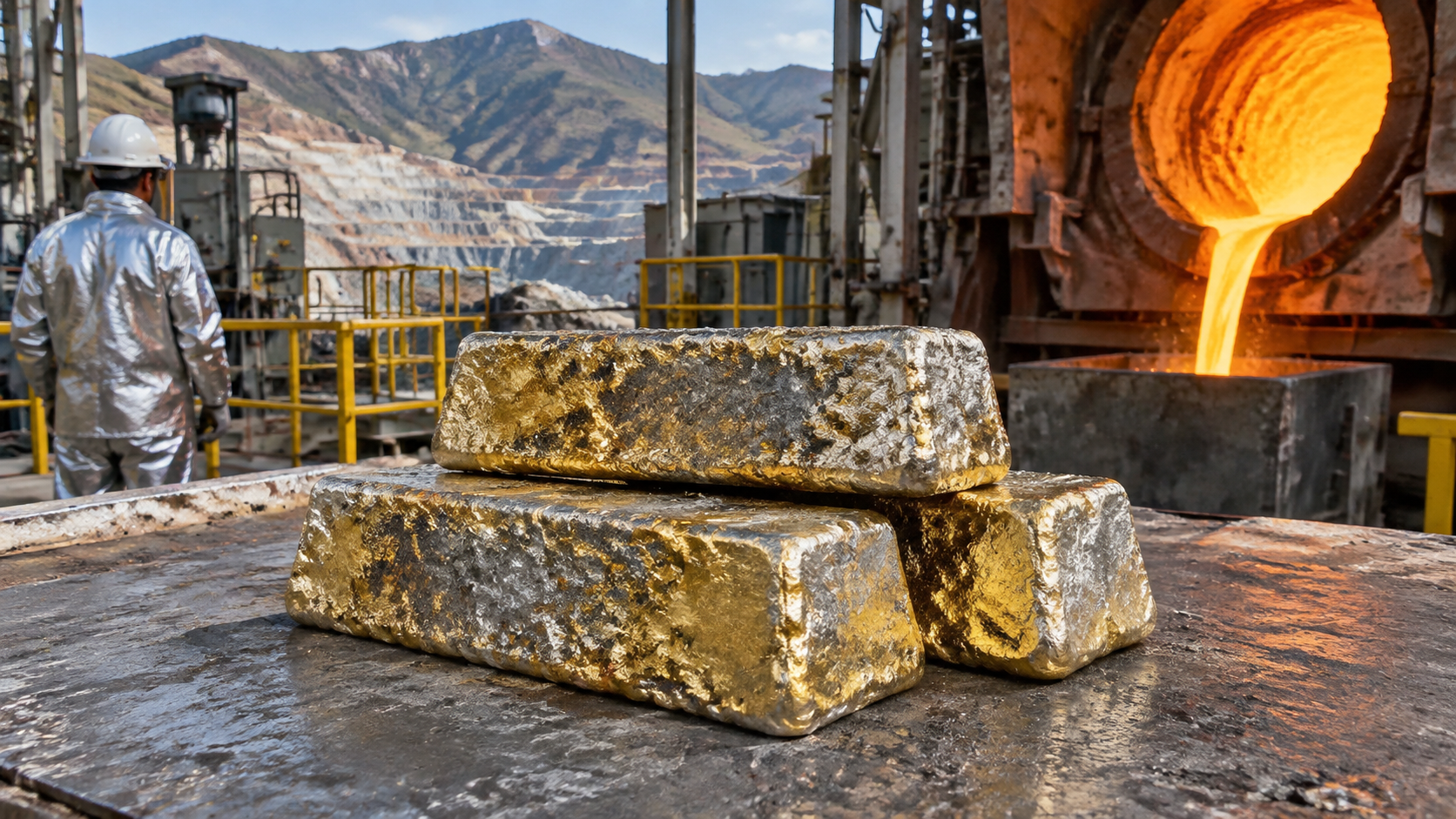
- Doré is an intermediate metal product, not a fixed-purity gold bar.
- Its composition varies and can include gold, silver and other metals.
- A representative refinery assay helps establish metal content before final settlement or further refining.
- Contained metal, payable value and operating profit are different measures; commercial terms and costs matter.
A heavy, gold-coloured bar lands on a counter. Is its whole weight gold? And if someone offers to buy it, what exactly are they paying for?
Those questions bring us to doré: an intermediate metal product that can contain gold and other metals, often including silver. Its exact composition varies. It is not the same as a finished bar of refined gold.
At Teqwah, we believe understanding that difference brings you closer to the real work behind gold. The opportunity is exciting precisely because value must be created through execution—not assumed from a shiny surface.
What is doré, in plain language?
Think of a small miner who has recovered precious metals from mined material. After processing and smelting—heating material to separate and collect metals—the result may be cast into a doré bar.
That bar is a step along the production journey, not necessarily the finished product. It can contain gold, silver and other metals that still need to be identified and separated.
The word doré describes an intermediate product, not a fixed gold purity. Two bars of the same weight can contain very different quantities of gold.
For a shopkeeper buying a sack of mixed nuts, total weight does not tell them how much of each variety is inside. Doré presents a similar measurement challenge, although precious-metal testing requires much more specialised work.
Why this matters: a bar's weight tells you how much material you have. It does not, by itself, tell you how much gold you have.
Why does doré composition vary?
Imagine two miners working with different deposits. One source contains more silver alongside its gold. Another has a different mixture of metals. Their processing methods may also differ.
The resulting doré can therefore have different compositions. Its gold content cannot safely be inferred from the word “doré”, its colour or its apparent heft.
This creates a practical decision for anyone assessing a lot: should a purchase rely on an estimate, or on measured metal content under agreed terms?
A useful starting checklist is:
- What is the recorded weight of the lot?
- How was a representative sample taken?
- What does the assay report say about the metals tested?
- Which results and deductions will govern payment?
Those questions separate an attractive-looking object from a transaction that can be evaluated. Appearance starts a conversation; measurement supports a valuation.
What does a refinery assay establish?
An assay is a test used to determine metal content. A refinery assay helps establish what is present in doré before final settlement or further refining.
The important word is “representative”. A sample needs to reflect the lot being assessed, rather than merely a convenient spot on its surface. Depending on the process, material may be melted and mixed before sampling to help obtain a representative sample.
The laboratory then uses suitable analytical methods to measure relevant metal content. The report should be read for what it actually tests and reports; an assay is not automatically a complete inventory of every possible substance.
Picture a seller expecting payment for a certain gold content. If the agreed assay finds less gold, the payment calculation may change. If silver is present, whether it attracts payment depends on the commercial terms.
Testing also has limits. An assay helps answer a composition question. It does not, on its own, prove lawful origin, ownership or the completeness of transaction records.
Doré is a stage in gold's journey: weight measures the material, while an assay helps establish the metal content behind its value.
How does doré become a settlement amount?
Suppose a hypothetical doré lot weighs 10 kilograms and the agreed assay reports 70% gold. That implies 7 kilograms of contained gold, not 10. These figures are an illustration, not a typical composition or an operating result.
Even then, contained gold is not automatically the same as payable gold or cash received.
Settlement means determining and paying the amount due under the transaction's terms. Those terms may address payable metal, the pricing reference and timing, refining charges, other deductions and how assay disagreements are resolved.
For a small miner paying workers and transport bills, those details affect cash flow. A promising estimated metal value is not yet money available to spend.
The distinction matters to participants, too. Metal value is not operating profit. Recovering, assessing, transporting and refining material can involve costs. A movement in the gold price alone does not explain whether an operation has created value.
What should a future participant understand?
For people who see potential in gold but cannot run a mine themselves, doré offers a useful lesson: understand the process between production and recorded financial results.
At Teqwah, gold mining and physical gold trade are core activities, alongside productive machinery and selected real estate. We deploy equipment and operating capital into mining, and physical gold is assessed, consolidated and moved through documented channels.
Our TGC participation connects participants to our unified pool, rather than to a personally selected mine or bar. TGC is a divisible participation unit, not an exchange-traded gold price. Its value is our recorded pool value divided by circulating TGC, and it can rise or fall.
That is the opportunity we are working to build: accessible participation in productive operations, with outcomes that depend on actual work. Understanding doré helps you approach that opportunity with better questions—not assumptions about purity or profit.
Frequently asked questions
Is doré pure gold?
No. Doré is an intermediate metal product with variable composition. It can contain gold, often silver, and other metals. Its name does not establish its purity.
Is a doré bar the same as a refined bullion bar?
No. Doré still requires assessment and potentially further refining. Refined bullion is produced to a stated fineness, meaning its precious-metal purity.
Does a refinery assay determine the final payment?
It helps establish metal content. Final payment also depends on agreed commercial terms, including pricing, payable metals and applicable charges or deductions.
You can keep learning about our approach and decide whether it fits your goals. Explore Teqwah →
Investing involves risk; values can fall. This article is education, not financial advice.
Teqwah view
At Teqwah, we connect participation with gold mining, physical gold trade and productive operations. We see understanding doré as a practical way to bring you closer to that journey: real value depends on assessment, execution and recorded results, not appearance alone.
Sources
Investing involves risk. TGC value can fall. This is not investment advice.
Comments
No comments yet — be the first.