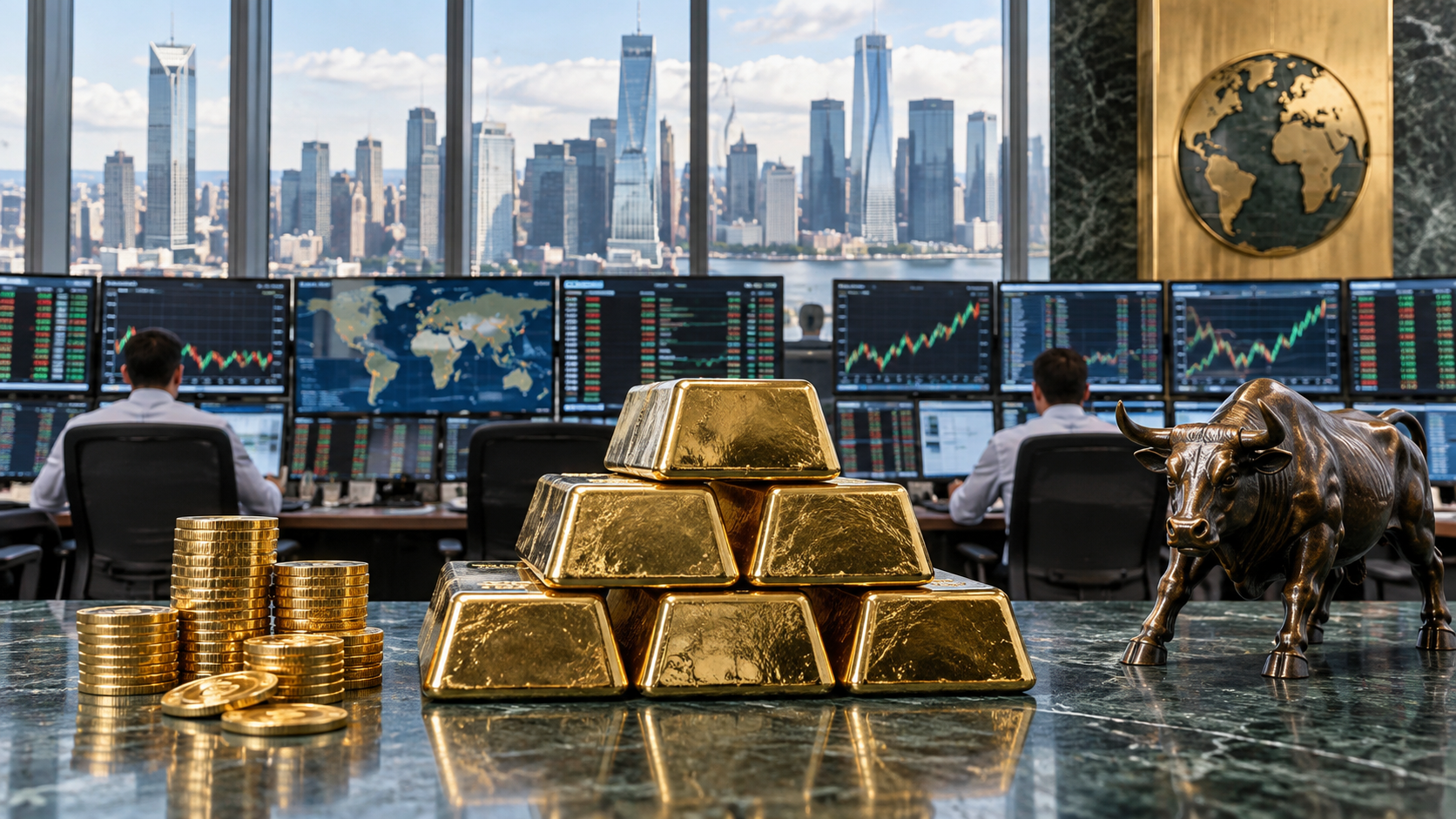
Why Gold Prices Move: A Practical Guide to the Main Drivers
Discover why gold prices rise and fall, how currencies and interest rates matter, and why the time period changes the story.

Key takeaways
- Gold prices reflect several interacting drivers, so one headline rarely explains every move.
- Currencies, expected interest rates and real yields can change gold’s appeal before policy decisions are announced.
- Safe-haven demand does not prevent short-term falls, particularly when investors need cash.
- TGC reflects recorded pool value per circulating unit; it does not directly track the gold price.
You check the gold price before breakfast. By lunchtime, it has fallen—even though the news still sounds worrying. If gold is a safe haven, why is it moving the “wrong” way?
At Teqwah, we believe that question opens a better conversation than any confident prediction. Gold prices reflect global buying and selling, currencies, interest-rate expectations and perceived risk. Several forces can pull in opposite directions at once.
Understanding them helps you look beyond the headline—and recognise the difference between a moving market price and the work of creating operating value.
The useful question is not simply “Why did gold move?” but “Which drivers changed, and over what time period?”
1. Start with the price you are actually seeing
Imagine a shopkeeper replacing a gold bracelet in the display. The international gold price may have barely changed, but the replacement costs more because the local currency has weakened.
Gold is commonly quoted internationally in US dollars. Your local price also reflects the exchange rate. A stronger dollar often creates pressure on dollar-priced gold because it becomes more expensive for buyers using other currencies. But that relationship is not a rule: both can rise when demand for safety increases.
The price of a physical item can also include fabrication, transport, dealer margins and applicable taxes. A small bar and a bracelet do not necessarily carry the same premium above their gold content.
Before comparing prices, check:
- Currency: Are both quotes in the same currency?
- Weight and purity: Are you comparing equivalent gold content?
- Price type: Is this a market quote, a retail selling price or a dealer’s buying offer?
- Timing: Were the quotes recorded at the same time?
Why this matters: A higher shop price does not always mean the global gold market has risen.
2. Watch interest-rate expectations, not just announcements
A young saver choosing between gold and an interest-paying deposit faces a simple trade-off. Gold itself pays no interest. When relatively low-risk savings offer more attractive returns, holding gold can become less appealing.
This is gold’s opportunity cost: what you give up by choosing it instead of something else.
Inflation changes that calculation. A deposit’s headline interest rate matters less if rising living costs absorb much of the return. Investors therefore watch real yields—returns after allowing for inflation. Rising real yields often weigh on gold; falling real yields can support it. Neither outcome is automatic.
Markets also look ahead. Gold can move when investors revise expectations for future interest rates, well before a central bank announces a decision.
Suppose a rate cut was widely expected. The announcement may produce little reaction. A signal that fewer cuts are coming could matter more than the cut itself.
Why this matters: Compare the news with what the market expected, not just with yesterday’s policy rate.
3. Treat inflation and fear as influences, not switches
It is tempting to assume that higher inflation or frightening headlines must push gold up. Reality is more complicated.
Inflation can encourage people to seek a store of value. But it can also lead investors to expect tighter monetary policy and higher real yields. Those responses can pull gold in different directions. Gold is not a reliable short-term match for every rise in household bills.
The same caution applies to perceived risk. During political tension or financial stress, some investors buy gold as a safe-haven asset—something they hope will preserve value during uncertainty.
Others may sell gold to raise cash, cover losses elsewhere or meet urgent payment demands. That helps explain why gold can fall during a crisis without making the safe-haven idea meaningless.
A shopkeeper facing an unexpected bill may sell savings for liquidity, meaning ready access to cash. Large investors can face their own version of that problem.
Why this matters: Ask whether investors are seeking protection, seeking cash or adjusting their interest-rate outlook.
4. Follow buyers and sellers across different time periods
Gold has several sources of demand: jewellery buyers, investors, central banks and industrial users. Their motives and timing differ.
A family may delay jewellery purchases when prices rise. An investor may buy because prices are rising. Central-bank purchases can reflect reserve-management decisions rather than the latest trading headline.
Supply matters too. Mines produce new gold, while recycling brings existing gold back to market. Higher prices can encourage people to sell old jewellery. Mine production usually responds more slowly because equipment, development and operating changes take time.
In the short term, investment flows and trading can move prices quickly. Futures—contracts for future delivery—and leveraged positions can amplify moves when traders adjust or close positions.
Across longer periods, changes in investment demand, reserve buying and supply become important context. The same explanation may not fit an afternoon’s drop and a multi-year trend.
Why this matters: Start with the period you want to understand. Then check which buyers, sellers and expectations changed within it.
5. Separate gold’s market price from operating performance
For a small miner, a higher gold price can improve potential sales revenue. It does not automatically improve profit. Fuel, equipment availability, recovery rates and the amount of gold actually produced also matter.
That distinction sits at the heart of our approach at Teqwah Capital. We deploy capital across gold mining, physical gold trade, productive machinery and selected real estate. For people who see potential in gold but cannot run a mine themselves, our model brings those activities into one participation.
A Teqwah investment through TGC is not the same as buying a unit that tracks the gold price. TGC is our divisible participation unit, valued by dividing recorded pool value by circulating TGC. It is not exchange-traded, and its recorded value can rise or fall.
The opportunity is exciting precisely because value must be created through execution. Gold’s market price provides context; operating results still matter.
Frequently asked questions
Does gold always rise when inflation rises?
No. Inflation can support demand, but interest-rate expectations, real yields and currencies can outweigh that effect, especially over short periods.
Why can gold fall during a crisis?
Investors may sell to raise cash or cover other losses. A stronger dollar or changing rate expectations can also offset safe-haven buying.
Does a rising gold price mean TGC rises too?
Not automatically. Our TGC value comes from recorded pool value divided by circulating units, not from directly tracking gold’s market price. Operating outcomes can be positive or negative.
Keep asking what changed—and over which period. If you would like to understand how we connect participation with productive operations, explore TGC at teqwah.com →.
Investing involves risk, values can fall, and returns are variable and not guaranteed. This article is education, not financial advice.
Teqwah view
At Teqwah, we connect participation with gold mining, physical gold trade and productive operations rather than a simple bet on gold’s next move. We see the opportunity in putting capital and assets to work, while keeping clear that TGC reflects recorded pool value and that outcomes can be positive or negative.
Sources
Investing involves risk. TGC value can fall. This is not investment advice.
Comments
No comments yet — be the first.