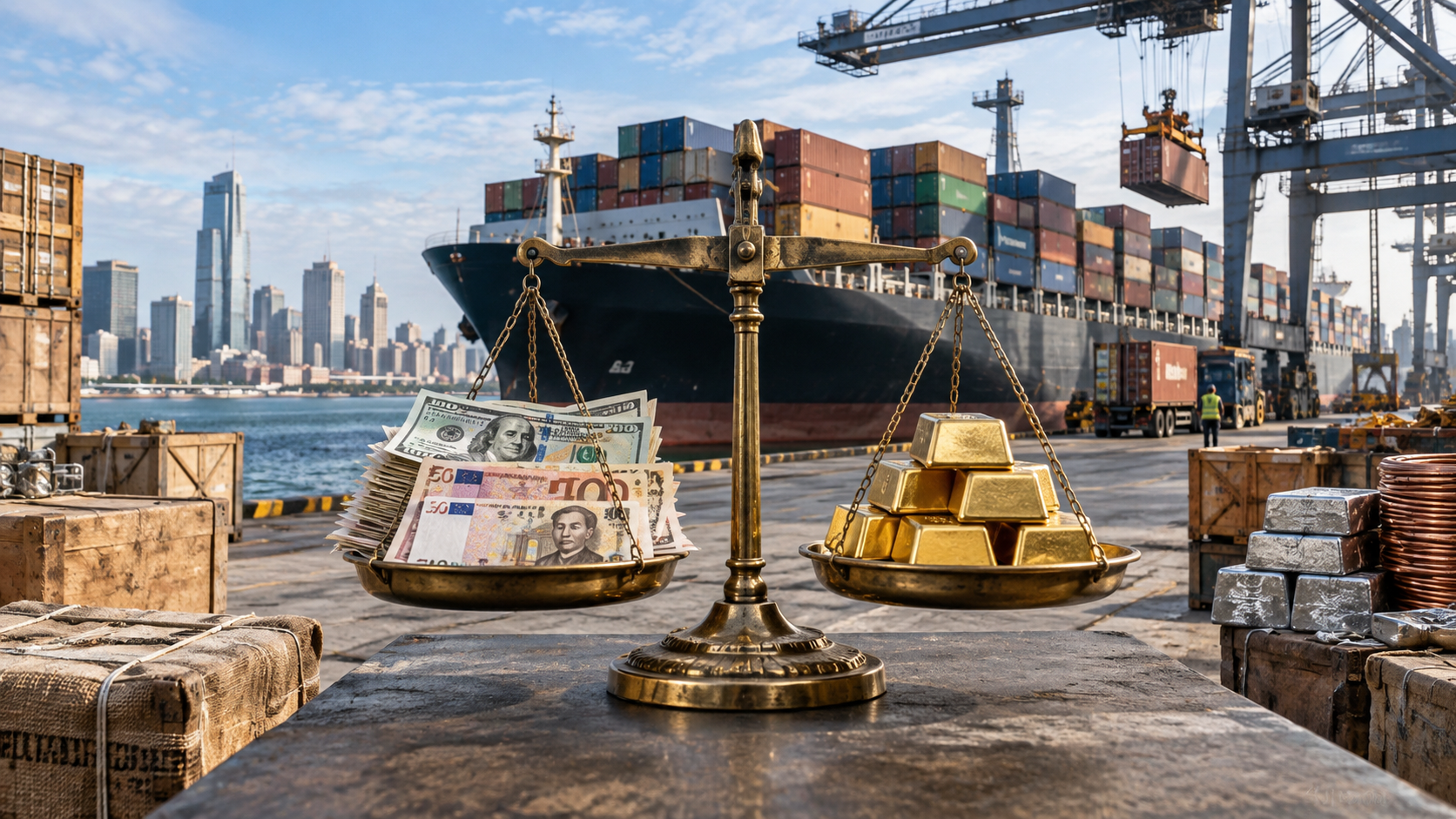
Predictable Inflation: Why Stable Prices Help Businesses Plan
Discover how predictable inflation helps businesses plan wages, purchases and mining projects—and why unexpected costs can squeeze future profits.
Key takeaways
- Relatively stable, predictable inflation helps businesses budget, but it does not mean prices are unchanged or affordable.
- Unexpected price increases can disrupt wage commitments, purchasing decisions and long-term investment plans.
- A mine’s fuel, equipment and labour costs can change differently from overall inflation, while future gold sales remain uncertain.
- Gold participation requires attention to operating results and risk; inflation alone does not determine investment outcomes.
Imagine running a small shop. You agree next month’s wages, order stock and set aside money for a new fridge. Then your supplier raises prices far more than expected. Suddenly, the same budget buys less—and the fridge may have to wait.
A mine faces a similar challenge, with fuel deliveries, spare parts and equipment replacing shop shelves. At Teqwah, we want to make that connection clear: understanding inflation helps you look beyond the appeal of gold and understand the work behind productive operations.
Predictable prices do not remove business risk. They make the next decision easier to judge.
Why predictable inflation matters more than unchanged prices
Inflation means a broad rise in prices over time. Predictable inflation means that the pace of that rise stays reasonably close to what businesses and households expect. It does not mean every price stays still—or rises at the same rate.
Think of a baker preparing a yearly budget. If flour, packaging and wages increase roughly as expected, the baker can allow for higher costs before committing to orders. If those costs suddenly jump, yesterday’s sensible selling price may no longer cover tomorrow’s expenses.
Relatively low, stable inflation generally makes planning easier than high or erratic inflation. But predictability and affordability are different things. An expected increase can still be painful, especially when customers cannot pay more.
Why this matters: a useful budget needs realistic assumptions, not an expectation that nothing will change.
Predictable inflation does not make the future certain. It gives businesses a clearer starting point for deciding what they can afford.
How businesses plan wages and everyday purchases
Suppose a shopkeeper wants to hire an assistant. The decision is not just whether this month’s sales cover this month’s pay. It is whether the business can support that commitment through quieter months and rising costs.
When inflation is relatively predictable, employers can prepare wage budgets and workers can better judge what their earnings might buy. Unexpected inflation can reduce purchasing power—the amount of goods and services money buys—before pay catches up.
Purchasing decisions face the same tension. Should a business buy spare parts now or preserve cash for later? Buying early may avoid a price increase, but it ties up money and creates storage costs. Waiting preserves flexibility but leaves the buyer exposed to changing prices.
A practical planning checklist includes:
- Separating essential spending from purchases that can wait.
- Checking when supplier quotes expire and contracts reset.
- Allowing room for costs to differ from expectations.
- Reviewing budgets as new information arrives.
These are general planning tools, not a description of specific procedures within our operations.
Why a mine feels uncertainty in several places at once
For a small mine operator, a fuel surprise is not just a bigger invoice. It can change the cost of moving material, running machinery and transporting supplies.
Equipment creates another challenge. A machine ordered today may arrive later, while replacement parts may be priced in a different currency. Exchange-rate changes, shipping disruption or a shortage can push those costs up even when overall inflation looks steady.
That distinction matters: a national inflation measure describes a broad basket of prices, not the exact shopping list of a mine.
Revenue is uncertain too. Future gold sales depend on the quantity produced and the price received. Stable general inflation does not make the gold price stable, and rising costs do not automatically lead to higher gold revenue.
At Teqwah Capital, our activities include gold mining, physical gold trade and productive machinery. That is why the relationship between operating costs and sales is worth understanding: productive assets still need productive execution.
Why this matters: gold’s appeal and a mine’s profitability are not the same thing.
How price surprises change long-term projects
Now imagine a miner considering a larger processing machine. The purchase needs money upfront, while any benefit arrives through future production.
The operator must estimate installation costs, fuel, maintenance, wages and future sales. More predictable inflation makes those estimates easier to compare across time. Greater uncertainty widens the range of possible outcomes and may lead the operator to delay, resize or reject the project.
Consider a purely hypothetical example. A project expects sales of 120 units of money and operating costs of 100, leaving 20 before other expenses. If costs unexpectedly rise to 110 while sales remain unchanged, that gap falls to 10. A modest cost surprise has halved the amount left over.
The example is not a forecast or a figure from our business. It shows why the difference between revenue and costs matters more than revenue alone.
For longer projects, there is another question: what will future money buy? A larger cash receipt is not necessarily a larger gain in purchasing power. Planning needs to consider both the number on the invoice and its real economic value.
What this means when you explore gold participation
For people who see potential in gold but cannot run a mine themselves, understanding these moving parts is empowering. You do not need to predict every fuel delivery. You need to recognise what can change the outcome.
A Teqwah investment provides one participation through TGC across our unified pool, rather than a choice of individual projects. TGC is a divisible participation unit whose value is our recorded pool value divided by the units in circulation. It is not exchange-traded, and its value can rise or fall.
The opportunity we are building connects participants with real operations. Its appeal rests on work that must create value—not on assuming inflation will lift every asset or that gold sales will always outpace costs.
Frequently asked questions
Does predictable inflation mean prices stop rising?
No. Prices can keep rising at a relatively stable pace. Predictability helps businesses budget for change; it does not eliminate that change.
Can mining costs rise when overall inflation is stable?
Yes. Fuel, equipment, transport and wages can move differently from a broad inflation measure. Currency changes and supply shortages can also affect particular costs.
Does higher inflation always help gold investments?
No. Gold prices respond to several influences, and mining costs can rise without matching sales growth. Neither gold nor participation in mining removes investment risk.
Keep exploring the connection between productive assets and participation with us at teqwah.com.
Investing involves risk, values can fall, and this article is education, not financial advice.
Teqwah view
At Teqwah, we connect participation through TGC with a unified pool spanning gold mining, physical gold trade, productive machinery and selected real estate. We want you to understand why operating costs and future sales matter to that journey: real assets create an opportunity, but outcomes depend on recorded operating performance and can be positive or negative.
Sources
Investing involves risk. TGC value can fall. This is not investment advice.
Comments
No comments yet — be the first.