Personal Inflation: Why Your Costs Feel Different
Your personal inflation rate depends on what you buy. Learn why rent, transport and everyday spending can tell a different story from the headline.

Key takeaways
- Published inflation measures a representative basket, not your household's exact purchases.
- Your spending shares determine how strongly rent, transport and other price changes affect you.
- Slower inflation usually means slower price increases, not a return to earlier prices.
- A personal inflation estimate can support budgeting, but no investment automatically offsets your household's rising costs.
Your rent renewal arrives. Your grocery bill has crept up. Then you read that inflation is slowing. You look at your bank balance and wonder: slowing for whom?
Both experiences can be true. A published inflation rate describes price changes across a broad basket of purchases. Your household pays for its own particular basket, with its own pressure points.
At Teqwah, we believe understanding that difference gives you a stronger starting point for saving, budgeting and evaluating investments. Before asking how to grow your money, it helps to understand what your money needs to keep buying.
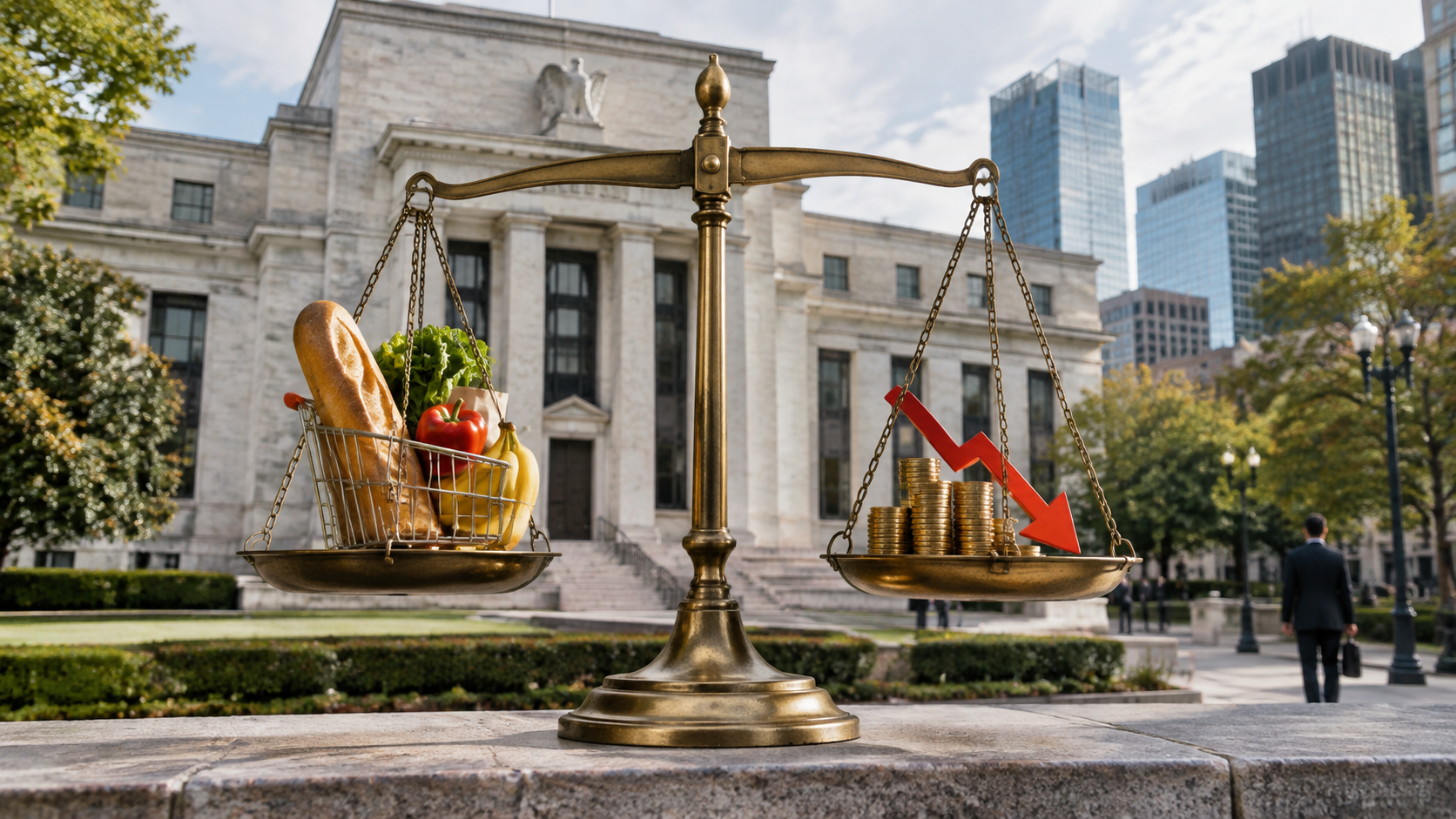
The headline measures a broad basket. Your personal inflation depends on the basket you actually buy.
Why the headline does not match your household
A consumer price index tracks changes in the prices of a representative basket of goods and services. It combines categories such as housing, food, transport and healthcare, giving each a weight: its relative importance in spending.
Those weights matter. A price increase in a large spending category affects the overall result more than the same increase in a small one.
But a representative basket is not your shopping list. A young renter commuting by train, a family running two cars and a homeowner living near work face different bills. The same economy can produce very different household experiences.
Published inflation is useful for understanding the broader direction of prices. It is not a promise that every household's costs have changed by the same amount. Housing measurement also varies between indices, so the treatment of rent and homeownership deserves attention when comparing a headline with your budget.
Why this matters: a gap between your bills and the headline does not, by itself, mean either is wrong.
Rent or transport: your spending weights change the story
Imagine two households with the same total spending. One puts a large share towards rent. The other spends more on transport. If rents rise faster than transport costs, the first household will face more pressure, all else being equal.
Here is a deliberately simplified, fictional example using only two categories:
- Household A spends 60% on rent and 40% on transport.
- Household B spends 30% on rent and 70% on transport.
- Rent prices rise 10%, while transport prices remain unchanged.
Keeping purchases unchanged, Household A's basket becomes 6% more expensive. Household B's becomes 3% more expensive. Those figures are illustrations, not actual inflation readings.
The difference comes entirely from the weights. Neither household needs to misunderstand the news for its experience to differ.
The same principle applies within categories. A driver buying fuel faces a different mix from a passenger buying a fixed-price travel pass. Your basket includes not just broad labels, but the particular products, services and contracts you use.
Why slower inflation can still feel expensive
Slower inflation usually means prices are rising more slowly, not returning to where they were. A smaller increase on an already higher grocery bill still leaves you paying more.
Timing adds another wrinkle. A renter on a fixed lease may feel little immediate change, then face a jump at renewal. A shopkeeper paying delivery charges may notice fuel-related changes sooner. Annual school fees or insurance renewals can create sudden pressure rather than a smooth monthly increase.
Attention matters, too. You see bread and milk prices frequently. You might buy a washing machine once in several years. Frequent purchases can dominate your impression of inflation, even when less visible expenses carry substantial weight in your budget.
There is also an income question. If your pay does not keep pace with the cost of your basket, your purchasing power falls: the same income buys less. That squeeze is real, even if the headline rate is easing.
Build a practical personal inflation estimate
You do not need a complicated dashboard. Start with a spending record that includes regular bills and a monthly allowance for predictable annual expenses.
Group purchases into a few useful categories, then work out each category's share of your starting budget. Compare prices for similar quantities and quality over the same period, such as one year.
A simple approximation is:
Personal inflation ≈ the sum of each starting spending share multiplied by its price change.
Use shares as decimals when calculating. For example, a category taking 20% of your budget and rising 5% contributes one percentage point to your estimate.
Keep price changes separate from lifestyle changes. A bigger apartment, extra restaurant meals or a longer commute can raise spending without representing inflation in the same purchases. Smaller packaging can do the opposite: leave the sticker price unchanged while increasing the price per unit.
Your estimate will not reproduce an official index. Its value is practical: identifying which costs deserve attention before the next renewal or budgeting decision.
Turn the insight into better money decisions
Once you know your pressure points, your choices become clearer. Compare recurring contracts where possible. Budget ahead for essential bills. Keep near-term spending needs separate from money you can leave invested.
For a young saver, the important question is not simply whether an investment rises. It is whether the result, after fees and relevant taxes, helps preserve purchasing power over the intended period. Investment losses and limited access to funds matter, too.
At Teqwah Capital, we connect participation through TGC with our unified pool across gold mining, physical gold trade, productive machinery and selected real estate. For people interested in those operations without running them themselves, we manage allocation while participants hold one proportional participation.
That is the opportunity we are working to build: participation in productive activity where results depend on execution. It is not a claim that TGC tracks your household expenses or automatically offsets inflation. Its recorded value can rise or fall.
Frequently asked questions
What is personal inflation?
Personal inflation is the change in the cost of your own spending basket. It reflects both the price changes you face and how much of your budget goes to each purchase.
Does falling inflation mean my bills will fall?
Not necessarily. Falling inflation usually means slower price growth. Some prices may decline, but a lower positive inflation rate still means the overall measured basket is becoming more expensive.
Can an investment protect against every household cost increase?
No investment reliably matches every household's changing bills. Consider risk, fees, access to your money and your time horizon, rather than assuming an asset will offset your personal inflation.
Bring a clearer understanding of your own basket to your next financial decision. When you are ready to learn about our approach at Teqwah, explore TGC →.
Investing involves risk, values can fall, and this article is education, not financial advice.
Teqwah view
At Teqwah, we connect participants with productive operations through one proportional participation, TGC. We see understanding personal inflation as a useful starting point for evaluating that opportunity with clear expectations: our results depend on recorded operating performance, and value can rise or fall.
Sources
Investing involves risk. TGC value can fall. This is not investment advice.
Comments
No comments yet — be the first.