
Argentina puts a $350,000 price of entry on citizenship as it seeks investment
The proposed passport programme is part of President Javier Milei’s drive to attract foreign money, but economists question investor confidence and screening risks.
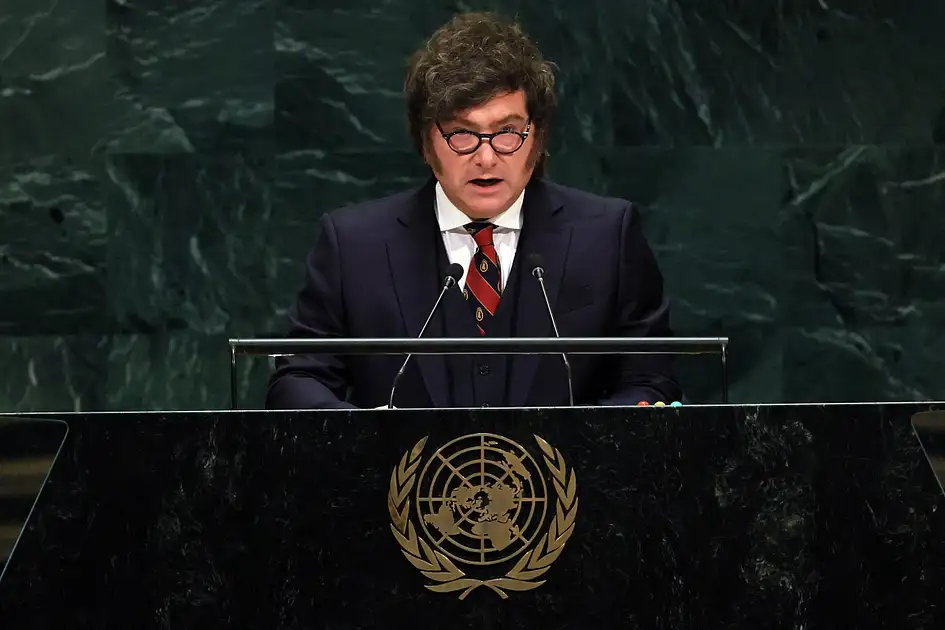
Key takeaways
- Argentina plans to offer citizenship to foreigners investing at least $350,000.
- Spouses and children could qualify through Treasury contributions, with a lower amount for those under 18.
- The economy ministry promises checks on the origin of funds, money laundering and national security.
- Argentina attracted $3.134 billion in foreign direct investment last year, far below Brazil and Mexico.
- The programme comes alongside major energy and mining investment pledges and a dispute over foreign ownership of rural land.
Foreigners who invest at least $350,000 in Argentina could gain citizenship under a government plan that also opens a route for their spouses and children, according to Khaleej Times. For President Javier Milei, the proposal is another way to draw money into an economy seeking investment and stronger dollar reserves. The challenge is not only attracting applicants, but convincing investors that his economic changes will last.
The government announced its Citizenship by Investment Program alongside Argentina Week in Paris. It described two straightforward, transparent routes to an Argentine passport, although the report did not spell out how both would work. Spouses and children could also obtain citizenship through a Treasury contribution of $100,000, falling to $25,000 for those younger than 18. The scheme is scheduled to take effect later this year.
A passport offer with a financial purpose
The programme has an explicit financial goal. The government said the proceeds would help reinforce Argentina’s public finances. In a post on X, the economy ministry said investments would undergo strict checks to establish where the money came from, prevent money laundering—the concealment of illegally obtained funds—and protect national security. Those assurances put the screening of applicants and their money at the centre of the proposal.
Argentina’s economy ministry said investments would face rigorous checks covering the traceability of funds, money-laundering prevention and national security.
The push comes against a wide regional investment gap. Argentina, Latin America’s third-largest economy, received $3.134 billion in foreign direct investment last year, according to OECD figures cited by Khaleej Times. That measure tracks investment from abroad into businesses and projects. Brazil attracted $76.877 billion and Mexico secured $40.871 billion. Milei has cut public spending, eased economic rules and removed trade barriers in an effort to improve competitiveness and replenish shrinking dollar reserves.
Yet policy changes alone have not settled investors’ doubts. Economist Marcelo Elizondo told AFP that investors were waiting for evidence that Argentina’s economic direction could endure. Economist Pablo Tigani, a frequent Milei critic, raised a different concern: the citizenship offer could attract drug traffickers or people with questionable backgrounds who cannot enter other countries. His warning highlights the stakes of the screening process promised by the ministry.
Big pledges, and a fight over land
Milei’s Paris trip also produced several investment promises, the report said. France’s TotalEnergies pledged $10 billion for oil and gas exploration in Patagonia, while Swiss mining group Glencore committed $4 billion to a copper project. The president met investors during Argentina Week at the OECD. These were reported as pledges, rather than money already invested, as the government sought to turn its economic opening into new projects.
The citizenship proposal follows another contested opening to foreign capital. Argentina’s Supreme Court upheld Milei’s 2023 decree removing a 15% ceiling on foreign ownership of rural land that had applied since 2011. Veterans of the 1982 war with Britain over the Falkland Islands, known in Argentina as Las Malvinas, opposed the measure, accusing the president of selling off the country.
The next tests are implementation and political resistance. The passport programme is due to begin later this year, with the promised financial checks central to how it operates. Separately, a demonstration against the rural-land change has been called for next week, and the opposition plans to try to block that change in Parliament.
Sources
Investing involves risk. TGC value can fall. This is not investment advice.
Comments
No comments yet — be the first.