Ecobank puts processing at the heart of Uganda’s mineral wealth push
The bank is urging Uganda to finance industries beyond mining, as the government plans a standalone regulator and the EU prepares additional support.
Key takeaways
- Ecobank’s Grace Muliisa urged Uganda to invest beyond extraction in mineral processing and manufacturing.
- Muliisa said Ecobank had committed more than $1 billion to Africa’s mineral value chain over five years.
- She proposed carefully structured pension-fund investment in mature projects, not exploration.
- Uganda plans a standalone minerals regulator to strengthen oversight of the sector.
- The EU is preparing more than €16 million in additional support, including for artisanal mining formalisation.
The biggest earnings from minerals may come long after they leave the ground. In the global battery industry, raw mineral extraction is worth about $11 billion, against more than $1.2 trillion for equipment and electric vehicles, according to figures cited by Ecobank Uganda Managing Director Grace Muliisa. Her message to Uganda: mineral deposits alone are not enough to build the businesses and jobs the country wants.
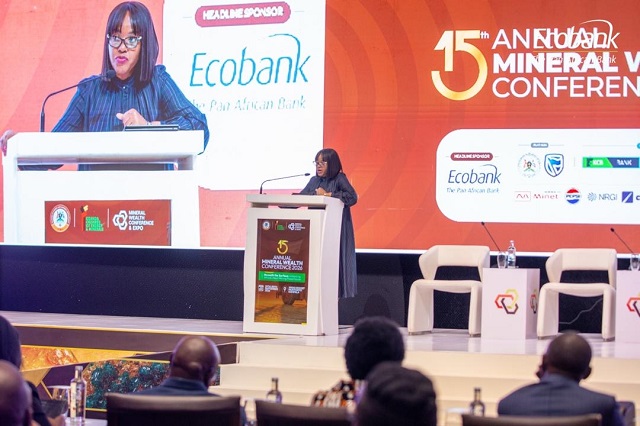
Speaking at an Ecobank CEO Breakfast during the 15th Annual Mineral Wealth Conference at Speke Resort Munyonyo, Muliisa urged Uganda to put more money into processing and manufacturing, according to The Independent Uganda (direct). The conference, organised by the Uganda Chamber of Energy and Minerals, brought government officials, mining companies, investors and lenders together to discuss investment in the sector.
Muliisa’s comparison showed where she sees the opportunity. Beyond extraction, she valued global battery refining at about $44 billion and battery components at $271 billion. Uganda should therefore look beyond selling raw minerals and build businesses that turn them into more valuable products, she said. The East African market and the African Continental Free Trade Area offer potential outlets for those products within Africa.
Financing the businesses around the mine
Ecobank says it wants to fund more of that value chain—the linked businesses that take minerals from extraction through processing. Muliisa said the bank had committed more than $1 billion to Africa’s mineral value chain over the past five years. Its financing has covered mining operations and related businesses in countries including Côte d’Ivoire, Guinea and Zimbabwe, as well as smelters and other processors.
The proposed approach would extend beyond mine operators to contractors, suppliers and processing companies. Muliisa said Ecobank could bring partners together to arrange financing too large for one lender. For Uganda, that could give local firms a greater share of mining-related business rather than allowing most of it to remain with large foreign companies.
“We can bring the partners to one table and arrange financing no single lender could carry alone,” Muliisa said.
Domestic savings could provide another source of long-term funding. Muliisa cited the National Social Security Fund, whose assets she said reached 32.8 trillion Ugandan shillings by June 2026. She argued that pension savings should stay clear of exploration risk—the uncertainty of finding viable mineral deposits—but could support mature projects through carefully structured investments. Options included infrastructure bonds, borrowing instruments used to fund infrastructure, local-currency financing and partnerships involving banks, pension funds and development finance institutions.
Regulation and EU support come into focus
The government is also looking at how the industry is supervised. State Minister for Energy and Mineral Development Sidronius Opolot Okasai said minerals lacked a standalone regulator, unlike electricity and petroleum. The government plans to strengthen the sector’s institutions, including by creating an independent minerals regulator.
EU Ambassador to Uganda Jan Sadek said the bloc was preparing more than €16 million in additional support. That funding would help bring artisanal mining into the formal system and support compliance with international standards. The effort matters because small-scale and artisanal miners account for much of Uganda’s mining activity.
The next developments to watch are the planned regulator, the EU funding under preparation and whether financing partnerships can support more processing and manufacturing. Muliisa’s challenge is to connect miners, suppliers, processors and investors so that Uganda’s mineral resources generate a wider base of local businesses, industries and jobs.
Sources
Investing involves risk. TGC value can fall. This is not investment advice.
Comments
No comments yet — be the first.