Family Bank’s Sh1.3bn AfDB deal targets small firms’ import financing gap
The trade finance facility will provide foreign currency funding for Kenyan businesses, including women-owned enterprises and companies in four key sectors.
Key takeaways
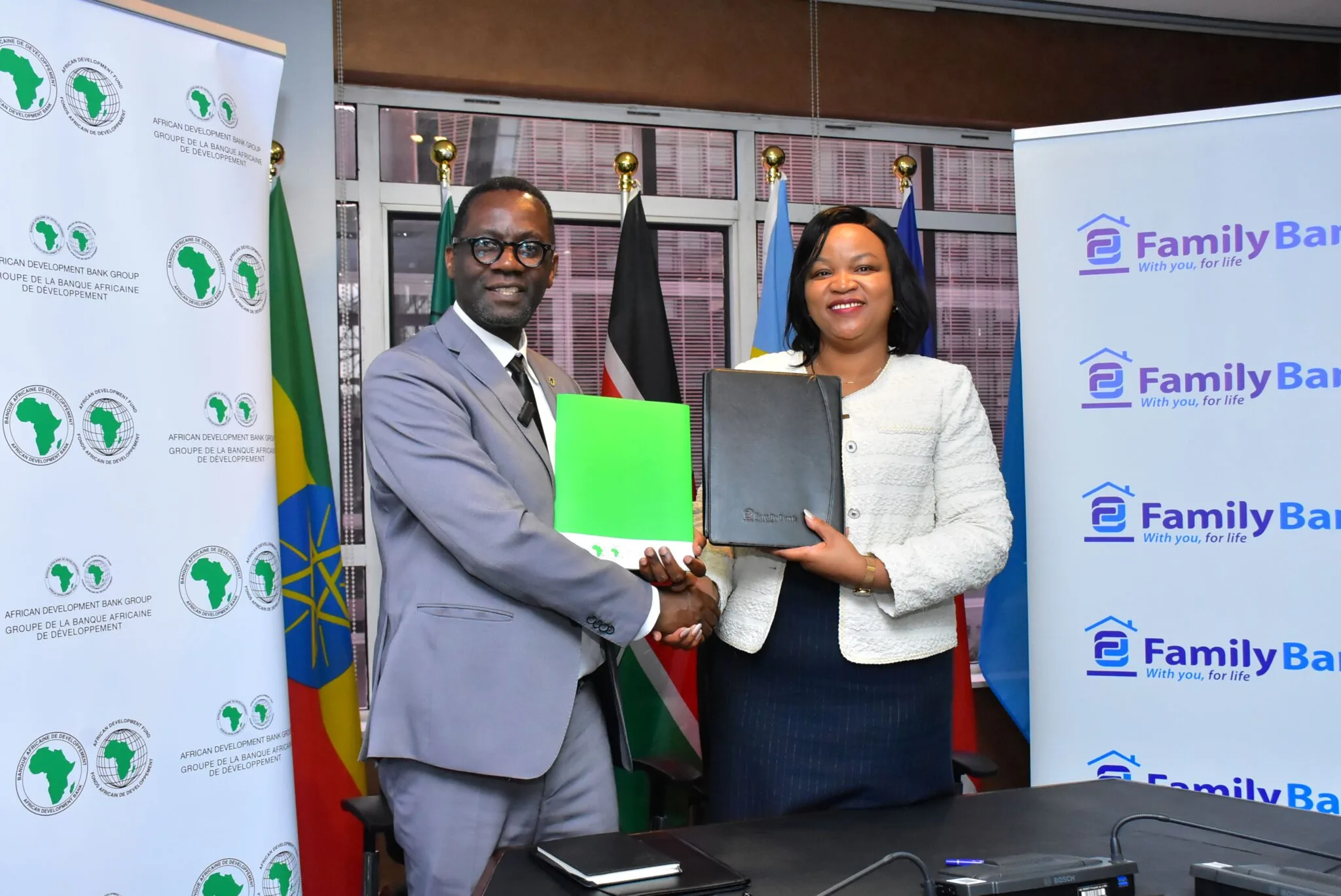
- Family Bank signed a Sh1.3 billion trade finance facility with the African Development Bank.
- The facility will provide foreign currency financing for the import needs of Kenyan businesses.
- Target borrowers include manufacturers, agricultural businesses, healthcare and renewable energy companies, and women-owned enterprises.
- Micro, small and medium-sized enterprises account for more than 80% of Family Bank’s customers, according to CEO Nancy Njau.
- AfDB said the agreement would also support intra-African trade and implementation of AfCFTA.
Micro, small and medium-sized businesses make up more than 80% of Family Bank’s customer base, yet financing gaps continue to hold back their growth, according to its chief executive, Nancy Njau. A new Sh1.3 billion agreement with the African Development Bank (AfDB) is intended to help the Kenyan lender address that challenge, with foreign currency funding aimed at businesses that need to pay for imports.
Family Bank signed the trade finance facility—a funding arrangement supporting cross-border commerce—to increase lending to small and medium-sized enterprises and local companies, according to Capital FM Kenya Business (direct). The agreement puts import financing at the centre of the effort. Its stated purpose is to help meet businesses’ foreign currency needs, rather than simply expand the bank’s lending without a defined trade focus.
Funding imports for smaller businesses
The facility will support businesses in manufacturing, agriculture, healthcare and renewable energy, as well as women-owned enterprises. Those are the sectors and borrowers identified in the announcement. The financing is intended to serve both smaller enterprises and local corporate customers, giving the agreement a reach beyond any single industry while keeping its focus on the import trade needs of Kenyan businesses.
For Njau, the agreement is closely tied to the bank’s existing customer base. She said the funding would allow Family Bank to expand lending to micro, small and medium-sized enterprises, often grouped under the abbreviation MSMEs. Their share of more than 80% refers to the bank’s customers, underlining how central these businesses are to the lender and why their financing constraints matter to its plans.
Njau said the facility would increase Family Bank’s ability to lend to smaller businesses while helping address funding shortfalls that limit their growth.
Njau also said the bank wanted the financing to create practical opportunities for businesses and contribute to economic growth whose benefits are more widely shared. Her comments set out the intended result of the agreement: not just additional lending capacity for Family Bank, but financing that can help businesses pursue opportunities despite the gaps she identified.
A wider African trade ambition
AfDB’s East Africa Director General, Alex Mubiru, placed the deal within a broader commitment to local businesses and Kenya’s financial system. He said the facility would help meet the import trade financing needs of smaller enterprises and local companies. That makes the agreement both a source of funding for Family Bank’s customers and part of AfDB’s stated support for business finance in Kenya.
Mubiru also linked the facility to trade between African countries and implementation of the African Continental Free Trade Area (AfCFTA), the continent’s free-trade initiative. The next point to watch is how Family Bank translates the agreement into lending for the businesses it has identified. The immediate test follows Njau’s stated aim: turning the new financing capacity into tangible opportunities for borrowers.
Sources
Comments
No comments yet — be the first.