Why Gold Mining Yields Vary From Day to Day
Learn why gold mining yields change daily, why one strong shift proves little, and how sampling and longer records help reveal repeatable results.
Key takeaways
- Gold mining yields change with deposit grade, processing volume, recovery efficiency and operating conditions.
- One strong shift is an observation, not proof of a permanent daily average.
- Representative sampling and longer, comparable records help assess whether production is repeatable.
- Gold output is not participant return: costs and recorded pool performance matter.
A small miner finishes an excellent shift. More gold comes through than expected. Someone watching asks the obvious question: “If that happened today, why not every day?”
It is a fair question—and an important one before putting money into productive operations. A busy Saturday does not tell a shopkeeper what every weekday will earn. A strong mining shift has the same limitation.
At Teqwah, we see opportunity in real work, not in treating a standout result as a permanent daily average. Understanding why gold mining yields vary helps you ask better questions about that opportunity.
What does a strong day's yield actually tell you?
First, we need to separate three things that often get called “yield”: the amount of gold recovered, the efficiency of recovery, and the financial return to a participant. They are connected, but they are not interchangeable.
A mine can recover more gold while spending more on fuel, labour or repairs. Higher production does not automatically mean higher profit. And a sample containing plenty of gold does not show how much a processing plant will recover from a whole day's material.
Think of a bakery. Flour quality, the number of loaves baked and the money left after expenses answer different questions. Mining needs the same clarity.
Why this matters: before comparing results, ask what the number measures—and what costs or operating time sit behind it.
Why neighbouring ground can produce different results
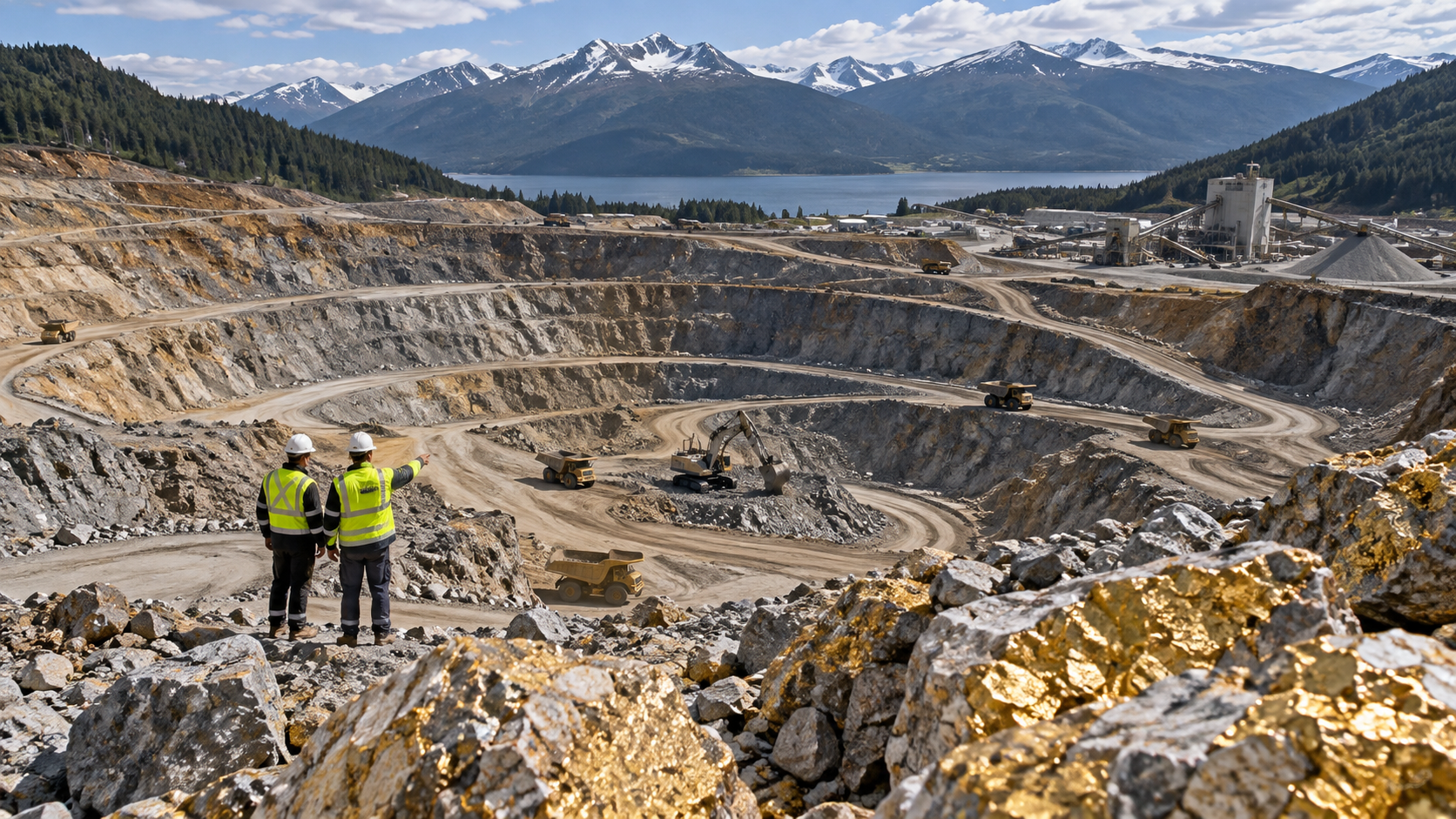
Mineral deposits are uneven. Gold is not spread through the ground like sugar thoroughly stirred into tea. One section may contain richer material; another may contain less gold or material that is harder to process.
“Grade” means the concentration of gold in the material. As extraction moves between sections, the grade reaching the plant can change. The amount of material processed can also change, even when people work equally hard.
A simple relationship helps explain the moving parts:
Gold recovered ≈ material processed × gold grade × recovery rate.
Recovery rate is the share of the gold present that the process successfully captures. This is a simplified production relationship, not a profit formula or forecast.
A small miner might encounter a rich pocket during one shift. That result is real, but assuming the same pocket continues indefinitely turns an observation into an unsupported expectation.
One strong shift shows what happened once. Longer, comparable records help show what may be repeatable.
Why the same equipment does not deliver the same day
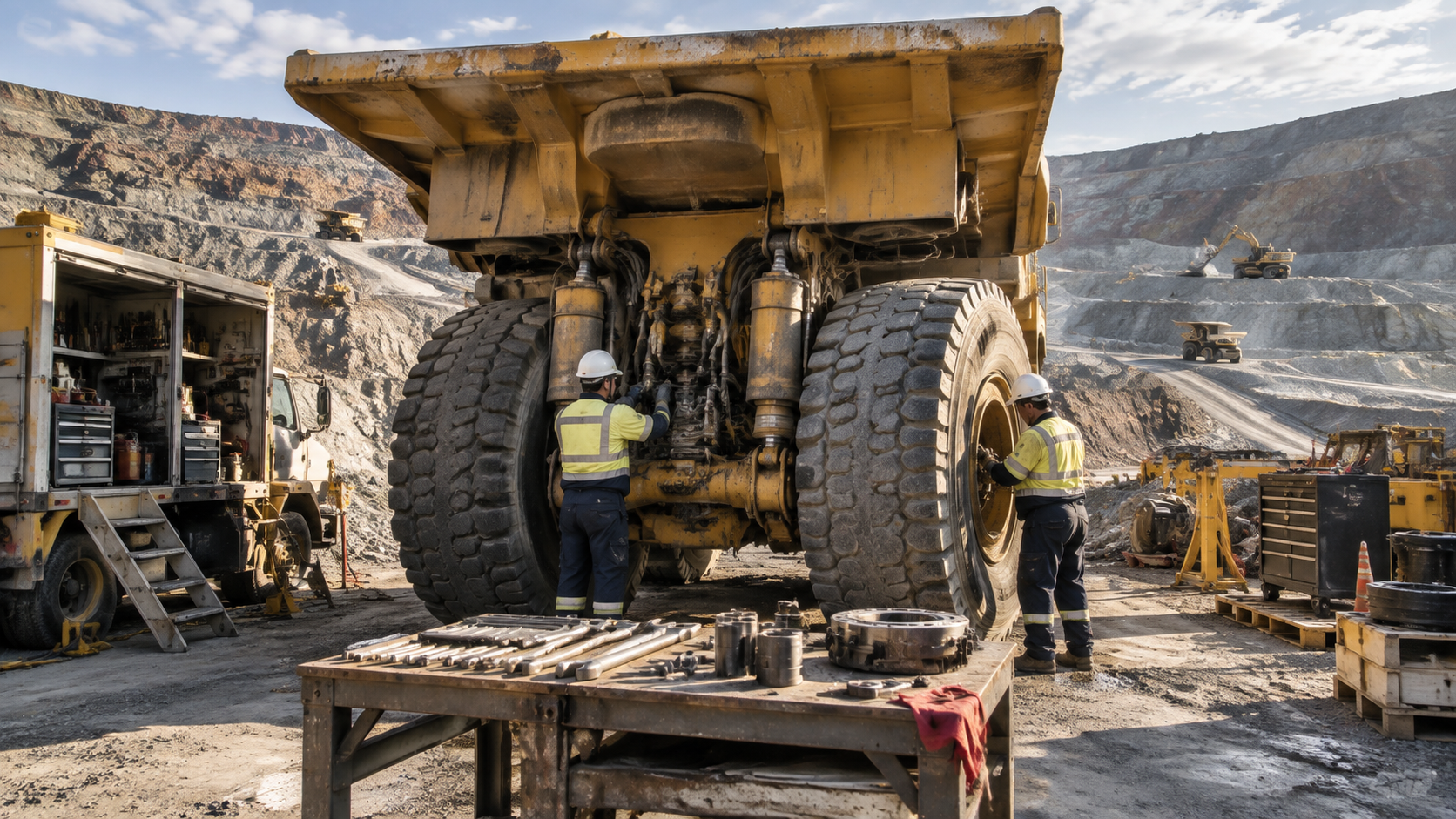
Even when the ground is similar, operating conditions can change. Equipment needs maintenance. Rain can affect access or material handling. Water availability, fuel supply and the properties of the material can influence processing.
Imagine two shifts with the same machine. In one, it runs steadily. In the other, a repair stops it for several hours. Comparing total gold alone misses the difference in productive working time.
The reverse mistake is to look only at gold recovered per running hour and ignore frequent stoppages. An efficient machine that spends much of its time idle may still produce disappointing daily totals.
We encourage readers to consider both productivity while running and availability across the full period. Neither tells the whole story alone.
Why this matters: a credible assessment includes ordinary interruptions, not just the hours when everything goes right.
How to judge whether results are repeatable
For a young saver considering mining-linked participation, the useful question is not “What was the best day?” It is “What evidence supports the expectation?”
Longer records help, provided they cover relevant conditions. A month drawn entirely from unusually rich material may still say little about the next section. More observations are useful; representative observations are essential.
Sensible sampling means collecting material that fairly reflects what is being assessed—not selecting only pieces that look promising. Sampling across relevant locations and periods, using consistent methods, helps reduce selection bias. Clear sample identification and reliable testing also matter.
When reviewing a production explanation, look for:
- Material processed and grade: how much was treated, and what did testing indicate?
- Gold recovered: what was actually captured, rather than merely estimated to be present?
- Operating hours and downtime: how much time was productive, and why did work stop?
- Costs and coverage: which expenses and reporting periods are included?
Averages also need care. Average daily production should distinguish calendar days from operating days. An average grade across unequal batches should account for their different sizes. Otherwise, a small rich batch can distort the picture.
Clear data does not remove uncertainty. It makes uncertainty easier to understand.
What changing mining yields mean for participation
For people who see potential in gold but cannot run a mine themselves, participation can bring them closer to productive activity. The important step is understanding how operating results connect to recorded value.
With a Teqwah investment, participants hold TGC, our divisible participation unit in a unified pool across gold mining, physical gold trade, productive machinery and selected real estate. Participants do not choose individual projects. A single mine's strongest shift therefore should not be treated as a forecast for the whole pool.
TGC value is recorded pool value divided by circulating TGC. The recorded investor share of daily profit enters pool value; losses move it in the opposite direction. TGC is not exchange-traded, and its recorded value is not a traded market price.
At Teqwah, that is the opportunity we are working to build: participation in real operations, with results reflected through recorded performance rather than a fixed daily return. Execution matters because value must be created through productive work.
Our how it works page explains the participation mechanics. Read our risk disclosure alongside it to understand the limits of projections and the factors affecting outcomes.
Frequently asked questions
Does one excellent mining day establish an average?
No. It establishes a result for that day. A useful average needs a clearly defined period, comparable measurements and coverage of both stronger and weaker conditions.
Does more recovered gold always mean more profit?
No. Costs can rise too. Production measures output; profit depends on revenue and the costs attributable to earning it.
Can longer records make future yields certain?
No. They can improve understanding of variability and repeatability, but geology, operating conditions and costs can still change.
Curious about participation built around productive work? Explore TGC at teqwah.com →
Investing involves risk, values can fall, and this article is education, not financial advice.
Teqwah view
At Teqwah, we connect participation through TGC to a unified pool of gold mining, physical gold trade, productive machinery and selected real estate. We invite you to understand how recorded operating results affect pool value, because the opportunity rests on productive work—not a fixed daily return.
Sources
Investing involves risk. TGC value can fall. This is not investment advice.
Comments
No comments yet — be the first.