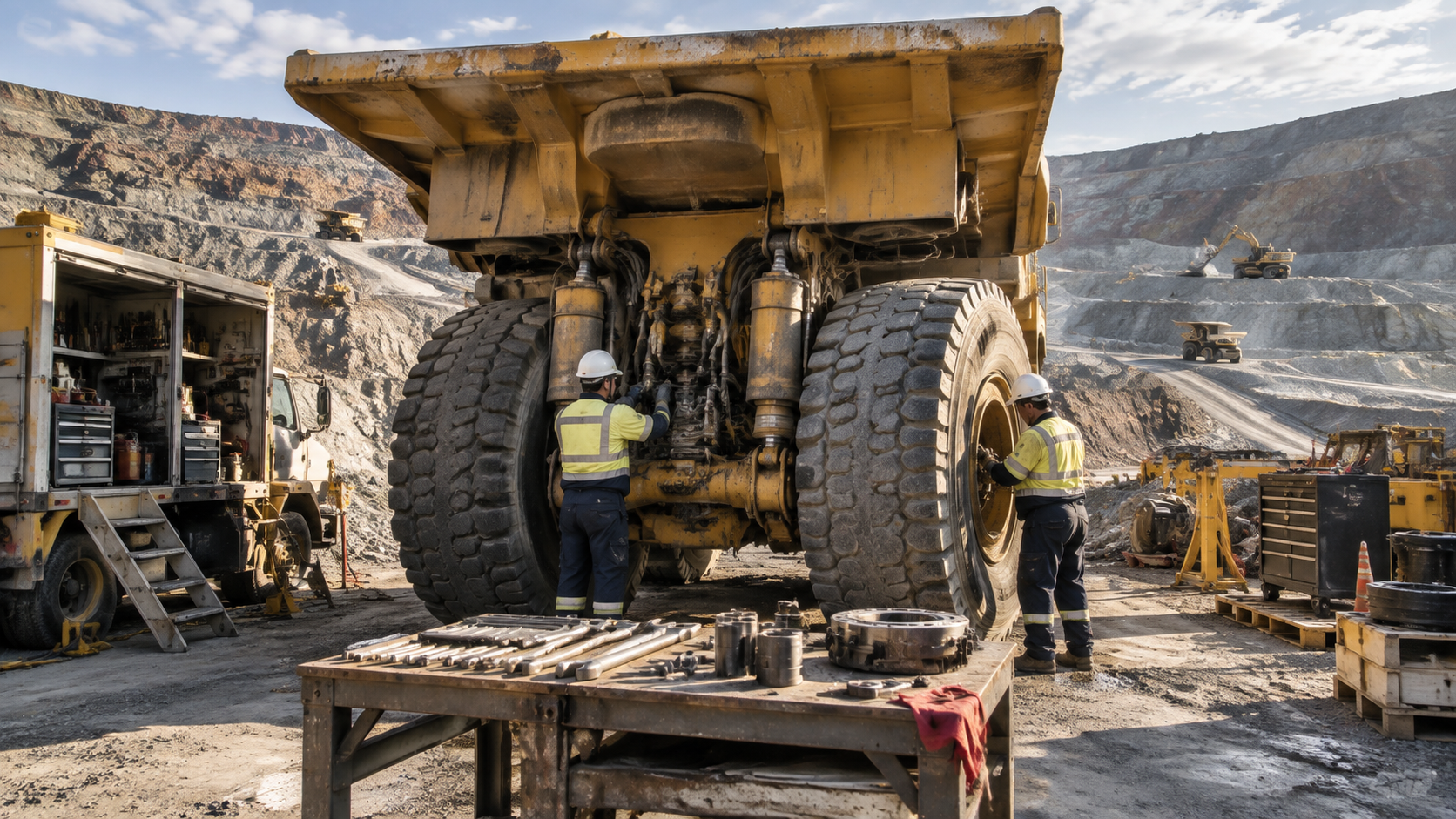
Production Targets vs Measured Production in Gold Mining
Learn how gold mining production targets differ from measured output, why results vary, and what clear reporting should tell investors.

Key takeaways
- Production targets are planning assumptions, not evidence of recovered output.
- Measured production needs a clear period, unit and measurement basis, including the distinction between product weight and gold content.
- Credible reporting explains both shortfalls and outperformance using operational evidence and acknowledges uncertainty.
- Production is not profit: costs, revenue timing and the wider pool matter when assessing participation value.
A small miner expects a productive month. The equipment is ready, the crew is organised, and the plan looks convincing. But when the recovered gold is weighed, the result is below target. Was the plan unreasonable—or did conditions change?
For someone considering gold mining participation, that question matters more than a bold production headline. At Teqwah, we see opportunity in productive operations, but understanding that opportunity starts with separating ambition from evidence.
A production target is a planning assumption. Measured production is what was actually recovered, weighed and recorded. Both are useful. They simply answer different questions.
A target describes what an operation aims to produce. Measured production shows what it actually delivered.
Before you trust a target, ask what supports it
Think of a shopkeeper ordering bread for the weekend. Expected sales help determine stock and staffing. They do not prove how many loaves customers will buy.
Gold mining production targets serve a similar purpose. They help an operator plan equipment use, labour, fuel and processing work. A target may depend on several assumptions:
- How much material can be processed during the period.
- The expected gold content, often called grade.
- The share of that gold the process can recover, called recovery.
- How many hours equipment can operate productively.
A simplified planning relationship is: material processed × gold content × recovery rate = expected recovered gold. The units must match, and every input remains an assumption until supported by results.
For a young saver reading an investment presentation, the useful question is not just “How large is the target?” It is “What has to go right for that target to be reached?”
Why this matters: a precise-looking number can still rest on uncertain inputs.
When you read actual production, check what was measured
Measured production replaces an expectation with a recorded result. Yet the label alone is not enough. A reader needs to know the period, the unit and the material being measured.
Tonnes of earth moved are not tonnes of ore processed. Ore processed is not gold recovered. And the weight of a gold-bearing product is not necessarily its pure gold content.
For example, a recovered bar may contain gold alongside other metals. Its total weight and its gold content are different measurements. An assay—a test of metal content—helps establish that distinction.
Credible reporting should identify the measurement basis and whether figures are provisional or final. We encourage readers to look for supporting records, such as weighing records, processing logs and relevant test results, rather than treating the word “actual” as proof by itself.
This is a general reading checklist, not a claim that every operation publishes every underlying document.
Why this matters: a fair comparison needs the same period, unit and measurement basis on both sides.
When results differ, look for causes—not excuses
Imagine a hypothetical mine targeting 100 grams of recovered gold for a period but recording 80 grams on the same measurement basis. It delivered 20% less than planned. These figures are illustrative, not results from our operations.
The gap is called a variance: the difference between a target and an actual result. Naming the gap is only the first step. Explaining it is where useful reporting begins.
Geology can change the outcome. The material encountered may contain less gold than expected, or the gold may be harder to recover.
Equipment can change it too. A breakdown can reduce operating hours. A processing bottleneck can limit throughput—the amount of material handled over time.
Weather may interrupt access, affect water availability or make work unsafe. Staffing, supplies, permitting and changes to the operating schedule can also matter.
A useful explanation connects the cause to the result: fewer operating hours meant less material processed, for example. Where evidence cannot isolate each cause, the uncertainty should remain visible rather than be hidden behind confident estimates.
The same discipline applies when production exceeds target. A stronger result could reflect better grade, more operating hours or an unusually favourable batch. It does not automatically establish a repeatable trend.
Before you infer profit, follow the costs
More gold recovered sounds encouraging. But production is not the same as revenue, and revenue is not the same as profit.
A shopkeeper can sell more bread while earning less if flour, wages and delivery costs rise faster than sales. Mining has the same basic challenge: output must be understood alongside its cost.
Higher production can require extra fuel, repairs or overtime. Recovered material may also await assessment or sale, so production and cash receipts need not fall in the same period.
For our Teqwah investment participants, this distinction is important. Our model connects TGC to a unified pool across gold mining, physical gold trade, productive machinery and selected real estate. Participants do not choose individual projects.
TGC value is recorded pool value divided by circulating TGC. It is not an exchange-traded market price. A mining production headline alone therefore cannot explain the whole participation value, and a production target is not an investor return forecast.
Build a habit of comparing plans with evidence
Before drawing a conclusion, place the original target beside the measured result. Check whether they cover the same dates and whether both refer to the same kind of output.
Then look for an explanation of the difference, the relevant costs and any remaining uncertainty. If a target was revised during the period, distinguish the original plan from the later forecast. Replacing the first target can hide how expectations changed.
At Teqwah, we put capital to work in real operations and record operating results before they are reflected in the investor share of value. The opportunity is exciting precisely because value must be created through execution—not through a planning number alone.
For people who see potential in gold but cannot run a mine themselves, understanding these distinctions makes participation easier to assess. You do not need to operate machinery to ask clear questions about its results.
Frequently asked questions
Is a production target a promise?
No. It is an operating goal built on assumptions. Geology, equipment availability, weather and other conditions can cause actual production to differ.
Does measured production prove profitability?
No. It establishes an output figure on a stated basis. Profit also depends on costs, realised revenue and other applicable deductions.
What makes a target-versus-actual comparison credible?
Matching periods, consistent units, a clear measurement basis and evidence-based explanations. Revisions and unresolved uncertainties should be labelled, not concealed.
Discover how our participation model connects capital with productive work at teqwah.com.
Investing involves risk; values can fall. This article is education, not financial advice.
Teqwah view
At Teqwah, we connect participation with real gold mining, physical gold trade and productive assets through TGC. We record operating results before they are reflected in the investor share of value, so we encourage readers to distinguish what is planned from what has been recorded. That is the opportunity we are working to build: participation in productive work, with variable outcomes rather than fixed returns.
Sources
Investing involves risk. TGC value can fall. This is not investment advice.
Comments
No comments yet — be the first.