Pump Distance: Why Longer Routes Change Mining Costs
Learn how pump distance affects pipe size, energy, maintenance and mining costs—and why engineers design for actual terrain and flow.
Key takeaways
- Pump distance affects system design and operating costs, not just the amount of pipe required.
- Engineers match pumps and pipes to flow, elevation, friction and actual operating conditions.
- Slurry requires additional attention to settling, abrasion, transport velocity and maintenance.
- Whole-life cost and cost per unit delivered reveal more than the initial equipment price.
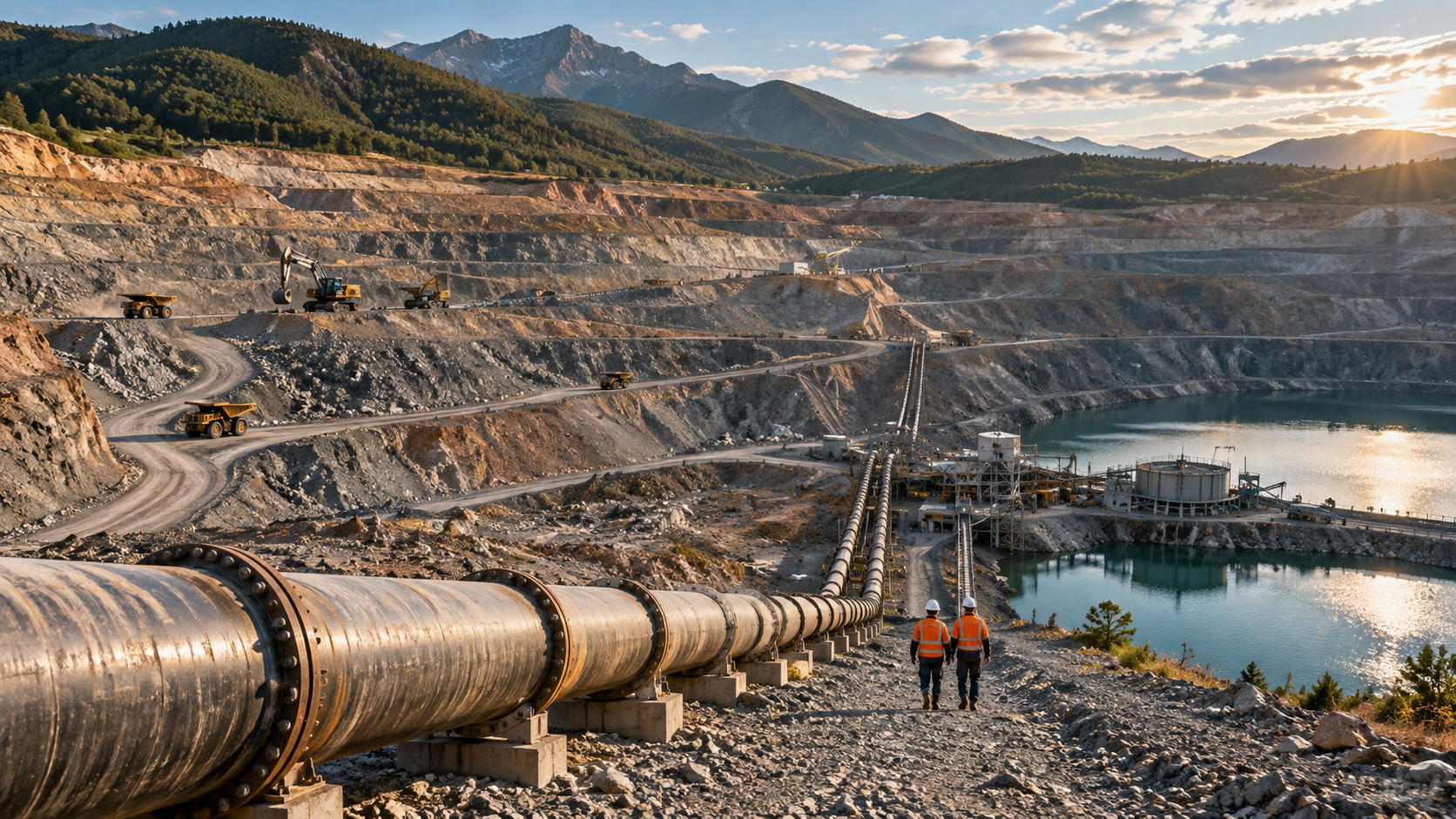
A water source looks close on a map. Then you walk the route: uphill, around a ridge, across uneven ground. Suddenly, “just add more pipe” sounds less like a solution and more like a question.
For a small miner, that question can shape the operating budget. For someone considering an investment in productive assets, it reveals something equally important: useful equipment creates value only when it fits the job.
At Teqwah, we believe understanding these practical details brings you closer to the economics behind gold operations. Pump distance is a good place to start.
Distance is not just a line on a map. It is a design decision with an operating bill attached.
Why does a longer pumping route change the budget?
Imagine a shopkeeper moving boxes from a storeroom. A longer corridor takes more effort. Add stairs, narrow doors and heavier boxes, and distance alone no longer describes the job.
Pumping water works in a similar way. As water travels through a pipe, friction resists its movement. A longer pipe generally adds more resistance when flow, diameter and other conditions stay the same. Climbing to a higher discharge point adds another demand.
Engineers describe the energy requirement as head: energy per unit weight of fluid, commonly expressed as a height. The pump must meet the required flow at the system’s total head, including elevation, friction and any required pressure at delivery.
A longer route may therefore need a different pump, a larger pipe or a different layout. Sometimes it needs a combination.
Why this matters: buying more pipe without checking the system can leave an operation paying for equipment that does not deliver enough water.
A bigger pump is not always the best answer
Suppose a miner needs a steady water supply for processing. The route becomes longer, but the required delivery rate stays the same. One response is to install a more powerful pump. Another is to reduce resistance with a larger pipe.
Neither answer wins automatically.
A larger pipe can reduce friction at the same water flow, but usually costs more to buy and install. A smaller pipe may look economical at purchase and then demand more energy throughout its working life.
The decision is about whole-life cost: purchase, installation, energy, maintenance and eventual replacement—not simply the lowest equipment quote.
Engineers also check the pump curve, which shows how much flow a pump can deliver at different heads. They match it to the system’s needs and consider efficiency, rather than assuming a powerful engine means suitable performance.
The cheapest component can produce the more expensive system. That is the financial lesson worth remembering.
Slurry makes the decision more demanding
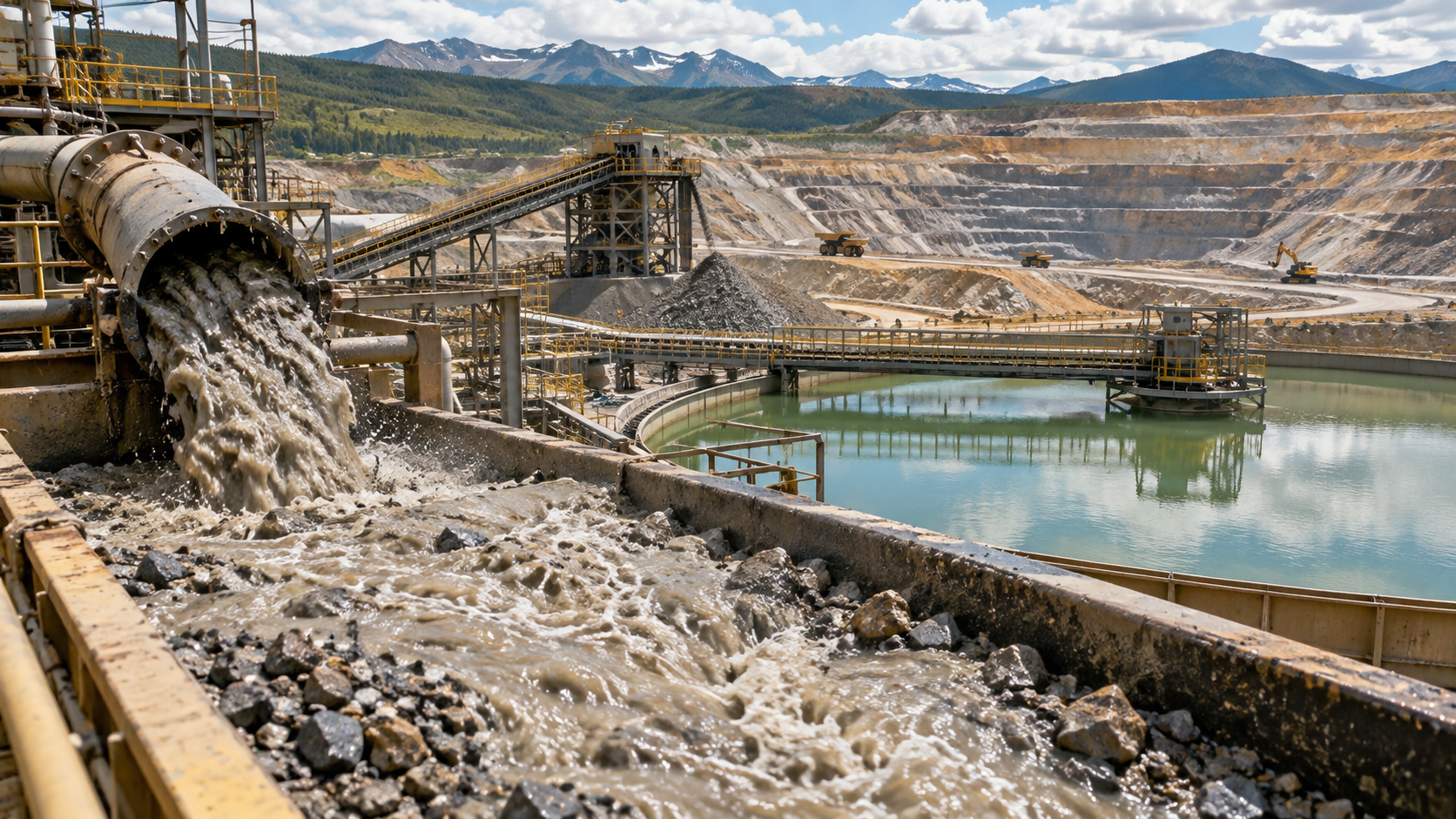
Water is only part of the story. Mining operations may also move slurry, a mixture of liquid and solid particles.
Think of the difference between pouring water and moving a sandy mixture through a hose. The solids change how the mixture behaves and can wear down pumps, bends and pipe surfaces.
Pipe size now involves another trade-off. A wider pipe can lower velocity at the same flow. For some slurries, slowing too far allows particles to settle, increasing the risk of blockage. Moving too fast can increase wear and energy use.
Engineers therefore need more than distance. Their inputs can include:
- Required flow and operating hours.
- Route length, elevation changes, bends and fittings.
- Solids concentration, particle size and mixture properties.
- Pipe material, pressure limits and available power.
- Start-up, shutdown, flushing and maintenance requirements.
These are general engineering considerations, not descriptions of a particular installation of ours. Their significance is simple: a water-pumping assumption should not be carried straight into a slurry budget.
Fuel, maintenance and downtime belong in the same calculation
A pump’s purchase price is visible. Its recurring demands can be easier to overlook.
If a system needs more input power to deliver the required flow, it may consume more electricity or, with engine-driven equipment, more fuel. Actual consumption depends on efficiency, loading and operating conditions—not kilometres alone.
Longer routes can also mean more pipe to inspect, more connections and harder access to some sections. Abrasive slurry adds wear considerations. A repair may involve stopping delivery, reaching the fault, replacing a part and restarting safely.
Consider a shopkeeper’s delivery van. Fuel matters, but so does a breakdown that prevents stock reaching the shelves. Likewise, interrupted pumping can constrain the activity that depends on it.
A useful financial measure is cost per unit delivered: total relevant cost divided by the volume successfully delivered over the same period. For slurry, engineers may also assess cost per tonne of solids moved.
This connects spending to useful output. A low hourly fuel bill is not necessarily good value if delivery falls short.
What should a participant learn from the engineering?
You do not need to design a pipeline to understand its investment significance. You need to recognise why an equipment budget must reflect the work it is expected to perform.
Useful questions include: Has the actual route been assessed? What happens if the required flow changes? Does the budget include maintenance and interruptions? Is the comparison based on purchase price or whole-life cost?
At Teqwah Capital, we deploy capital across gold mining, physical gold trade and productive machinery, with selected real estate also within our mandate. Participants hold TGC as a proportional participation in our unified pool; they do not select individual projects.
For people who see potential in gold but cannot run a mine themselves, our Teqwah investment model offers participation without choosing each operating asset. It does not remove operating risk. Costs and execution still matter to recorded results.
That is the opportunity we are working to build: participation in productive activity where value must be created through execution, not assumed from an equipment list.
Frequently asked questions
Does doubling pump distance double the cost?
No. With other conditions unchanged, friction loss generally increases with pipe length. Total cost also depends on elevation, diameter, flow, efficiency, installation and maintenance. It does not follow a simple distance multiplier.
Is a larger pipe always better for slurry?
No. A larger pipe may reduce friction but also lower velocity. Depending on the mixture, solids may settle. Engineers balance energy use, transport velocity, wear and cost.
Why should investors care about pump sizing?
A poorly matched system can raise costs or limit output. Understanding this helps us distinguish ownership of machinery from its productive use—the practical work behind operating results.
Explore how we connect participation with productive operations at teqwah.com.
Investing involves risk; values can fall. This article is education, not financial advice.
Teqwah view
At Teqwah, we put capital to work across gold mining, physical gold trade and productive machinery. We see this topic as a useful window into why operating costs matter to recorded results. Through TGC, we offer proportional participation in our unified pool, with variable outcomes and capital at risk.
Sources
Investing involves risk. TGC value can fall. This is not investment advice.
Comments
No comments yet — be the first.