What Does an Excavator Contribute to Gold Mining?
An excavator moves material, not investment returns. Learn how geology, skilled operators and recovery turn equipment into productive mining capacity.
Key takeaways
- An excavator contributes digging and loading capacity; it does not create gold or investment returns by itself.
- Site planning, geology and operator skill determine whether material movement supports useful production.
- Uptime, transport and processing capacity must work together; a bottleneck can limit the whole operation.
- Financial value depends on recovered gold and costs, while TGC represents participation in our unified pool rather than a specific machine.
Imagine watching an excavator lift a bucket of earth. The engine sounds powerful. The machine looks valuable. But here is the question worth asking before investing: what has that bucket actually contributed?
It may contain gold-bearing material. It may contain waste that must be cleared first. Or it may simply be moving a stockpile that the processing line cannot yet handle.
At Teqwah, we want readers to see beyond the machine to the work it enables. An excavator contributes digging and loading capacity. Its economic value depends on whether that capacity helps a functioning operation recover gold at a cost that makes sense.
An excavator moves material; a coordinated operation turns the right material into recoverable gold.
What does an excavator actually do?
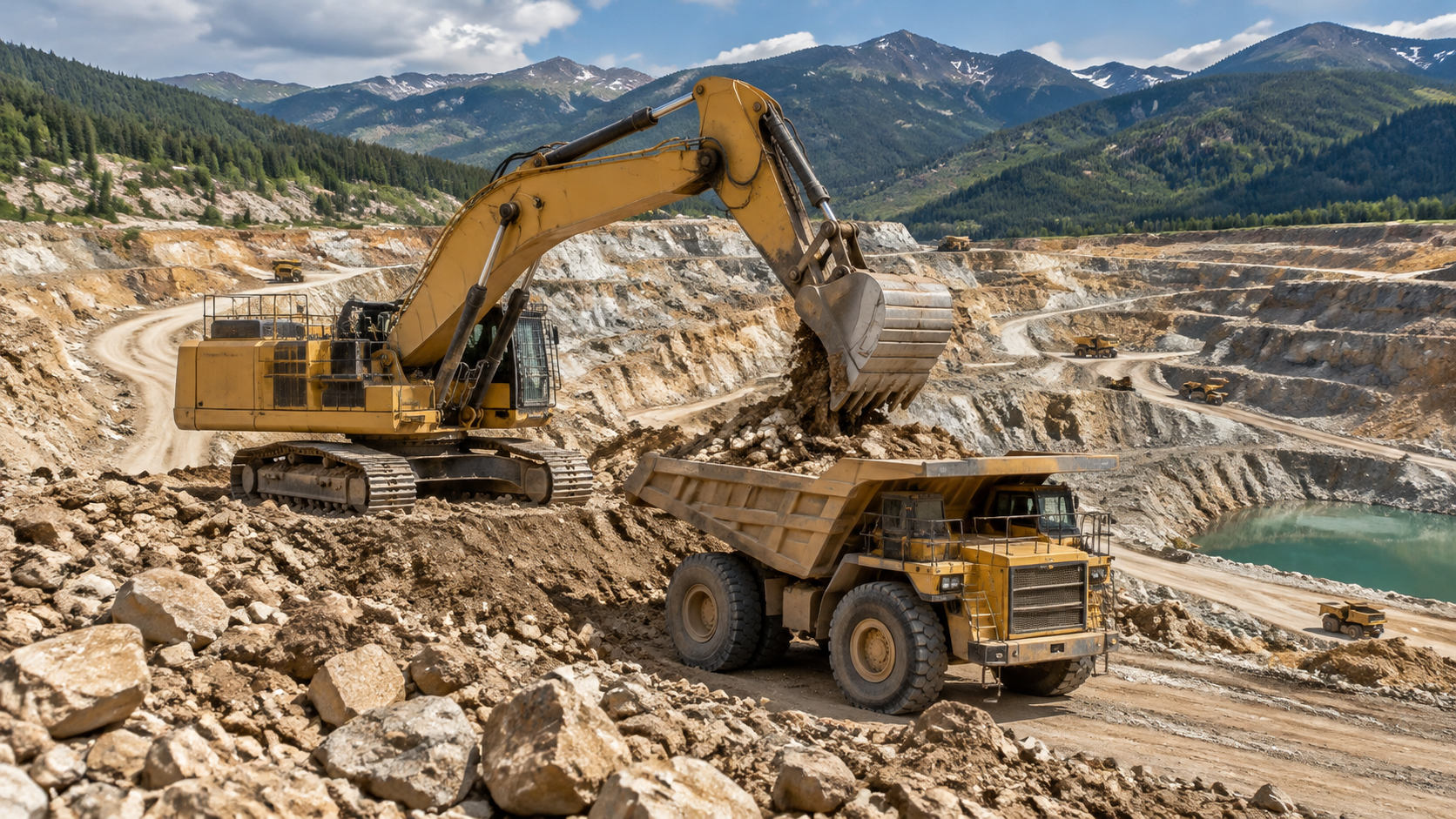
An excavator digs, lifts and loads soil, rock or sediment. Depending on the mining method and ground conditions, it may remove overburden—the material covering a deposit—extract accessible gold-bearing material, or load vehicles and stockpiles supplying a processing line.
Think of a shopkeeper receiving deliveries. A delivery vehicle is useful, but only if it brings the right goods to a shop ready to sell them. Moving more boxes does not help when they contain the wrong products.
Mining follows a similar logic. Some excavation directly supplies processing. Other excavation prepares access or removes waste so useful material can be reached later. Both can matter, but they serve different purposes.
Why this matters: bucket count alone does not tell you how much useful production has happened. You need to know what was moved and why.
Is the machine digging in the right place?
A small miner may have reliable equipment and still struggle if the site plan is poor. Digging wherever access looks easiest can mix waste with gold-bearing material. That dilution means more material must be processed for the same amount of contained gold.
Geology comes first. It helps establish where gold may occur and how the material varies. A site plan translates that understanding into practical decisions: where to dig, what to separate, where to place stockpiles and how to maintain safe access.
Operator skill then connects the plan to each bucket. Careful loading, controlled digging and sensible machine positioning can reduce unnecessary movement and help keep different materials separate.
The operator cannot create a deposit. But good execution can help avoid wasting the opportunity a deposit presents.
For someone considering mining investment, the useful question is not simply, “How large is the excavator?” It is, “How does this machine fit the ground, the plan and the next stage of work?”
Can the rest of the operation keep up?
Picture a busy bakery with a fast mixer and one small oven. Increasing mixing speed will not necessarily increase bread sales. The oven becomes the bottleneck—the stage limiting the whole operation.
An excavator can face the same problem. It may load efficiently while transport vehicles are unavailable or the processing line is stopped. Material accumulates, but recovered gold does not automatically increase.
Uptime matters too. This means the time equipment is available and able to work. Fuel supply, maintenance, spare parts and operator availability all affect it. Even then, an available machine is not necessarily doing useful work every hour.
A practical assessment connects several questions:
- Is suitable material ready to be excavated?
- Can transport move it without long delays?
- Can the processing line handle the feed?
- Are maintenance and safe working conditions supported?
- Is recovered output worth the total operating cost?
Why this matters: the best machine is not always the biggest. It is the one whose capacity fits the operation.
How does moved material become financial value?
There are several steps between a bucket of earth and an operating result. Material must contain gold, reach processing and pass through a recovery method suited to its characteristics.
A useful simplified relationship is:
Gold recovered = material processed × gold grade × recovery rate.
Grade means the amount of gold in a given quantity of material. Recovery rate means the proportion of that gold the process actually captures. The units must be consistent, and the relationship is an educational guide—not a production forecast.
The excavator supports material supply. It does not determine the deposit’s grade, and it cannot ensure that processing captures all the gold present.
Then costs enter the picture. Fuel, labour, maintenance, transport and processing all consume resources. More tonnes moved can mean more spending without a matching increase in recovered value.
A young saver might see a machine and think, “That is a tangible asset.” That is a reasonable starting point. The next question is stronger: “Can the activity supported by this asset generate value after costs?”
The opportunity is exciting precisely because value must be created through execution. Equipment ownership and operating profitability are not the same thing.
What does this mean for participation with us?
At Teqwah Capital, we deploy equipment and operating capital into gold mining. Our activities also include physical gold trade, productive machinery and selected real estate. Productive equipment supports mining and can earn through managed rental activity.
For people who see potential in gold but cannot run a mine themselves, our approach connects participation with operations we select and manage. Participants hold TGC, our divisible participation unit representing a proportional share of our unified pool. They do not select a particular excavator, mine or project.
That distinction matters. A Teqwah investment is not a claim that one machine will produce a particular result. TGC value is recorded pool value divided by circulating TGC; it is not an exchange-traded market price and can rise or fall.
We invite you to look beyond the equipment photograph. Understanding the connection between geology, machinery, processing and costs makes the opportunity clearer—and the risks easier to recognise.
Frequently asked questions
Does an excavator produce gold by itself?
No. It moves material and supports access or loading. Gold recovery also requires suitable geology, material handling and processing. Equipment alone does not establish profitability.
Does a larger excavator mean higher profits?
Not necessarily. Extra capacity helps only when the site, transport and processing line can use it economically. Otherwise, higher costs or idle capacity can outweigh the benefit.
Am I investing in a specific excavator through TGC?
No. You hold proportional participation in our unified pool, while we manage allocation internally. You can explore the broader model through how it works.
Ready to see how the pieces connect? Explore Teqwah →
Investing involves risk, values can fall, and this article is education, not financial advice.
Teqwah view
At Teqwah, we connect equipment and operating capital with gold mining, alongside physical gold trade and productive machinery activity. We offer participation through TGC in our unified pool, so you do not have to choose or manage individual projects. We see the opportunity in productive work, with outcomes that remain variable and values that can fall.
Sources
Investing involves risk. TGC value can fall. This is not investment advice.
Comments
No comments yet — be the first.