What Is an Assay? Understanding Gold Content and Purity
Learn what a gold assay measures, how sampling and laboratory methods affect results, and why gold content alone does not establish investment value.
Key takeaways
- An assay measures material content or purity; mining grade and metal purity answer different questions.
- A laboratory result is only as relevant as the sample’s ability to represent the material under consideration.
- Testing methods have different strengths and limits, so preparation, units and quality checks matter.
- Gold content alone does not establish recovery, commercial viability or investment returns.
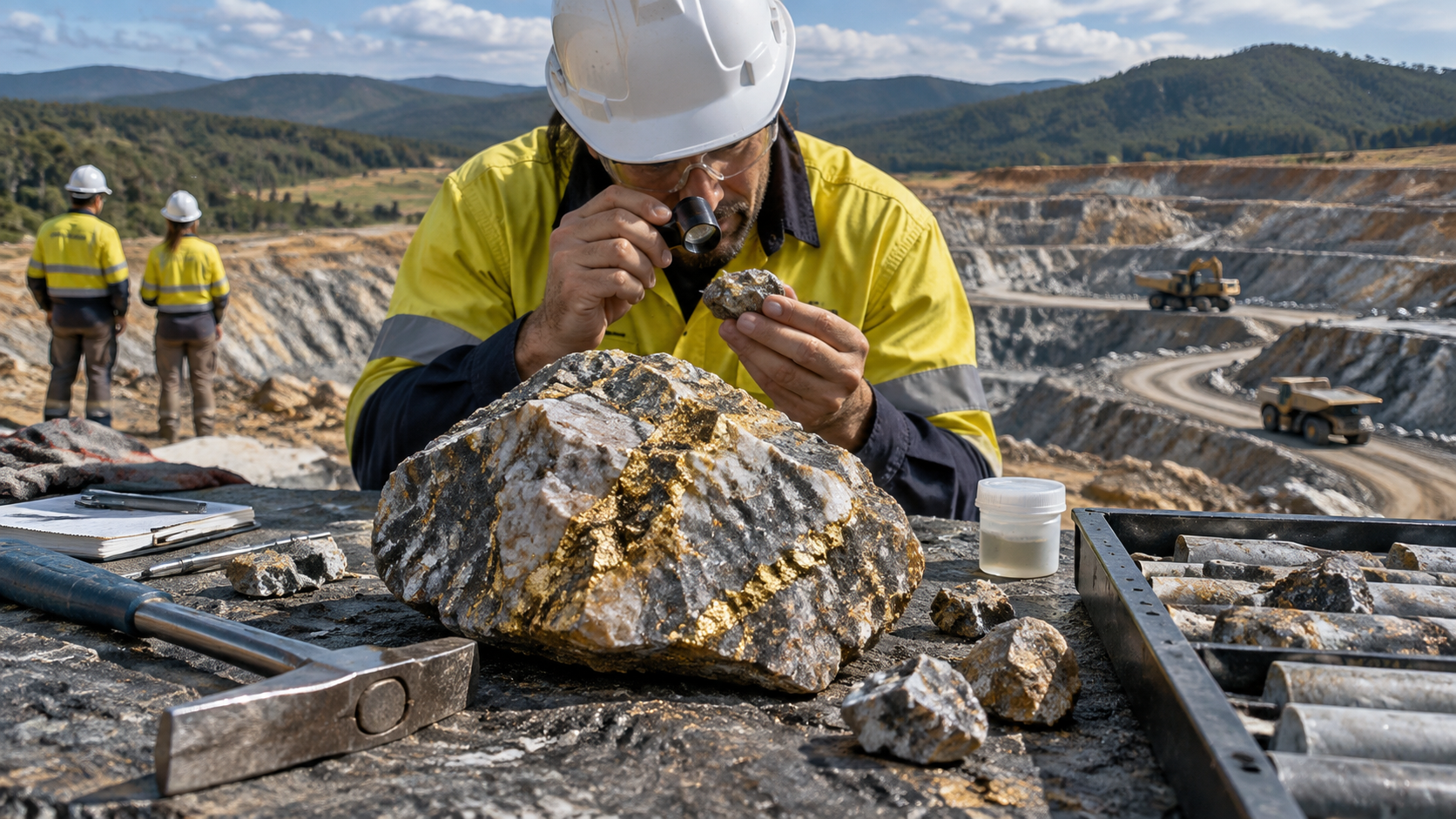
A small miner puts a glittering rock on the table. A shopkeeper offers a gold bar with a purity number attached. Both look promising. But how much gold is actually there—and what would it take to find out?
At Teqwah, we believe understanding gold starts with asking better questions. An assay helps answer one of the most important. It is a test that measures the content or purity of a material. Yet the number only becomes useful when we understand the sample, the method and the limits of the result.
An assay tells us about the material tested—not automatically about an entire mine, a whole shipment or the profit it might produce.
What does a gold assay actually measure?
Imagine a young saver comparing two documents. One reports gold in grams per tonne. The other reports purity as a percentage. Both may describe an assay, but they answer different questions.
In mining, an assay can measure the concentration of gold in a sample of rock, soil or processed material. This concentration is often called grade. Grams per tonne means the mass of gold relative to a metric tonne of material.
In refining and physical gold trade, an assay can help establish purity: how much of the tested metal is gold rather than other elements. Purity may be expressed as a percentage or as fineness—parts per thousand.
Neither measure is a price. Grade does not tell us extraction costs, and purity does not tell us the complete terms of a purchase.
Why this matters: before comparing two assay numbers, check that they measure the same thing in the same units.
Can a small sample represent a big opportunity?
A spoonful of soup can tell you plenty about the pot—unless all the salt has settled at the bottom. Gold-bearing material presents a similar challenge. Gold may be unevenly distributed, sometimes concentrated in a few particles.
A small miner who selects only the most impressive-looking rocks may obtain a genuine laboratory result that says little about the surrounding ground. The laboratory can test what it receives accurately while the sample itself remains unrepresentative.
Sampling means choosing material for testing. Sample preparation may involve crushing, grinding, mixing and splitting that material into smaller portions. Each step must suit the material and the purpose of the test.
We should also ask where the sample came from and how it was identified and handled. Chain of custody is the documented trail showing who handled it between collection and testing.
Why this matters: a precise result cannot fix a poorly chosen sample. One encouraging assay is not enough to establish a mineable deposit.
Which assay method should you trust?
There is no single best method for every gold question. The right choice depends on the material, the expected gold content and the accuracy required.
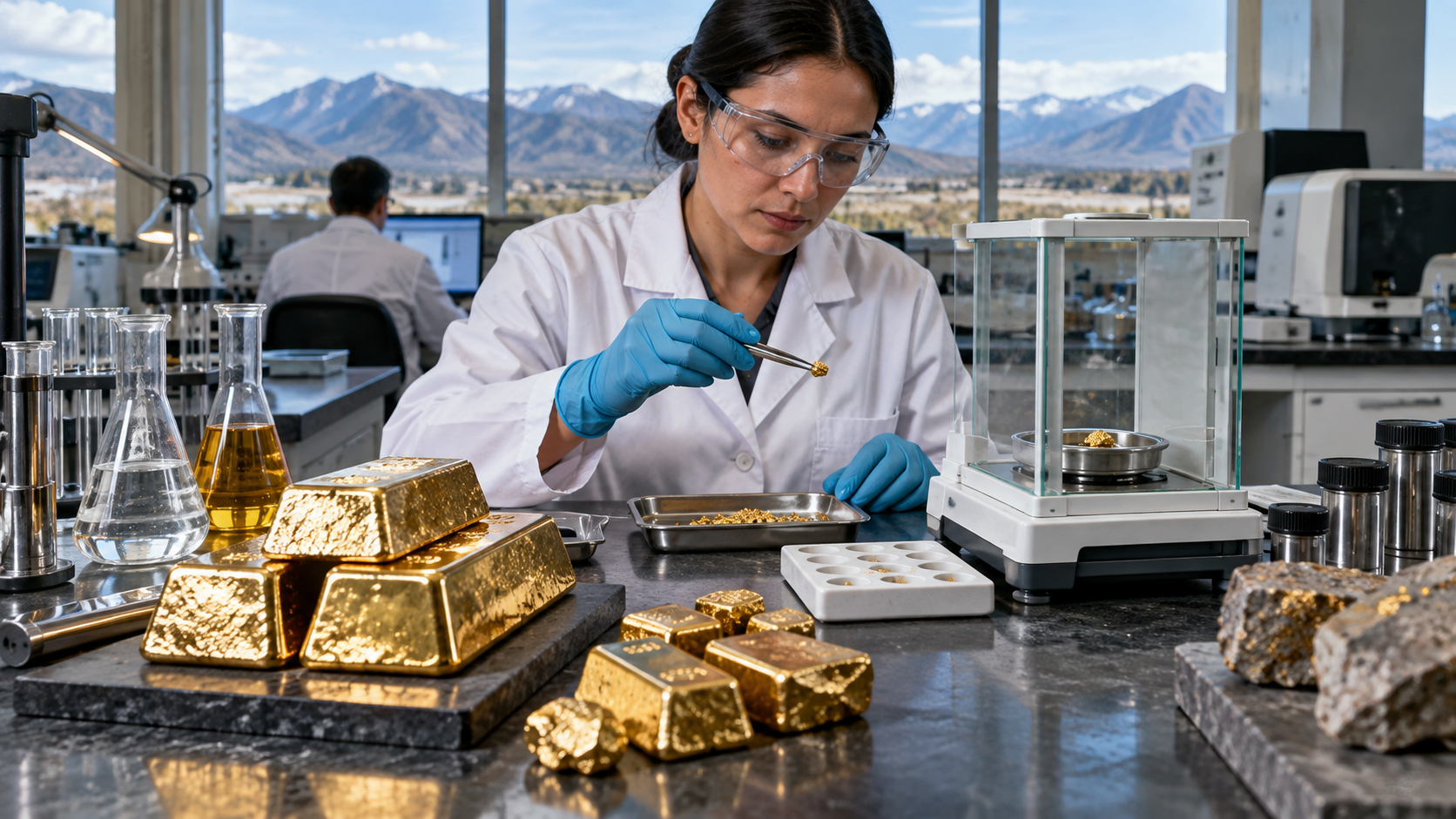
Fire assay uses high temperatures and chemical processes to collect precious metals from a prepared sample, followed by a measurement step. It is widely used for gold analysis, but sample size, preparation and the final measurement technique still matter.
X-ray fluorescence, or XRF, uses X-rays to identify and estimate elements in a material. It can provide a quick, often non-destructive check of metal composition. However, readings are sensitive to the surface or near-surface material. Plating, uneven composition and instrument calibration can affect interpretation.
Solution-based laboratory analysis dissolves prepared material before measuring gold with instruments. The digestion procedure matters: incomplete dissolution can leave some gold unmeasured.
For a shopkeeper checking an unfamiliar item, a quick surface reading may be useful screening. It may not resolve whether the inside matches the outside.
We would ask whether the method suits the decision—not simply whether the report carries an impressive name.
What should you check on an assay report?
Before relying on a report, connect its number to a specific sample and a clear testing process. A useful review asks:
- Identity: does the sample reference match the material being discussed?
- Units and basis: is the result grade or purity, and is any moisture basis stated where relevant?
- Method: how was the sample prepared and analysed?
- Limits: could the result fall below the method’s detection limit or outside its measurement range?
- Quality checks: were suitable reference materials, blanks or repeat tests used?
Reference materials have known properties. Blanks help reveal contamination. Repeat tests help assess consistency. These checks support confidence, although none makes poor sampling representative.
A result below the detection limit does not necessarily mean there is no gold. It means the method could not reliably detect it at that level. Likewise, extra decimal places do not automatically mean greater accuracy.
Why this matters: a report is evidence to interpret, not a shortcut around due diligence.
How does an assay connect to investment value?
Here is where an exciting number meets practical work. Suppose a representative sample indicates gold in material that a miner hopes to process. The next questions concern scale, recovery, costs and execution.
Recovery means the proportion of contained gold a process actually extracts. An assay of the original material does not establish that proportion. Separate processing tests may be needed. Fuel, labour, equipment and other operating costs also affect whether activity produces a profit.
At Teqwah Capital, our core activities are gold mining and gold trade, supported by productive machinery and selected real estate opportunities. For people who see potential in gold but cannot run a mine themselves, our TGC participation connects them to our unified pool rather than a project they choose individually.
That is the opportunity we are working to build: participation in productive operations, where value depends on execution. An assay explains one input—not a future return or the value of TGC, which is calculated from recorded pool value divided by circulating units.
Frequently asked questions
Is an assay the same as a hallmark?
No. An assay is a test. A hallmark is a mark associated with a fineness standard under a particular system. Its meaning depends on that system; it is not the laboratory analysis itself.
Does a high gold assay mean a profitable mine?
No. Representative sampling, deposit size, recovery, operating costs and practical conditions all matter. A high-grade sample alone cannot establish commercial viability.
Can an assay establish the purity of a whole gold bar?
It can support that conclusion when sampling and testing appropriately represent the bar. A surface-only reading may not establish internal composition, particularly if the item is plated or uneven.
Gold becomes easier to understand when we look beyond the headline number. Keep asking what was tested, how it was tested and what the result can actually support. Discover our approach at teqwah.com, or Explore TGC →.
Investing involves risk; values can fall. This article is education, not financial advice.
Teqwah view
At Teqwah, we connect participation through TGC to our unified pool across gold mining, physical gold trade and productive assets. We see assay education as a useful way to help you understand the difference between a promising gold measurement and the operational work needed to create value. Our results depend on recorded operating performance, and values can rise or fall.
Sources
Investing involves risk. TGC value can fall. This is not investment advice.
Comments
No comments yet — be the first.