Why Gold Sampling Matters Before Investment Decisions
Learn why representative gold sampling, clear records and repeated testing matter more than one impressive result when assessing mining potential.
Key takeaways
- One impressive gold sample may not represent the wider deposit, even when its laboratory result is accurate.
- Useful records connect each result to its location, collection method, handling and testing history.
- Repeated sampling strengthens evidence only when coverage and methods address the material being assessed.
- Sampling informs geological understanding; it does not establish recoverable gold, operating profit or investment returns.
Would you buy a whole crate of fruit after tasting the one perfect piece placed on top? Probably not. You would want to know what lies underneath.
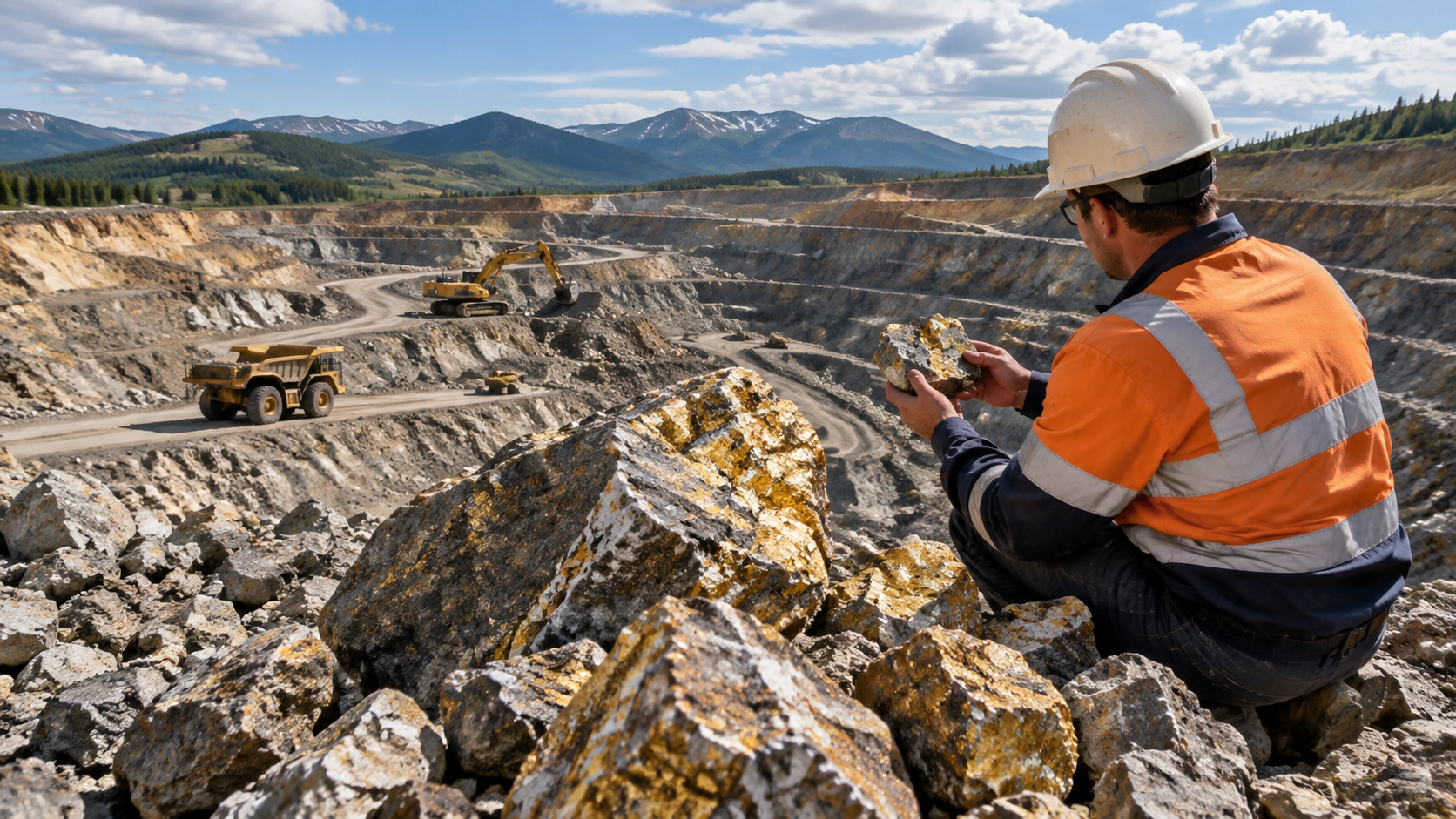
Gold mining presents a similar challenge, with much more at stake. One attractive rock or strong laboratory result can spark excitement. But does it describe a promising pocket, or the wider deposit?
At Teqwah, we want readers to understand that difference. For people who see potential in gold but cannot run a mine themselves, understanding sampling is a practical way to look beyond the headline. The opportunity is exciting precisely because value must be created through execution—not assumed from a single discovery.
Why one impressive gold sample can mislead
A sample is a small amount of material collected to learn about a larger body of ground. An assay is a test that measures its metal content. Gold grade describes the concentration of gold in the material tested.
The difficulty is that gold is not necessarily spread evenly. One part of a deposit may contain more gold than another. A small miner might pick up a piece with visible gold while nearby material contains very little.
That piece can be genuinely interesting. It still cannot tell us the average grade of the surrounding ground.
Imagine a shopkeeper checking a delivery by opening only the best-looking box. The inspection may be accurate for that box and misleading for the shipment. Sampling has the same weakness when the material selected does not match the question being asked.
Why this matters: a correct test of an unrepresentative sample can still support a poor decision.
A strong result tells us about a sample. Representative, well-documented sampling helps us understand the ground behind it.
What makes a sample representative?
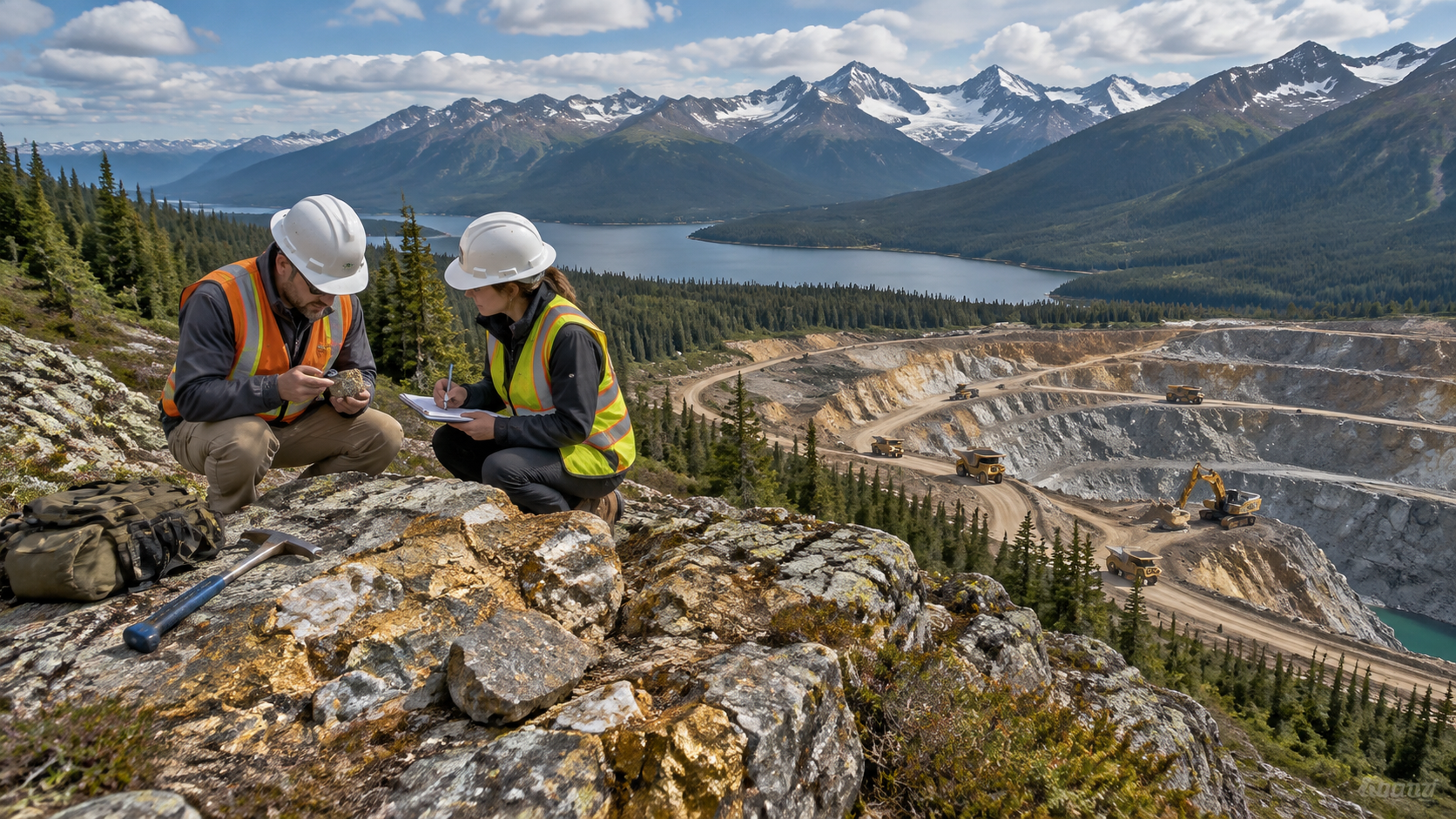
Representative sampling aims to reflect the material being assessed, rather than favouring its most attractive parts. It starts with a clear question: which area, depth or type of material is this sample supposed to describe?
A surface sample may help identify an area for further investigation. It does not automatically describe material deeper underground. A sample from one narrow vein does not establish the grade of everything around it.
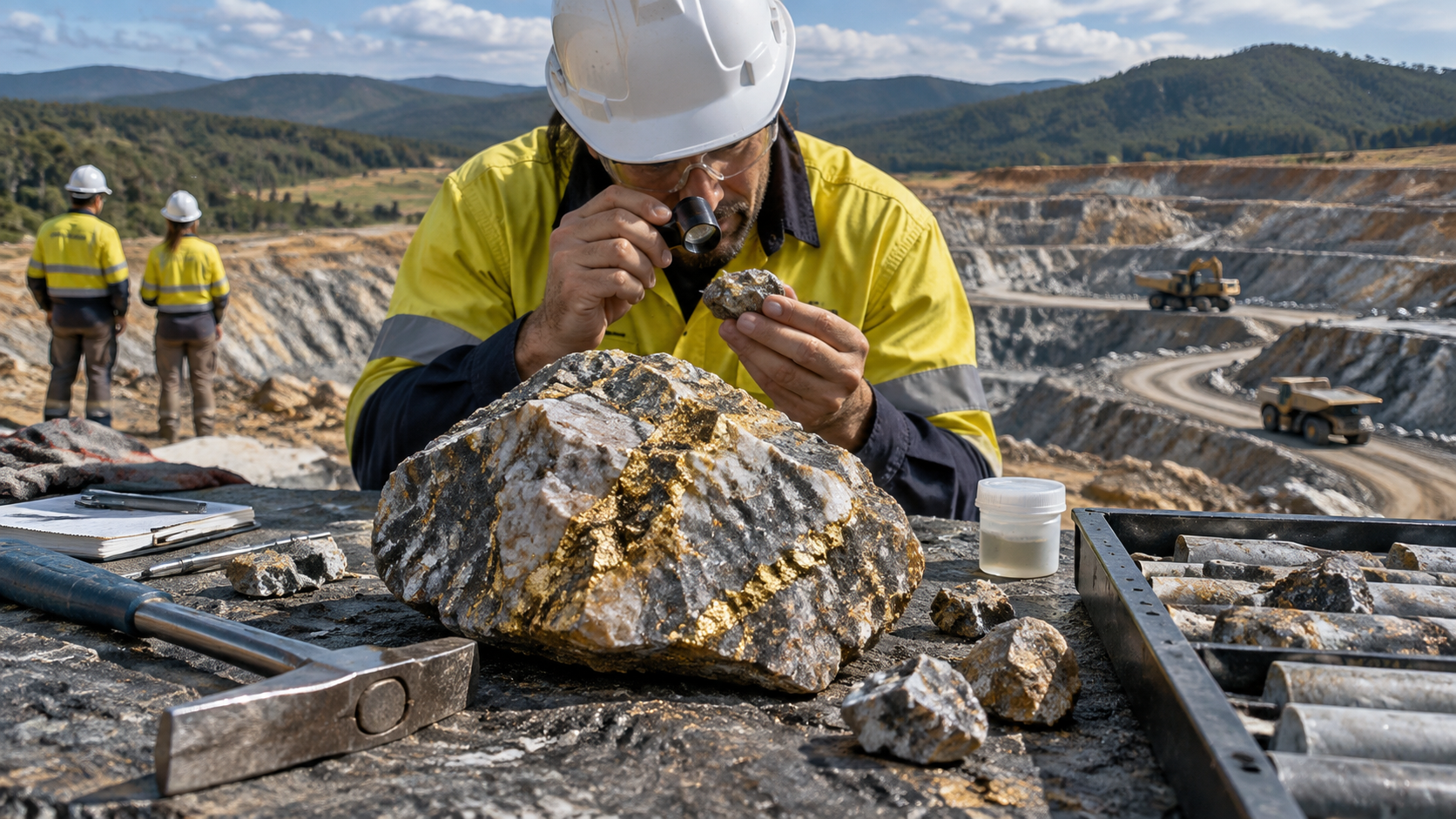
Collection methods matter too. Picking selected pieces, cutting a channel across exposed rock and sampling drill core collect material differently. Their results need to be understood in that context, not treated as interchangeable.
There is no universal sample count that makes every deposit understood. Suitable sample size, spacing and collection methods depend on the geology and how unevenly gold occurs. Qualified technical judgement matters.
For a young saver reading a mining update, the useful question is not simply, “How high was the grade?” It is, “What material can this result reasonably describe?”
Which records make a result useful?
A number becomes more useful when its history travels with it. Without that history, comparing two results can be like comparing two receipts without knowing what was purchased.
Good sampling records should make it possible to understand:
- Origin: the location, depth or interval, and the material sampled.
- Collection: the method, date, sample size and person responsible.
- Handling: the sample identification, preparation and transfer history.
- Testing: the laboratory method, reported units and relevant quality checks.
These details help identify whether differences reflect the ground itself or a change in collection and handling.
For example, a sample taken across a broad exposed section should not be casually compared with a few hand-picked fragments. Both can provide information, but they answer different questions.
Sample preparation also matters. Crushing, mixing and reducing material for testing must avoid introducing bias or contamination. Clear records help reviewers investigate an unexpected result rather than merely admire it.
Why this matters: traceability makes evidence easier to question, compare and use responsibly.
Why repeated sampling is stronger—but not magic
Repeated samples can show whether a promising result persists across relevant locations and depths. They can also reveal lower-grade areas that a first visit missed.
But taking more samples from the same unusually rich spot does not solve a coverage problem. Repetition becomes valuable when the sampling plan addresses the wider material under consideration.
Quality checks serve a different purpose. Duplicate samples help assess repeatability. Blanks—material expected to contain negligible gold—help detect contamination. Reference materials with known gold content help check analytical accuracy. These checks support confidence in the measurements; they do not prove that a deposit is economically mineable.
Consider a small miner deciding whether to pay for more excavation. Several documented results across the relevant ground provide a stronger basis for that decision than one exceptional piece. Mixed results may justify further investigation rather than immediate expansion.
Sometimes the most valuable finding is a reason to slow down before committing more capital.
How sampling connects to investment judgement
Sampling helps assess geological potential. It does not establish profit by itself. Even a well-supported grade estimate leaves important questions: how much material is present, how much gold processing can recover, and what extraction and operations will cost.
Gold measured in the ground is not the same as gold recovered and sold. Fuel, labour, equipment and processing performance all affect the journey between those two points.
At Teqwah Capital, we put capital to work across gold mining, physical gold trade, productive machinery and selected real estate. Our participants hold TGC as a proportional participation in our unified pool; they do not select individual projects. This sampling explanation is general education, not a report of specific sampling procedures or results from our operations.
For anyone considering a Teqwah investment, the distinction matters: a geological result is not a participant return. TGC reflects recorded pool value divided by circulating units, and its value can fall.
We invite you to approach gold with curiosity and practical questions. Better understanding helps you see both the opportunity and the work required to pursue it.
Frequently asked questions
Does a high-grade sample prove a profitable deposit?
No. It describes the material tested. Representativeness, deposit size, recovery and operating costs still need assessment before conclusions about economic potential.
Are more samples always better?
Not automatically. More biased samples can repeat the same mistake. Appropriate coverage, collection methods, documentation and quality checks matter alongside sample numbers.
What should I ask when shown a sampling result?
Ask where the material came from, how it was collected, what it represents and whether other documented samples support it. Also ask what remains uncertain.
Keep exploring the link between real operations and participation with us at teqwah.com.
Investing involves risk, values can fall, and this article is education—not financial advice.
Teqwah view
At Teqwah, gold mining and physical gold trade sit at the core of our operations, supported by productive machinery and selected real estate. We want you to understand the work behind the opportunity: TGC connects participants to our unified pool, while results depend on recorded operating performance rather than a single exciting finding.
Sources
Investing involves risk. TGC value can fall. This is not investment advice.
Comments
No comments yet — be the first.