What Is Slurry? Why Water and Rock Matter in Gold Mining
Learn what slurry is, how pumps and flow affect mineral separation, and why these operating details matter when understanding gold mining investments.
Key takeaways
- Slurry is a mixture of water and solid particles used to move and process material.
- Pumps and channels must suit slurry volume, particle size, solids concentration and flow conditions.
- Changes in flow can affect separation, but more slurry movement does not automatically mean more gold recovery.
- Slurry handling can influence costs and operating results; it cannot predict investment returns.
Imagine pouring a bucket of muddy water through a narrow funnel. At first, it runs freely. Then grit collects, the opening slows, and the job takes longer than expected. What changed? Not just the water—the amount and size of the solids mattered too.
A processing plant faces a more demanding version of that challenge. At Teqwah, we believe understanding these practical details helps you look beyond the appeal of gold and see the work behind productive operations.
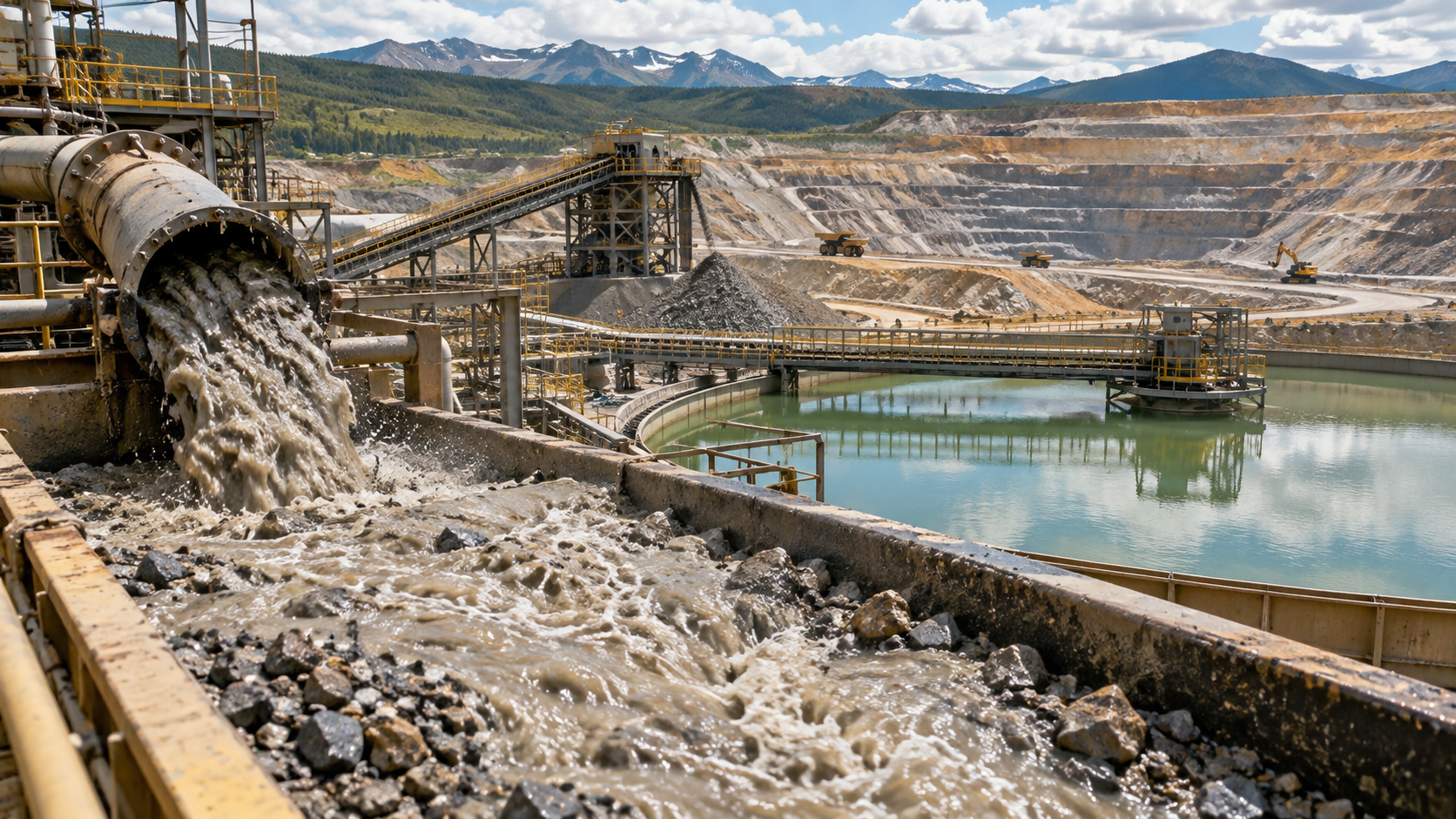
Slurry is a mixture of water and solid particles that moves through a processing system. In mining, those particles can include crushed rock, sand and mineral-bearing material. How that mixture moves can affect both operating costs and mineral recovery.
What is slurry, and why add water to rock?
Dry rock does not flow through a pipe like water. Mixing suitably sized material with water allows a processing system to transport it and feed equipment that separates different particles.
Think of stirring sand into a bucket. While you stir, particles move with the water. Stop, and some begin settling. A mining slurry behaves in a more complex way because particles differ in size, shape and density—how much mass they contain for their volume.
Water is therefore more than a carrier. It helps create the conditions in which separation can happen. In gravity separation, for example, equipment uses differences in particle density and movement to help concentrate valuable minerals.
But slurry is not automatically valuable. Its economic importance depends on what the solids contain, how effectively the plant treats them, and what that treatment costs.
Why this matters: moving more wet material is not the same as recovering more gold.
What must pumps and channels handle?
A shopkeeper would not judge a delivery van only by its engine. The load, the route and the size of the packages matter. The same thinking applies to slurry transport.
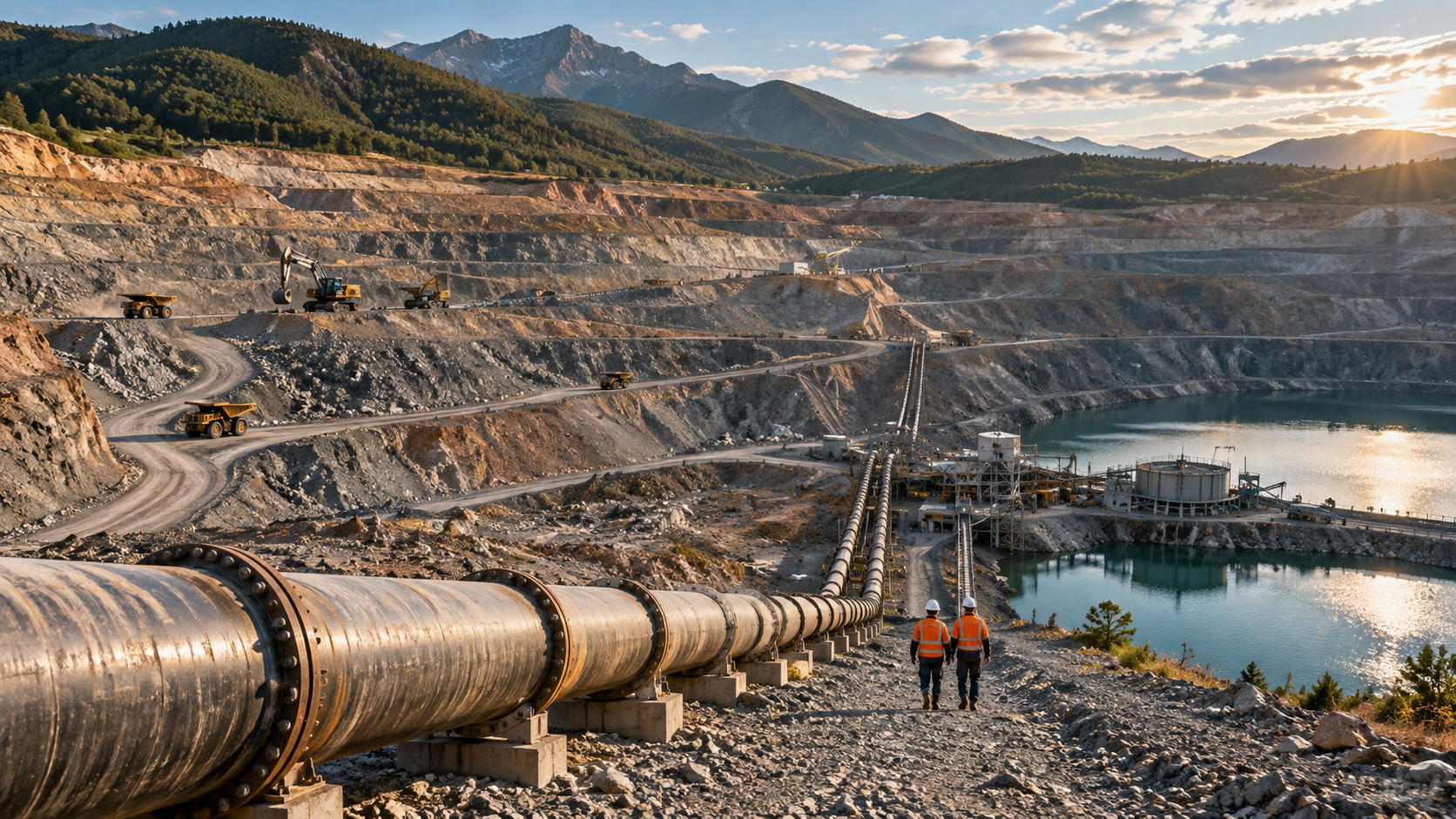
Pumps, pipes and channels must suit both the mixture and the job. A system designed for clean water may struggle with abrasive solids or oversized particles.
Four details deserve attention:
- Slurry volume: the total mixture passing through the system over time.
- Particle size: especially the largest particles equipment must safely pass.
- Solids concentration: how much solid material is mixed with the water.
- Flow velocity: how quickly the mixture travels through a pipe or channel.
These factors interact. In some conditions, slow movement allows particles to settle and accumulate. Higher velocity may help keep them moving, but can also increase wear and energy demand. Channel shape and slope matter too.
There is no single best speed for every slurry. The operating decision is to match transport conditions to the material and equipment, rather than simply push harder.
How can changing flow change gold separation?
Picture a small miner feeding a gravity separator. The equipment needs material delivered within a suitable operating range. If the feed suddenly surges, particles may pass through differently, leaving less opportunity for effective separation.
If the flow drops, solids may settle upstream or arrive unevenly. Adding water also changes the solids concentration, even if the amount of rock entering the system stays the same.
That is why three measurements should not be confused: the volume of slurry, the rate of dry solids entering the plant, and the amount of valuable mineral recovered. They describe different things.
A strong slurry flow tells us material is moving—not how much gold is being recovered or whether that movement is profitable.
Recovery means the share of valuable mineral in the feed that the process successfully captures. It depends on more than flow, including particle size, mineral characteristics and equipment settings.
Stable, suitable conditions can support consistent separation. Simply increasing water or pumping speed does not necessarily improve results.
Why should a future participant care about slurry?
For a young saver exploring mining, pumps and pipes may sound far removed from investment value. Yet they sit close to the everyday decisions that influence operating results.
Consider a hypothetical plant facing repeated blockages. Clearing them takes time. Replacing worn components costs money. If separation becomes less effective, more valuable material may leave with the rejected stream, often called tailings.
The financial connection is straightforward: transport and processing choices can affect throughput, recovery, energy use, maintenance and downtime. Throughput means how much material a plant processes over time. None of these measures alone proves profitability.
A useful question is not just, “How much material moved?” It is, “What did we recover, and what did it cost to recover it?”
At Teqwah Capital, we deploy equipment and operating capital into gold mining alongside our other activities. The opportunity is exciting precisely because value must be created through execution. Understanding slurry gives you one practical way to think about that execution without mistaking busy machinery for financial success.
How does this fit into participation with us?
For people who see potential in gold but cannot run a mine themselves, our model connects participation with operations we select and manage. Our activities span gold mining, physical gold trade, productive machinery and selected real estate.
A Teqwah investment is represented by TGC, a divisible participation unit recording a proportional share of our unified pool. Participants do not choose individual projects. TGC is not exchange-traded; its recorded value is pool value divided by circulating TGC, and it can rise or fall.
Slurry knowledge is therefore a lens, not a forecast. It helps explain why operating performance matters, but it cannot tell you what any participation will earn.
We invite you to bring that curiosity to the wider story: how capital supports productive work, how results are recorded, and how risks accompany the opportunity.
Frequently asked questions
Is slurry the same as mud?
They can look similar. In mineral processing, slurry specifically describes solid particles mixed with liquid for handling or treatment. Its composition and flow properties matter to the process.
Does adding more water improve separation?
Not necessarily. Water changes both slurry volume and solids concentration. Too much or too little can move equipment away from suitable operating conditions.
Does a higher slurry flow mean higher mining profit?
No. Higher flow does not necessarily mean more dry solids processed or more gold recovered. Costs, material quality, recovery and downtime also influence results.
Ready to connect the machinery with the bigger picture? Explore Teqwah and TGC →
Investing involves risk, values can fall, and returns are variable; this article is education, not financial advice.
Teqwah view
At Teqwah, we put equipment and operating capital to work in gold mining alongside physical gold trade and productive machinery activities. We want you to understand the practical work behind that opportunity, because participation through TGC follows recorded operating performance, not a fixed return.
Sources
Investing involves risk. TGC value can fall. This is not investment advice.
Comments
No comments yet — be the first.