Uganda Development Bank trades rented offices for a tower built for a bigger mandate
The bank’s new Kampala headquarters brings its teams together as the government calls for more long-term capital for productive investment.
Key takeaways
- UDB has commissioned a bank-owned Kampala headquarters, replacing rented premises.
- The facility provides about 7,806 square metres across 14 floors, including two basement levels.
- The government wants UDB to attract more private and development finance for Uganda’s economic priorities.
- The tower includes a 25-kilowatt solar system and central controls for building equipment.
- An auditorium and resource centre are planned to complement the new headquarters.
Uganda Development Bank is moving from rented premises into a permanent home of its own, but the government’s expectations reach beyond the building. At the commissioning of UDB Tower in Kampala, officials linked the new headquarters to a broader task: drawing more capital into businesses and projects that can expand production, employment and exports.
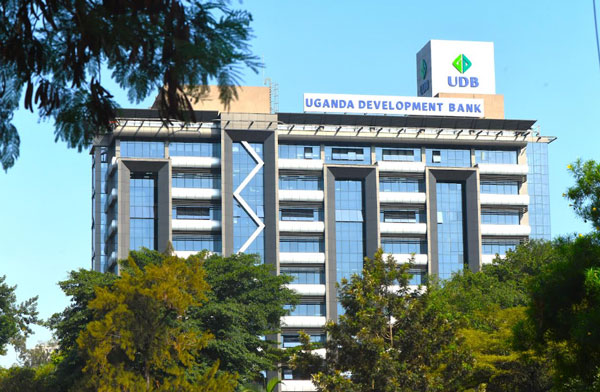
The national development finance institution—a bank that finances long-term economic priorities—has commissioned the facility at Plot 22, Hannington Road, according to The Independent Uganda. The building provides about 7,806 square metres of gross floor area across 14 floors, including two basement levels. It brings head-office teams and key functions into one location, with the aim of improving coordination and service as the bank’s responsibilities grow.
A permanent home, a wider financing role
Henry Musasizi, who officiated at the commissioning alongside the bank’s shareholders, said Uganda’s next stage of economic development requires institutions able to attract long-term funding and direct it into productive investments. He identified agricultural processing and related industries, tourism, mineral-based industries, and science, technology and innovation as priorities. UDB, he said, connects those national goals with the financing needed to turn them into economic opportunities.
The government expects the bank to use its capital, expertise and partnerships to attract additional private funding and development finance, Musasizi said. He linked stronger institutional capacity to investments that could broaden Uganda’s production base, create jobs, increase exports and lift household incomes. His message placed the headquarters within that financing mission, rather than treating the property as an end in itself.
Musasizi said the tower was an investment in the institutional capacity needed to deliver Uganda’s long-term development ambitions, not just in physical infrastructure.
Board chairman Geoffrey T. Kihuguru said the headquarters should be judged against UDB’s responsibility to serve Uganda over the long term. The bank needs governance, skilled staff and infrastructure capable of supporting enterprises and investments of national importance, he said. The source described the move as part of a wider institutional transformation involving governance, operational efficiency, financial performance, partnerships, technology and staff development.
Building efficiency into the expansion
Managing director Patricia Ojangole said bringing people and operations together would strengthen collaboration, innovation and service delivery. She described ownership of a permanent headquarters as a long-term investment in operational efficiency and institutional sustainability. The facility includes workspaces, customer-service areas, meeting and training rooms, an innovation room, a boardroom and information technology infrastructure, supported by integrated security and fire-safety systems.
The building also combines a 25-kilowatt solar-power system with grid electricity. A central building management system monitors and controls key electrical and mechanical equipment. Lighting controls and air conditioning divided into zones are designed to limit unnecessary energy use. Extensive glazing and windows that open allow natural light and ventilation to reduce reliance on artificial lighting and mechanical cooling when conditions permit.
Next on the facilities agenda are an auditorium and a resource centre intended to support the bank’s development-finance role. Beyond those additions, the issue to watch is how the consolidated headquarters supports the government’s stated expectation: that UDB attract more private and development funding and translate stronger internal capacity into support for productive investment.
Sources
Investing involves risk. TGC value can fall. This is not investment advice.
Comments
No comments yet — be the first.