Uganda’s power plants expand, but reliable electricity still stops short of homes
Rising generation capacity has exposed a harder challenge: connecting households and businesses to electricity they can afford and depend on.
Key takeaways
- Uganda’s installed generation capacity reached 2,098.2 megawatts at the end of 2025, with hydropower accounting for 82.1%.
- The latest available Afrobarometer country analysis found 28% of Ugandans connected to the grid and only 15% receiving power most or all of the time.
- Across 38 surveyed African countries, rural and poorer residents reported substantially lower connection rates and reliability.
- Solar is an important alternative, but basic household electricity access does not necessarily meet business power needs.
- A World Bank-funded project targets 300,000 new connections annually in Uganda, making delivery and reliability key measures to watch.
Uganda has more than 2,000 megawatts of installed electricity generation capacity, yet its latest available Afrobarometer country analysis found that only 15% of people had grid electricity working most or all of the time. For a household or business, a power station is only the beginning. The harder test is whether its electricity reaches the door, stays on and costs an amount the customer can afford.
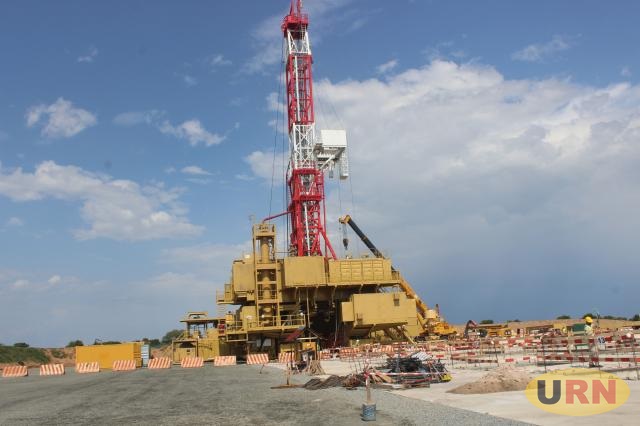
According to The Independent Uganda (direct), citing the Electricity Regulatory Authority, Uganda’s installed capacity—the combined rated output of its generating plants—reached 2,098.2 megawatts at the end of 2025. Hydropower supplied 82.1% of that total. The expansion spans more than seven decades, from the commissioning of Owen Falls in 1954 to the addition of the 600-megawatt Karuma station in 2024. By 2019, Uganda had already moved from an earlier severe supply shortage to generation capacity described as exceeding peak consumption.
The missing link between plants and customers
The latest country findings show how much of the challenge lies beyond generation. Some 62% of Ugandans lived in areas reached by the national grid, but only 28% were connected. Both figures had improved from an earlier survey, which recorded 49% and 26%, respectively. Yet extending power lines into a community does not ensure that families can connect, or that connected customers receive dependable service.
An Afrobarometer analysis published in 2021 by research partner Hatchile Consult identified connection fees and electricity tariffs—the prices customers pay for power—as barriers. Lead researcher Ronald Makanga Kakumba found a sharp urban-rural divide: 67% of urban residents reported household connections, against 13% in rural areas. That analysis also noted that Uganda’s Electricity Connection Policy, introduced in 2018, ran into funding difficulties and was suspended in late 2020.
Afrobarometer’s latest country analysis found that the grid reached areas home to 62% of Ugandans, but only 28% were connected.
Uganda’s gap is part of a wider pattern. Across 38 African countries surveyed in 2024/2025, Afrobarometer found that 72% of people lived in grid-served areas and 60% of households were connected. Only 43% of respondents reported electricity working most or all of the time. Connections reached 83% of urban residents but just 37% of rural respondents. Among the poorest, only 27% reported reliable electricity, compared with 75% among the well-off.
Solar fills gaps, but businesses need more
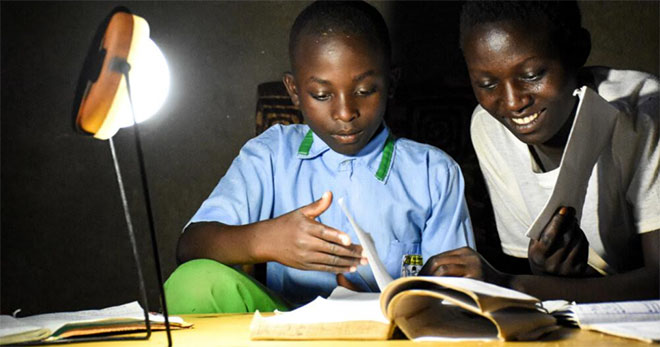
Households are finding other sources of electricity. Across the surveyed countries, 23% of citizens reported using power outside the main grid; 70% of those users relied on solar. Rural residents were twice as likely as urban residents to use non-grid supplies. Uganda’s earlier Afrobarometer findings showed solar reaching 33% of the population, more than the share reporting a national-grid connection. Such systems can support lighting and phone charging, although businesses may have greater power requirements.
The economic stakes extend to irrigation, refrigeration, manufacturing, communications and digitally enabled businesses. Those activities need more than basic access: they require affordable, reliable supply. Continental averages also hide large differences. Mauritius and Seychelles recorded household connection rates of 98%, while fewer than one-third of households reported connections in Uganda and several other surveyed countries.
Uganda’s next test is converting its generation investment into usable service. The regulator says the World Bank-funded Electricity Access Scale-Up Project aims to establish 300,000 new connections annually; grid customers totalled 2.52 million at the end of 2025. The weighted average end-user tariff fell from 459.8 Ugandan shillings per kilowatt-hour in the first quarter of 2025 to 395.8 by year-end. What matters next is whether more connections and lower prices are accompanied by electricity that households and businesses can consistently use.
Sources
Investing involves risk. TGC value can fall. This is not investment advice.
Comments
No comments yet — be the first.