Where Does Gold Come From? From Deposits to Production
Discover how gold forms deposits in rock and sediment, why mining methods differ, and what geology means for the economics of gold production.
Key takeaways
- Gold occurs in rock deposits and in loose sediments formed through weathering, erosion and transport.
- Exploration must assess grade, extent, access and recovery—not just the presence of gold.
- Mining and processing methods must fit the deposit, operating conditions and environmental responsibilities.
- Gold in the ground does not establish profitability; recoverable production, costs and execution determine the economics.
Imagine holding a gold ring and asking: was this metal once locked inside a mountain, or resting beneath a riverbed? Either is possible. The finished gold tells you little about the work needed to find, recover and refine it.
At Teqwah, we see that hidden journey as the starting point for understanding gold production. For people who see potential in gold but cannot run a mine themselves, the first lesson is simple: finding gold and building a productive operation are different achievements.
Where does gold come from in the ground?
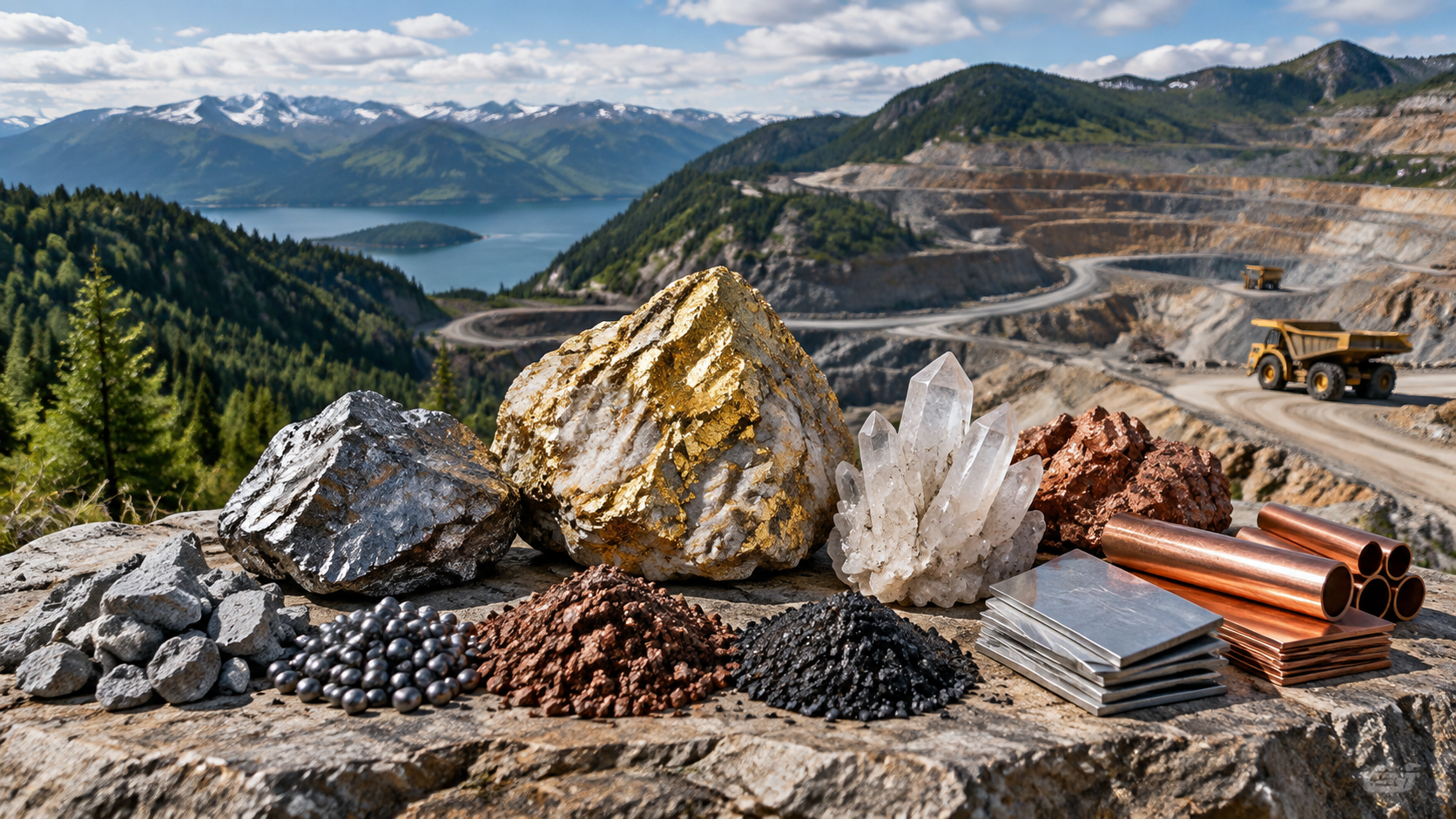
Gold is a naturally occurring element. Geological processes concentrate some of it into deposits, but those concentrations differ enormously. Some contain enough recoverable gold to support mining; others do not.
In rock deposits, gold can occur in veins, including quartz veins, or as tiny particles scattered through the surrounding rock. Hot fluids moving through cracks can carry dissolved gold and deposit it when conditions change. Not all gold-bearing rock contains visible flakes. Some gold is too fine to see without specialised examination.
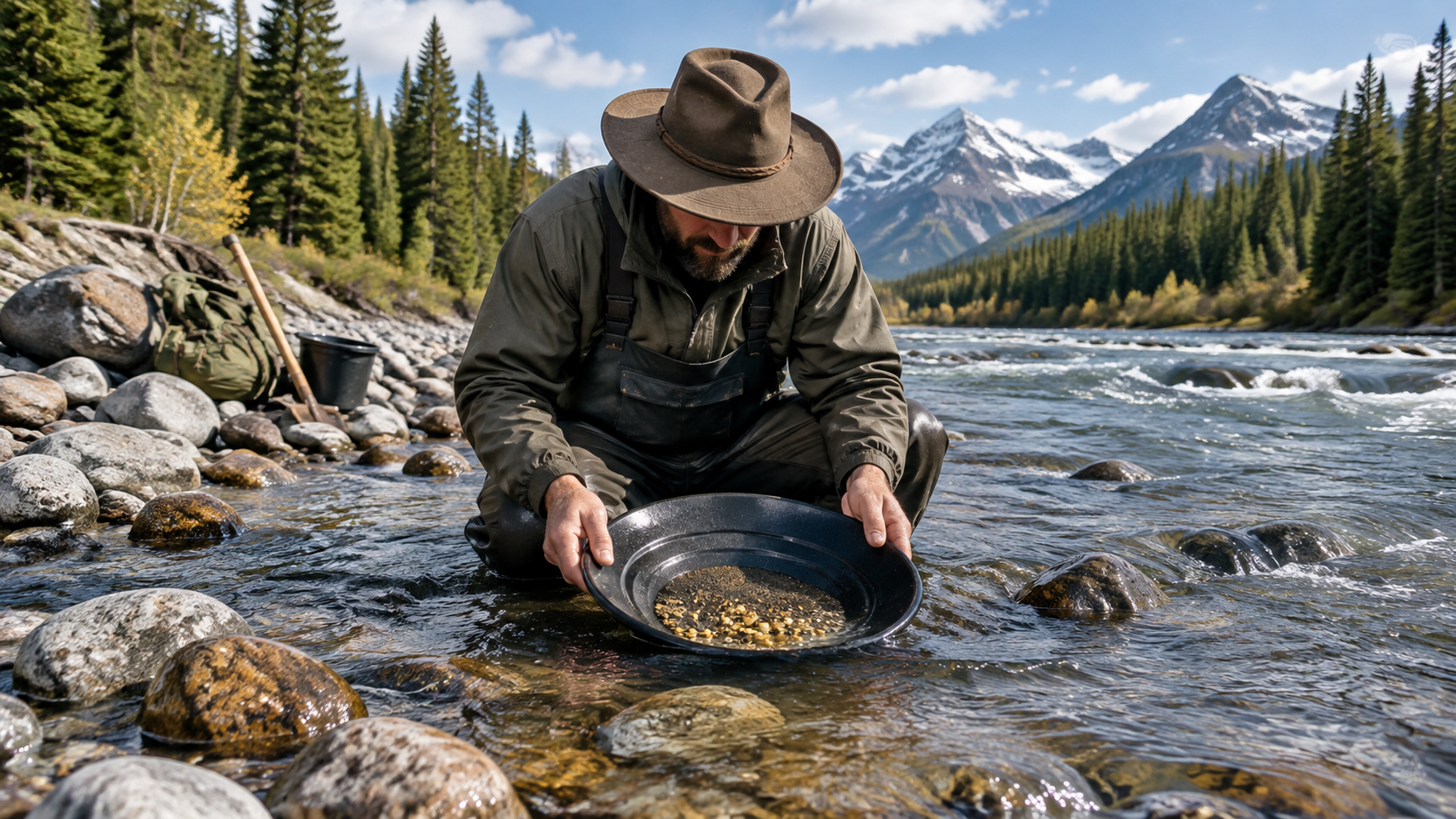
Then weathering and erosion begin another journey. Rock breaks down, releasing gold particles. Moving water can transport and concentrate those particles in gravel, sand and other loose material. These accumulations are called placer deposits. Those associated with rivers are often called alluvial deposits.
Gold is dense, so flowing water can leave it in natural traps, such as cracks in bedrock. But a promising river bend is a reason to investigate, not proof of a workable mine.
The deposit sets the challenge: how gold occurs determines how people search for it, recover it and assess its economic potential.
Before buying machinery, what must explorers learn?
Picture a small miner finding gold in one pan of river gravel. It is encouraging. But would you buy an excavator on that evidence alone?
Exploration must establish whether the discovery extends beyond that sample. Geologists map the ground, take samples and, where appropriate, drill or dig test pits. Laboratory assays measure the gold in samples. Representative sampling matters because one rich pocket can create a misleading picture.
A useful assessment asks:
- Grade: How much gold does the material contain?
- Extent: How large and continuous is the deposit?
- Depth and access: What must be removed or built to reach it?
- Recovery: How much of the contained gold can processing capture?
Grade and recovery are different. Material may contain gold that the proposed process cannot recover economically.
Why this matters: visible gold can spark interest, but repeatable evidence supports decisions. At Teqwah Capital, our gold-mining activity involves equipment and operating capital. Understanding these distinctions helps explain why productive assets need a workable operating plan.
Why is there no single gold-mining method?
Choosing mining equipment is a little like choosing a delivery vehicle. A bicycle, van and truck can all carry goods, but they do not suit the same load or route.
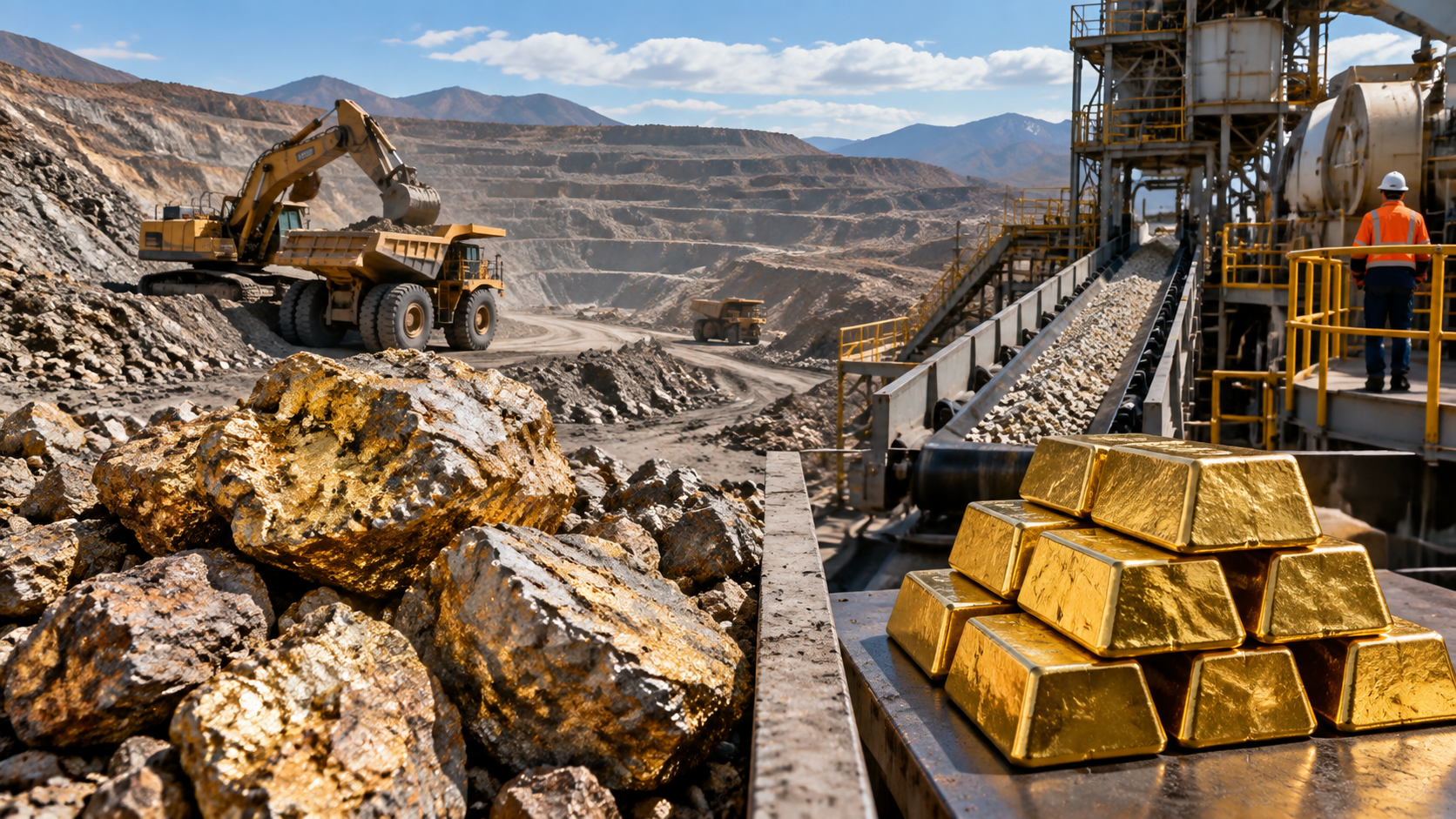
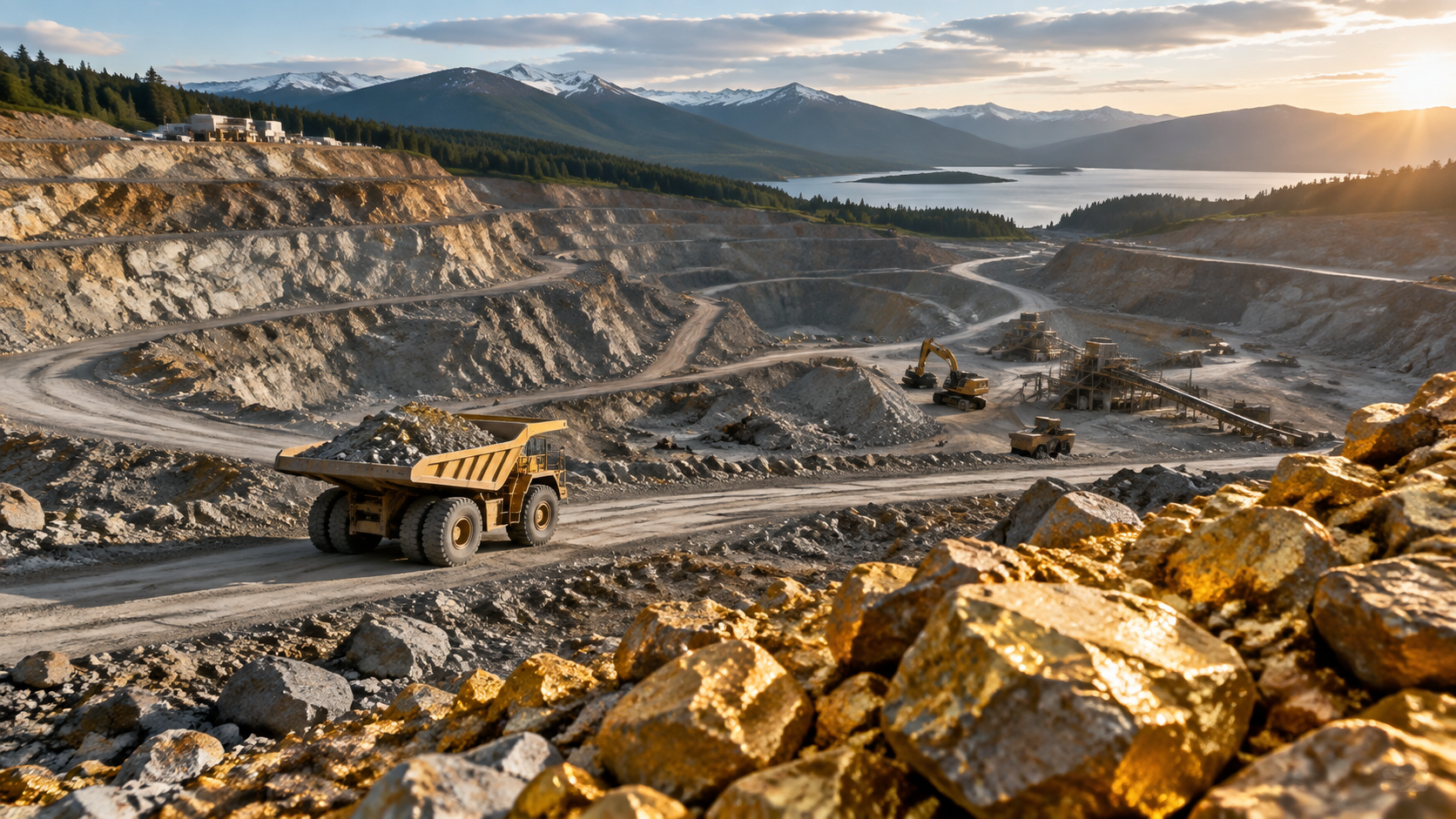
For gold in rock, a shallow deposit may suit open-pit mining, where material is excavated from the surface. A deeper deposit may require underground mining, using shafts or tunnels. Depth alone does not decide the method. Deposit shape, rock stability, waste removal, safety and economics also matter.
For gold in loose sediment, miners may excavate gravel and feed it into washing and separation equipment. Surface access can avoid some rock-breaking work, but sediment deposits are not automatically simple or inexpensive. Clay, large stones, water availability and uneven gold distribution can all complicate production.
An old river channel may also be buried beneath substantial cover. “Alluvial” does not necessarily mean gold sitting conveniently beside today's river.
The decision must also account for permits, land access, community interests and environmental responsibilities. A technically possible method is not automatically an acceptable or viable one.
How is gold separated from rock or sediment?
Mining brings material out of the ground. Processing separates valuable gold from that material. Refining then raises the purity of the recovered metal.
Rock usually needs crushing and often grinding to release gold particles. Loose sediment may need washing and screening to break up clumps and separate material by size.
Where gold is sufficiently liberated, gravity separation uses differences in density to concentrate it. Think of panning as the simplest illustration, rather than a blueprint for every operation. Very fine gold can be harder to capture this way.
Other ores need different treatment. Flotation can concentrate gold-bearing minerals. Certain chemical processes can dissolve gold so it can subsequently be recovered. Gold trapped within other minerals may require additional treatment before extraction becomes effective.
These processes require suitable expertise, controls and waste management. Water, leftover rock and processing residues all need attention, alongside rehabilitation of disturbed land.
Why this matters: the right processing route follows testing of the material, not a promise that one machine can recover every kind of gold.
What does the deposit mean for an investor?
A shopkeeper knows that sales are not the same as profit. Gold production follows the same logic. Recovered gold has value, but fuel, labour, maintenance, processing and other costs must be covered.
A higher gold price does not automatically make every deposit profitable. Lower recovery, equipment downtime or unexpected ground conditions can weaken the result. Equally, a lower-grade deposit may be workable if its scale, access and processing characteristics support the economics.
That is the opportunity we are working to build at Teqwah: connecting capital with productive operations. Our activities span gold mining, physical gold trade, productive machinery and selected real estate. Participants hold TGC as a proportional participation in our unified pool; they do not select an individual mine.
TGC is not exchange-traded, and its recorded value is not a market gold price. Its value follows recorded pool value divided by circulating TGC and can rise or fall. The opportunity is exciting precisely because value must be created through execution—not assumed from gold's presence underground.
Frequently asked questions
Is all gold found in rock?
No. Gold occurs in rock deposits and in loose sediments after weathering, erosion and transport. Placer deposits include gold concentrated in river gravel and other sediment settings.
Is alluvial gold easier to mine?
Sometimes it needs less rock-breaking, but that does not make every site easy or profitable. Depth, clay, water management, grade and recovery can change the practical challenge.
Does finding gold mean a mine will be profitable?
No. Exploration and processing tests must establish whether enough gold can be recovered at a cost that supports an operation, alongside legal, environmental and social requirements.
You can keep learning about the journey from capital to productive work wherever you are. Explore TGC at Teqwah →
Investing involves risk and values can fall. This article is educational, not financial advice.
Teqwah view
At Teqwah, we connect capital with gold mining, physical gold trade and productive machinery, with selected real estate also forming part of our activities. Through TGC, our participants hold a proportional share of our unified pool rather than choosing individual projects. We see the opportunity in productive work, while remaining clear that results vary and participation value can fall.
Sources
Investing involves risk. TGC value can fall. This is not investment advice.
Comments
No comments yet — be the first.