
A Kampala tailor’s TikTok audience outgrows his workshop
Didas Kainamula’s suit-making videos are bringing customers to Mengo and drawing inquiries from across East Africa, but digital reach cannot remove the limits of handmade production.
Key takeaways
- The Independent Uganda reports 900,780 TikTok followers and about 5 million likes as of October 2026.
- Online exposure has brought customers to Mengo and generated inquiries from across East Africa and South Sudan.
- Videos of the suit-making process help prospective customers assess workmanship before ordering.
- A team now supports both tailoring and content production, but handmade garments remain a capacity constraint.
- The source does not disclose revenue, production volumes or completed cross-border sales.
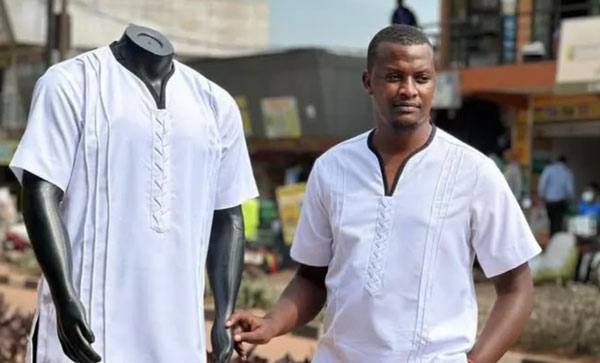
In a tailoring workshop in Mengo, Kampala, a phone has become much more than a camera. For Didas Kainamula, it has spent three years helping attract customers, showcase his work and handle inquiries. His TikTok account, Didas The Suit Guy, is taking a business built around hand-cut garments to an audience far beyond the workshop, according to a business feature in The Independent Uganda.
The publication reports that the account had 900,780 followers and about 5 million likes as of October 2026. Several videos had passed two million views. That attention has produced more than an online following: some customers have travelled to Mengo after finding him on TikTok. Inquiries have also come from Uganda, Kenya, Tanzania, Rwanda and South Sudan, with potential buyers asking about prices, fabrics, remote orders and delivery. Those inquiries show regional interest, rather than establish the scale of completed cross-border sales.
Showing the work before selling the suit
Kainamula began learning the trade from his father in Sembabule District at around six or seven years old. By 2016, while in his final year of secondary school at Namugoona Parents Secondary School, he was serving paying customers independently. Alongside sewing, he learned to manage clients, check quality and meet delivery schedules. Tailoring was already a business before he completed university.
He later earned a Bachelor of Science in Quantitative Economics at Makerere University, studying statistics, data analysis and economic modelling. According to the feature, those skills helped shape his approach to prices, customer patterns and business performance. He worked in data and analytics at the Mbuya Community Health Initiative between 2021 and 2022, then further developed his tailoring skills at the professional establishment C&D.
His move onto TikTok did not start with an elaborate marketing strategy. He filmed the work itself: choosing fabric, taking measurements, drawing patterns, cutting, sewing and fitting the finished clothing. For made-to-measure suits, that visibility matters. Customers must trust the maker before they can see the final garment. Repeated demonstrations give prospective buyers a way to judge his technique and attention to detail before placing an order.
A larger market, a physical bottleneck
The workshop now has a team helping with garment production, filming, lighting, editing and customer inquiries. It is therefore running both a tailoring business and a small media operation. The challenge is that their capacity grows at different speeds. A video can reach millions of viewers, while each suit still requires consultation, measurements, cutting, stitching, fittings and corrections. A bigger audience does not automatically mean the workshop can deliver more garments.
Mengo’s tailoring market serves weddings, church functions, graduations and professional clothing. Kainamula’s videos put that everyday trade before a much wider public. They also create a record of practical techniques in a craft that, the publication notes, is often taught informally from one tailor to another rather than preserved in formal documentation.
The next point to watch is how regional inquiries translate into orders and deliveries within those production limits. The feature gives no revenue figures, garment output or completed export volumes. What it does show is a working business gaining a new route to customers: TikTok did not supply Kainamula’s craft, but it made that craft easier to discover.
Sources
Comments
No comments yet — be the first.