Iraq carries 2 million barrels past Hormuz as buyers demand safer delivery
A state-arranged tanker shipment shifts part of Iraq’s oil trade beyond Basra as war disrupts the route supporting most government revenue.
Key takeaways
- Iraq’s state tanker company moved two million barrels of crude beyond Hormuz, taking on the task for the first time in decades.
- The shipment shifts some sales away from buyer-arranged transport at Basra towards delivery outside the strait.
- Oil provides at least 90% of state revenue, leaving Iraq highly exposed to shipping disruption.
- Alternative routes through Turkey and Syria handle only a fraction of export volumes.
- The tanker company is discussing crude-carrier purchases, while the government targets higher export capacity through infrastructure projects.
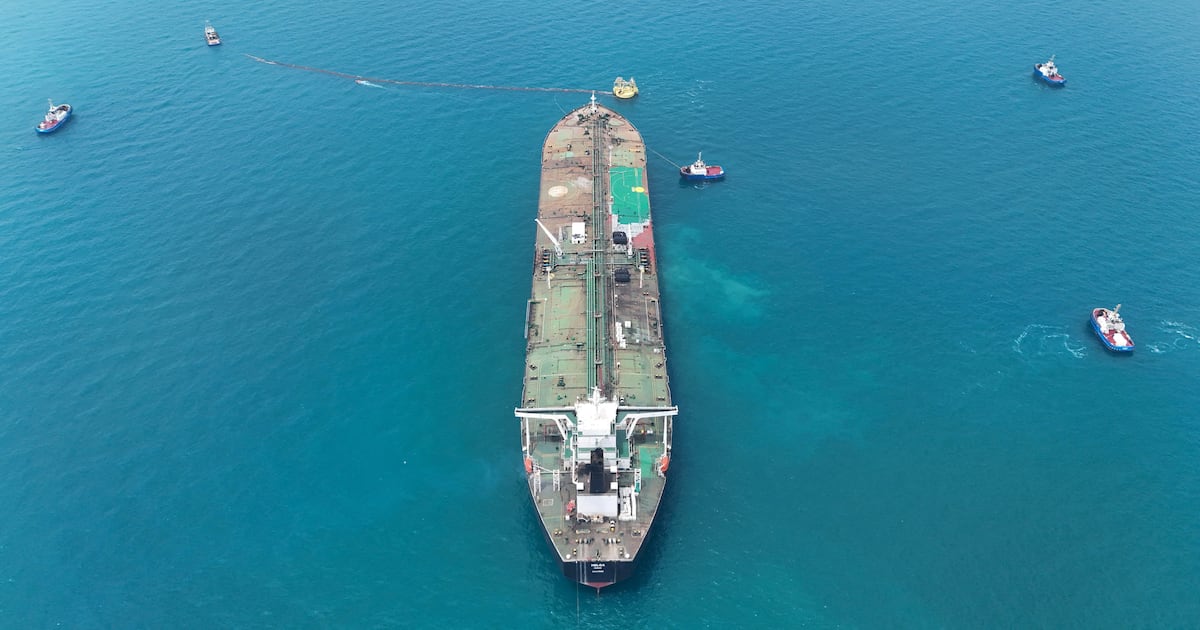
Iraq has carried two million barrels of its own crude beyond the Strait of Hormuz, taking on a delivery task it had not handled for decades as buyers seek oil outside the war-disrupted passage. For a country that relies on oil for at least 90% of government revenue, the shipment puts the effort to protect its main income source in the hands of its state tanker company.
According to The National — Business, Iraqi Oil Tankers Company director general Ali Qais told the Iraqi News Agency that the company secured a Very Large Crude Carrier, or VLCC—a tanker built to move large quantities of crude—for the operation. It did so after talks with specialised companies. Qais said the arrangement gave the State Oil Marketing Organisation, known as Somo, access to better selling and pricing opportunities.
Moving the delivery point beyond Basra
The shipment changes part of the way Iraq sells its oil. Previously, those sales used the free on board, or FOB, model at Basra: buyers took responsibility for transport after the crude was loaded. Carrying the cargo beyond Hormuz instead meets buyers’ demands for delivery outside the strait. It also gives Iraq a way to pursue better prices rather than offering discounts for loading at Basra, where buyers face the risks of the passage.
The stakes extend well beyond one tanker. Iraq is the second-largest producer in Opec, the oil-exporting countries’ group. Before the war, most of its exports—roughly 3.3 million barrels a day—left its southern Basra terminals and passed through Hormuz. The Iran war, which began in February, has effectively closed the narrow waterway, according to the report. Missile and drone attacks, sharply higher insurance costs and naval confrontations have disrupted shipping through the route.
Baghdad is also facing pressure from its neighbours. Iranian-aligned factions launched drones towards Gulf states from Iraqi territory, leading Saudi Arabia, the UAE, Qatar, Kuwait, Bahrain and Jordan to hold Iraq responsible. Meanwhile, heightened risks in Iraqi waters near Hormuz have pushed Somo to discount Basra-loading cargoes. The tanker operation responds to that commercial squeeze by moving the delivery point beyond the disrupted strait; it does not create a new export route around it.
More routes, and a fleet to rebuild
The government has been seeking other outlets, including talks to reopen the Iraq–Turkey pipeline through Ceyhan and efforts to truck crude to Syria. Those options handle only a fraction of export volumes. Still, oil minister Bassim Khudair said last month that Iraq had been able to export three million barrels a day since the beginning of September, the state news agency reported. He also outlined a larger capacity target tied to infrastructure projects.
“The government plans to increase export capacity to five million barrels per day,” oil minister Bassim Khudair said, according to the Iraqi News Agency.
Khudair linked that goal to completing strategic pipelines extending to Fishkhabour and Baniyas, alongside export terminals in the Strait of Hormuz. Export capacity is the amount the infrastructure can handle, rather than a statement of current shipments. For now, the two-million-barrel operation shows how Iraq is changing delivery arrangements while it works on alternatives to its heavily exposed southern export route.
The next step may involve owning more of the shipping chain. Qais said the tanker company was in talks to buy specialised crude carriers quickly and compete with regional peers, but gave no further details. Once a major fleet operator in the 1980s, the company lost much of its fleet through successive wars and sanctions. Its purchase talks, alongside the pipeline plans, are now key developments to watch as Baghdad seeks greater control over oil deliveries and revenue.
Sources
Comments
No comments yet — be the first.