Uganda’s flood relief bill puts climate spending in Parliament’s sights
Deputy Speaker Thomas Tayebwa wants MPs to steer public money towards disaster prevention, resilient farming and better weather forecasts.
Key takeaways
- Tayebwa urged MPs to prioritise disaster prevention over repeated emergency spending.
- Recurring flooding in Kasese and submerged land in Ntoroko illustrated the risks to communities.
- He proposed linking PDM funds to resilient farming, including drought-resistant seeds and soil protection.
- Public institutions were encouraged to pursue water harvesting and their own renewable electricity generation.
- He called for stronger environmental oversight and better forecasts delivered to farmers by phone.
Families along Uganda’s River Nyamwamba are repeatedly driven from their homes by floods. Deputy Speaker of Parliament Thomas Tayebwa says that raises a public spending question: should the government keep paying for tents, blankets and food each year, or invest in ways to stop the same disasters recurring? His appeal puts the protection of communities and government investments at the centre of Parliament’s climate responsibilities.
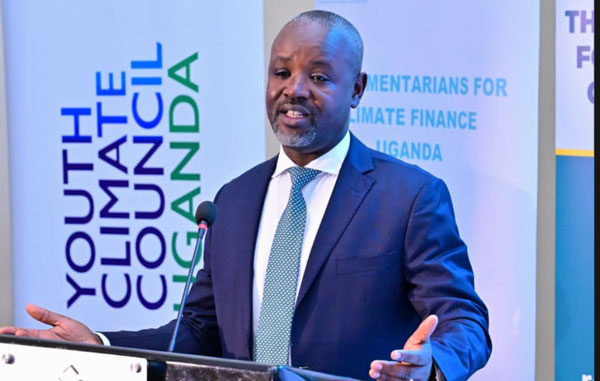
According to The Independent Uganda, Tayebwa addressed the issue on Tuesday while opening a two-day induction for members of Parliament’s climate change and natural resources committees at Mestil Hotel in Kampala. He urged lawmakers to use their powers over legislation, budgets and government scrutiny, alongside their role representing communities, to strengthen Uganda’s ability to withstand climate-related disasters. Climate policy, he argued, needs practical action and long-term investment rather than more speeches and conferences.
Tayebwa said the 12th Parliament would be judged by the disasters it helped prevent, not the number of sittings or conferences it held.
Spending before disaster strikes
Tayebwa called for climate risks to be considered across government programmes and public spending. Without that protection, he warned, the effects of climate change could undo investments. He urged Parliament to push the government towards prevention rather than repeatedly financing emergency responses. Recurring floods along the Nyamwamba in Kasese were his example of a problem that needs a lasting answer, rather than another round of supplies for displaced residents.
He also pointed to Ntoroko, describing it as a district facing serious climate risks, where some families had already lost substantial parts of their land to submergence. Together, those examples framed his argument for changing how public money is used: support after a disaster remains a recurring expense, while communities continue to face displacement and the loss of land. His appeal was for lawmakers to address those risks through the decisions they oversee.
Farms, power and forecasts
Agriculture was another focus. Tayebwa warned that shifting weather patterns could weaken programmes designed to raise household incomes and improve food security. He called for PDM funds to be linked to climate-smart agriculture—farming practices intended to cope with changing conditions. His priorities included drought-resistant seeds, growing trees alongside crops, protecting soils and giving agricultural extension workers the knowledge needed to teach sustainable farming. The proposals connect climate policy directly to household livelihoods.
For schools, hospitals and other public institutions, he urged MPs to promote water harvesting and explore wider use of renewable energy. Institutions should be encouraged to produce their own electricity, including through solar installations, he said. Any surplus could potentially be supplied to the national grid. These were proposals for Parliament to pursue, rather than announcements of funded projects or operating arrangements.
Tayebwa also demanded closer oversight of agencies responsible for forests and wetlands. He said Uganda was losing about 80,000 hectares of forest cover a year and described that loss as unacceptable. Better weather forecasting was another investment priority: he called for equipment for the Uganda National Meteorological Authority and for forecasts to reach farmers by phone, in languages they understand, before extreme weather hits.
The next test is whether those priorities shape Parliament’s budget decisions and scrutiny of government programmes. Tayebwa’s appeal spans prevention spending, farm support, public-sector energy and environmental accountability. Its central challenge is to turn climate concerns into choices about where public money goes—and how it protects people before the next disaster.
Sources
Investing involves risk. TGC value can fall. This is not investment advice.
Comments
No comments yet — be the first.