
India-US trade deal stalls as Russian oil tariff threat narrows options
Finance Minister Nirmala Sitharaman says negotiations are continuing, but both sides have little room left to compromise as India faces a choice between energy costs and export risks.
Key takeaways
- Sitharaman says India-US trade talks have reached a plateau, although negotiations are continuing.
- New US legislation authorises tariffs of up to 100% on countries buying significant amounts of Russian oil.
- India faces competing risks to fuel costs, government finances and exports to its biggest market.
- Indian goods exports to the United States rose to $42.79 billion in April-August from $40.39 billion a year earlier.
- Both Indian and US officials have signalled that a final agreement remains difficult.
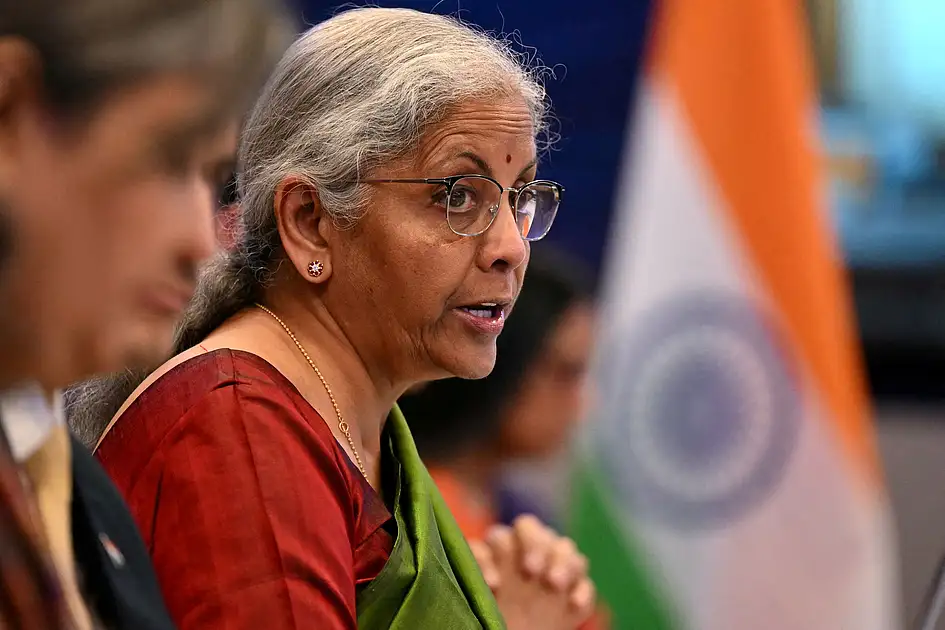
India faces a difficult trade-off: buying less Russian oil could raise fuel costs or strain public finances, while continuing those purchases could expose exports to steep US tariffs. That dilemma is tightening the space for a trade agreement with Washington. Finance Minister Nirmala Sitharaman said on Monday that negotiations had reached a plateau, according to Khaleej Times.
Speaking at an event in New Delhi, Sitharaman said both countries had reached a stage where further concessions would be extremely hard to make. She described the negotiations as demanding, but stressed that they were still under way. Her remarks were New Delhi’s clearest public acknowledgement yet that discussions on central issues had stalled, despite efforts to secure an agreement since February 2025.
“It's been a hard and very vigorously negotiated agreement,” Sitharaman said.
Russian oil raises the stakes
The room for a final compromise has shrunk after US President Donald Trump signed legislation authorising tariffs of up to 100% on countries that buy significant amounts of Russian oil, including India and China. Tariffs are taxes on imported goods. The legislation adds a potential penalty to an energy relationship already caught up in the wider dispute over Russia’s war in Ukraine.
India is the world’s third-largest oil importer and one of Russia’s biggest oil customers. Those purchases are seen as helping Moscow withstand the broad Western sanctions imposed since the war began in 2022. For Prime Minister Narendra Modi, reducing imports could mean higher fuel prices or greater pressure on government finances. Keeping them could threaten sales to India’s largest export market. New Delhi has warned that Washington’s new measures could damage bilateral ties.
A growing export market, an unfinished deal
The commercial stakes are substantial. Indian goods exports to the United States reached $42.79 billion between April and August, up from $40.39 billion in the same period a year earlier, according to the latest Indian official figures cited in the report. Sitharaman noted that India sells more to the United States than it buys, leaving Washington with a trade deficit—the gap when imports exceed exports. The proposed agreement is intended to strengthen economic ties and settle disputes over access to each other’s markets.
Washington has also played down expectations of a quick breakthrough. Last week, US Trade Representative Jamieson Greer said a deal was not imminent after meeting Indian Trade Minister Piyush Goyal in the United States. Reuters reported earlier this year that India was holding out for better terms while Washington sought additional concessions. Ajay Srivastava, founder of the New Delhi-based Global Trade Research Initiative and a former trade official, urged India to stop offering concessions while the agreement remains unfinished.
Sitharaman also criticised the growing use of tariffs to address trade imbalances, saying they were being turned into a weapon rather than simply a negotiating tool. She pointed to India’s own large deficit with China and argued that such gaps should be addressed through negotiation and compromise. Talks with Washington are continuing; the next test is whether either side can find room to move as the Russian oil tariff threat weighs on an already difficult bargain.
Sources
Comments
No comments yet — be the first.